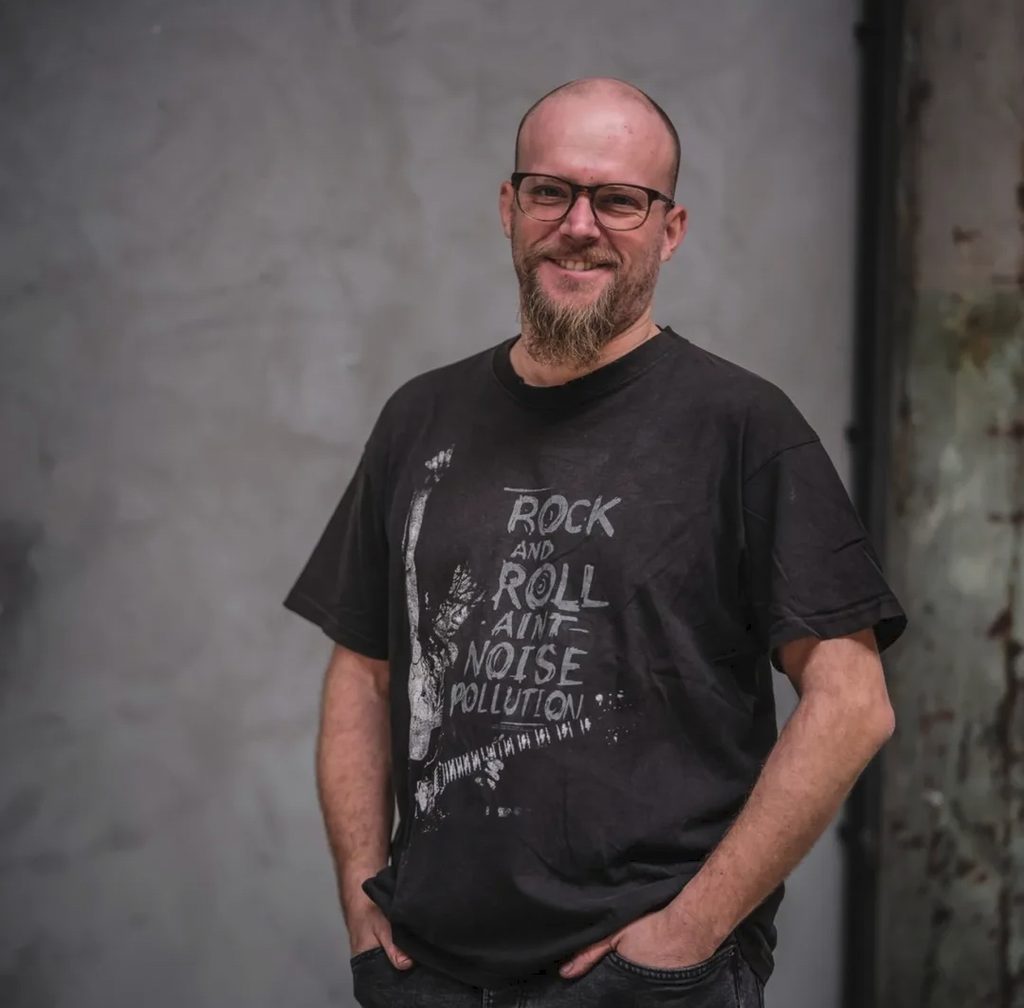
This week’s interview takes us to the workshop of a maker who creates some very unique pieces, some of which almost look like artifacts. No matter the style he pursues, he is all about making a functional tool, I absolutely love his artistic approach, and I am very pleased to be able to share his story.
To start off, please tell us a little about yourself.
My name is Clem Vanhee, Born in 1982 and I’m a independent Belgian designer and craftsman. I’m an avid creator, outdoorsman and hunter. I’m married to Lieselot Geeregat, who is an independent Jewellery designer at Lunalotta Jewellery.
Together we have 2 sons.
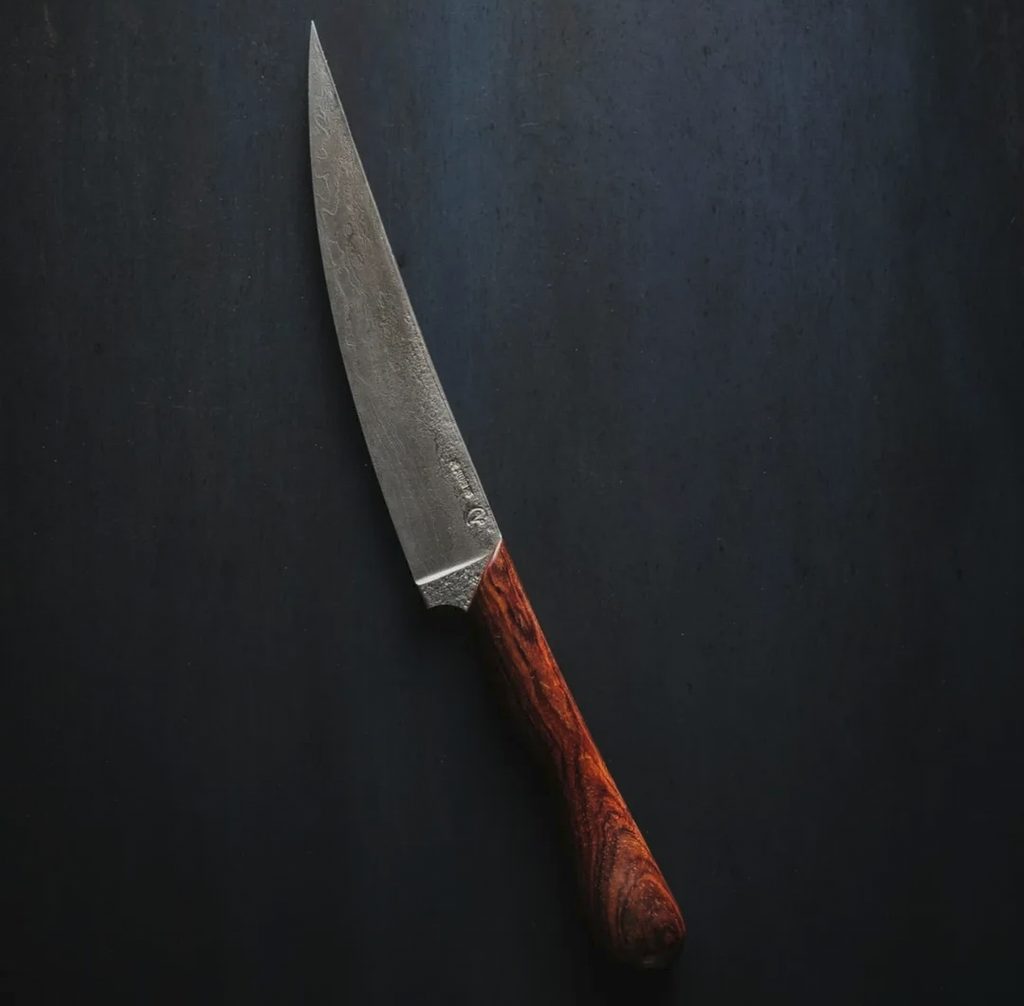
Under the brand ATELIER185 I create unique hand forged knives mainly out of damascussteel that I forge at Zaventem ateliers.
What sparked your interest in knives?
Ever since I was young, I was fascinated by knives, cutlery and swords. A passion that never went away. The simplicity in design and functionality of knives always fascinated me.
When did you start making knives?
When I was 14 I made my very first knives out of a piece of plate iron that I found. I had no idea that steel needed to have carbon or knew what hardening was. So the result was very bad, but my interest was sparked.
How did you learn?
After finishing high school as a mechanical engineer I started a course in blacksmithing at the art school in Ghent in 2005.
Under the skilled supervision of Philip Vercammen I learned how to forge, wield and weld hot steel, this way turning the blacksmithing craft more and more into the almost lost art of Damascus steel forging and knifemaking.
Philip guided me into the world of knifemaking and always encouraged and supported me to push my adventure further.
In 2017, I said goodbye to my career as R&D manager at Metalfire architectural fireplaces and focused entirely on the art of knife forging and since then have been making unique hand-forged knives of the highest quality.
Knifemaking is for me a profession which involves a lot of different techniques and in which i can use my manual and engineering skills.
Do you have a favorite knife you made, tell me about it?
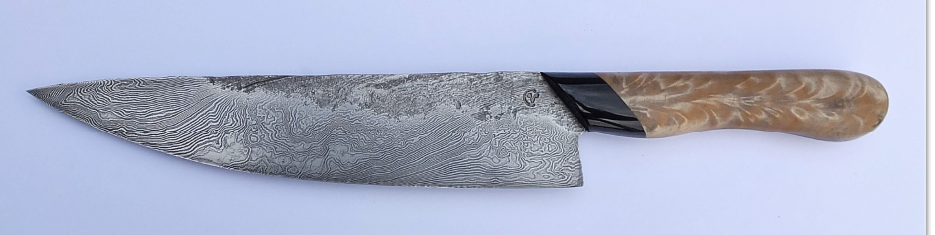
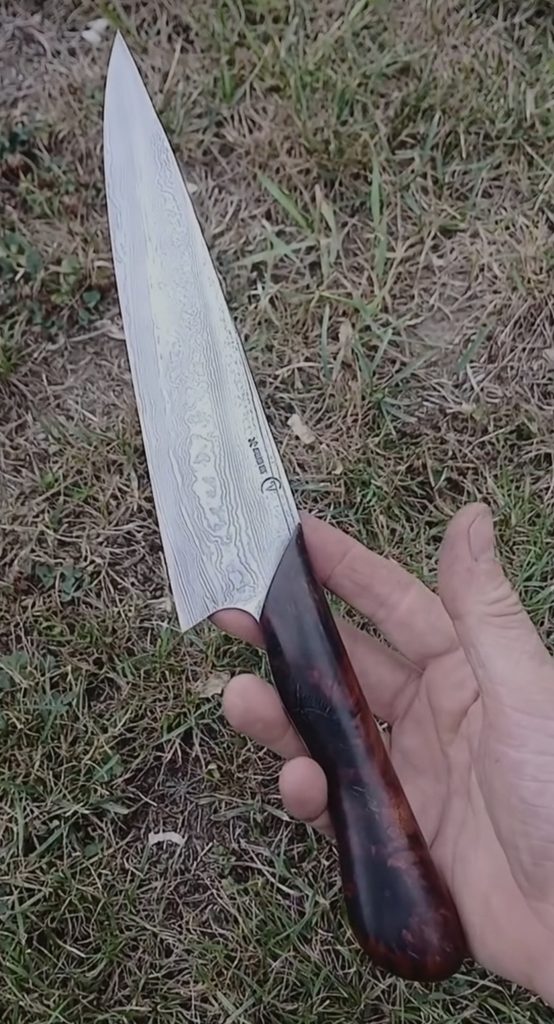
I really like the first Damascus chef knife I made in the current design that I use. It’s not perfectly made to my current standards, but it fits and balances perfect in my hand.
Almost everybody that visits me has had it in their hand and it has convinced so many people that it’s a real special knife for me. It has also been used by many high-end chefs.
What is the most important aspect of a well-made knife?
For me a well-made kitchen knife has to be light, perfectly balanced and sharp and off course build for the task it has to do.
What keeps you going?
Beer and bad jokes
Biggest struggle?
Marketing is really not my thing, I’m a engineer/maker, not a salesperson. Luckly my wife is very good at this, so she keeps on pushing me to do it.
What kinds of knives do you make?
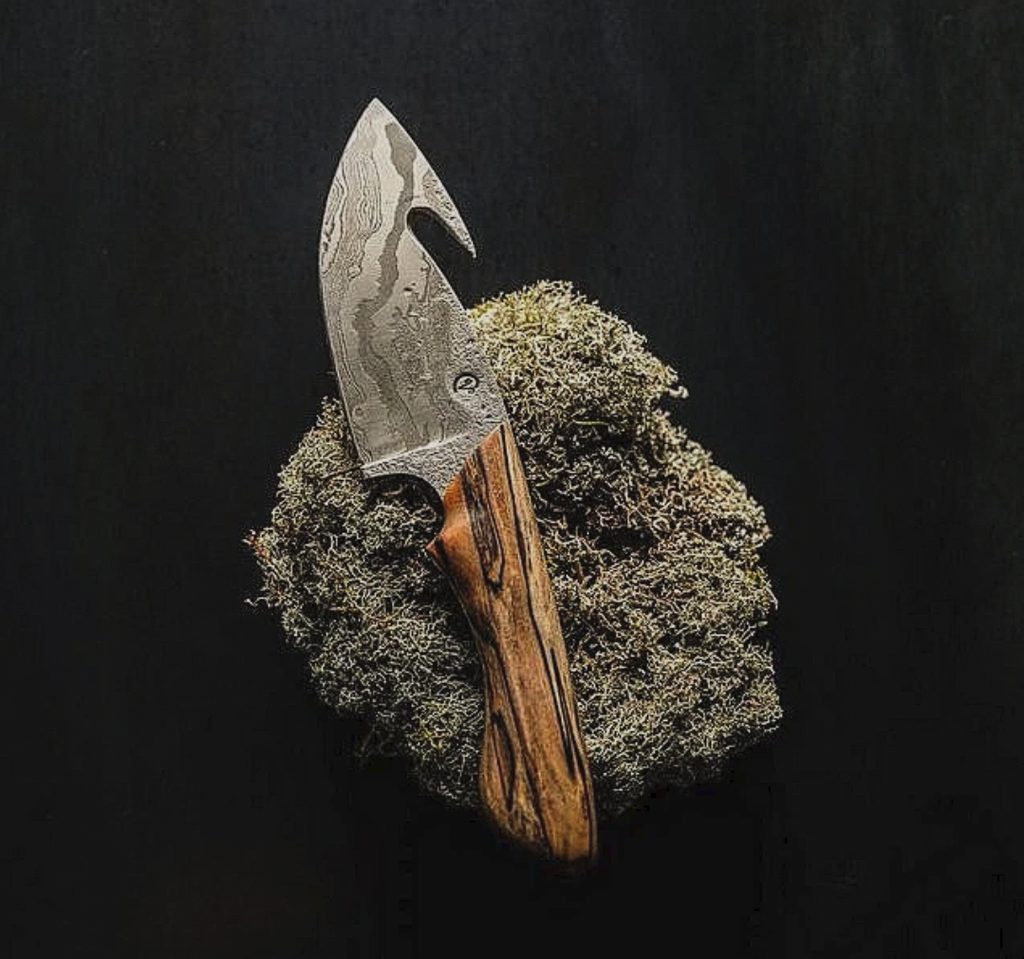
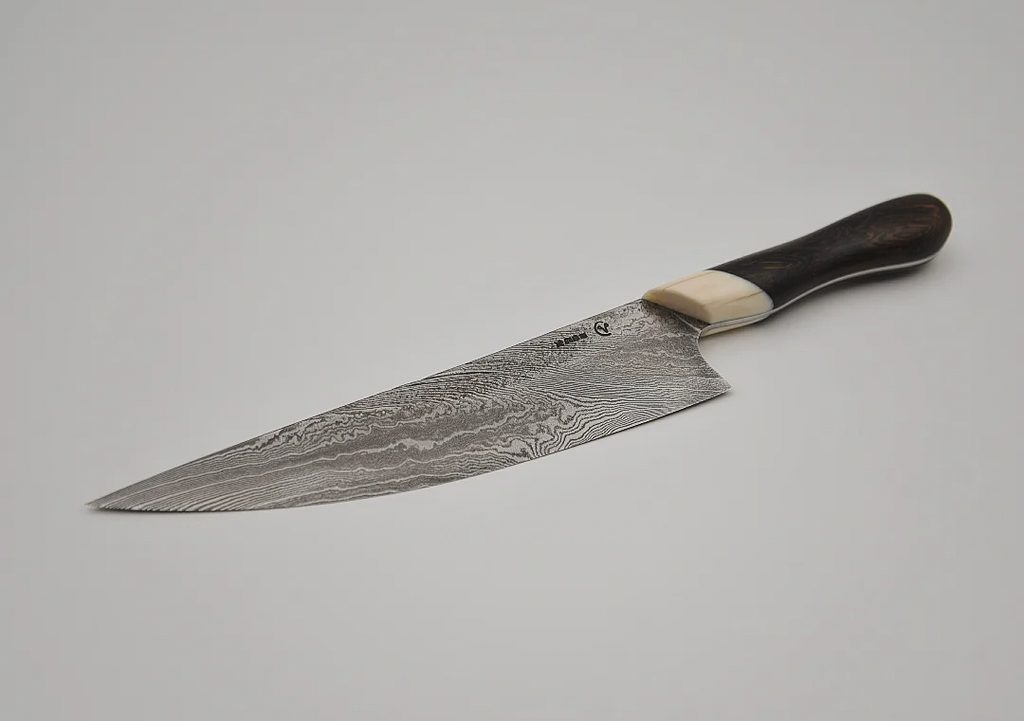
I make knives in 2 different styles, my Brut de forge knives and my Damascus range in both styles I only work to order, and here the customer chooses absolutely everything.
I mainly make kitchen knives and table knives for high-end restaurants, (hobby)chefs, design collectors. Occasionally I also make hunting knives or even Damascus swords.
How did your background affect your approach to knives and testing?
With my background in engineering and machinebuilding, I developed my own machines and my own ways of working.
For me basic steel quality and hardness are very important.
I always start my knives with steels that I’m sure of what it is.
Every knife that I make is numbered. I have an excel file of all the knives with their shape, materials, hardness, for who it was made….
On every damascus knife the hardness is tested on 6 to 8 different spots, to be ensure quality.
In the past I had samples of my Damascus tested in the university lab by Prof Coudeville to really see and understand what was happening.
Occasionally I do destructive testing on blades, and I always try to destroy my own hunting knife.
Who helped you early on?
My blacksmithing teacher Philip Vercammen, steel supplier Achim and metallurgic expert prof Coudeville.
Who are your influences/inspirations?
Hard to say, I find my inspiration in all kinds of things, it usually just comes by unexpected. Over the years I developed a specific style that works for me.
Any specific breakthroughs or revelations in your knife making journey?
Becoming a member of Zaventem ateliers and buying my heavy rolling mill.
What is the perfect knife?
That depends on what needs to be done, a knife has to be built for the task. A small paring knife is made completely different than a hunting knife.
How do you develop a design, select a steel, and fine-tune a heat treatment?
Designs are made on paper with a lot of erasing and redrawing.
I select my steel a bit based on what I can buy and then look at the composition of the steel. Fine tuning heat treatment is done in cooperation with Prof Coudeville in his lab.
What do you like about Damascus steel?
As an artistic maker I like damascus steel because it adds a fair bit of mystery to my work.
I mostly try to create damascussteels with a random pattern, just like in woods, I prefer the strange very figured parts. Next to that, a well-made damascus steel from the correct materials is a very good knife material.
Could you explain more about your process?
Damascus steel is created by stacking together alternating layers of different types of steel. This mix is heated in a forging fire to 1500°C and then forged together with brute force using my power hammer.
The resulting block is divided into pieces, re-stacked and forge welded together again. This intensive process is repeated several times until a block of damascus steel is forged with the desired number of layers.
By playing with the direction of the layers during the forging process, I can create all kinds of different patterns in the damascus steel. I’m always looking for random patterns. Just like in wood I prefer the very odd, wild figured patterns
Next to the visual aspect, for me, also the enhanced steel quality is very important in these knives. Because of the repetitive forging, the grain structure of the steel is much finer and stronger, resulting in a harder, stronger knife.
The brut de forge series was developed for the “hell’s kitchen” events at Zaventem ateliers, where I have my forge.
I got the question from Lionel Jadot, the owner and inspirator of Zaventem ateliers, to make a simple knife for this event.
I still wanted to create a knife that is fully handmade, but by the innovative way of forging, it gives me the possibilities to make a lot of different shapes.
It has been a big success, and I sell it mainly to high end restaurants all over the world.
How has the knife world changed since you started?
No idea.
What’s up next for you? Any exciting new projects to tell us about?
A client of mine is opened a new steakhouse nearby where I live, and I got to make the steak knives.
We also plan to do a takeover of a very important art deco house (villa empain) in Brussels with the Zaventem ateliers group.
To keep up to date with what he is working on head over to his website https://atelier185.be/ and follow him on Instagram https://www.instagram.com/clemvanhee/