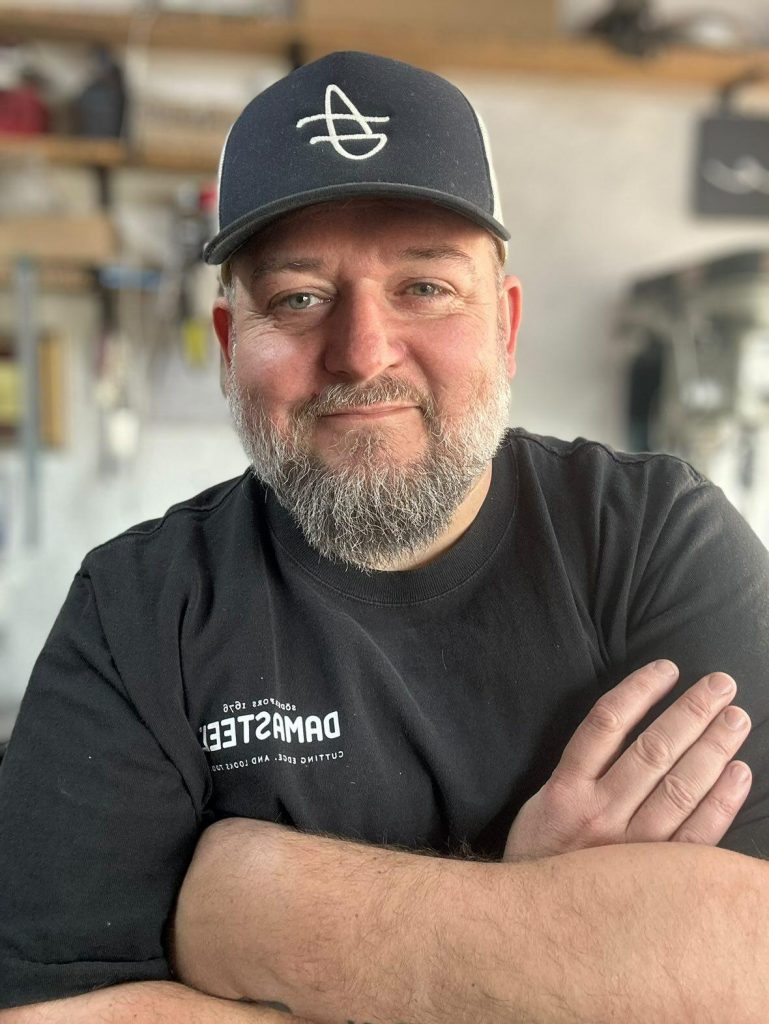
This week’s interview takes us to northern Italy and the workshop of one of the most fun-loving makers I have had the privilege of meeting. His work always looks pristine to my eyes, his passion for his craft is undeniable, and the work speaks for itself. But I am so glad he took the time to share his story, so that I can bring it to you.
Tell us a bit about yourself.
I’m 49 years old (I know, I’m old). I live in a town near Treviso but I’m originally from Vicenza. I’m married and have three children aged 22, 20, and 18. I have a dog named “Sasso” and
recently got a cat. I’ve worked in IT for many years.
What sparked your interest in knives?
I don’t really know. I have a photo of myself at 3 or 4 years old holding a knife. I’ve always had a knife. I think it’s something innate in humans—or at least in me…
What inspired you to start making knives and how did you learn?
Many years ago, I was at a friend’s house and to cut some salami, he pulled out a big knife made from an old industrial metal saw blade, with a handle crafted from scrap wood taken from a coffin. Don’t ask me why, but that knife is still one of the most beautiful “objects” I’ve ever seen. From that day on, I started making knives—first by watching YouTube videos, then by attending classes with my teacher. And I never stopped.
When did you start making knives?
I always say I started twice. The first time, without guidance, was about 15 years ago. I made things that had the shape of a knife. Only later did I realize that making a proper knife was a
whole different story. In 2014, through an online forum, I met the person who became my teacher and one of my closest friends: Denis Mura.
What did you use to make your first knife?
Of course, I copied my friend and made a knife from a metal saw blade and cherry wood scraps. It was horrible. But I still have it.
Do you have a favorite knife you’ve made? Tell us about it.
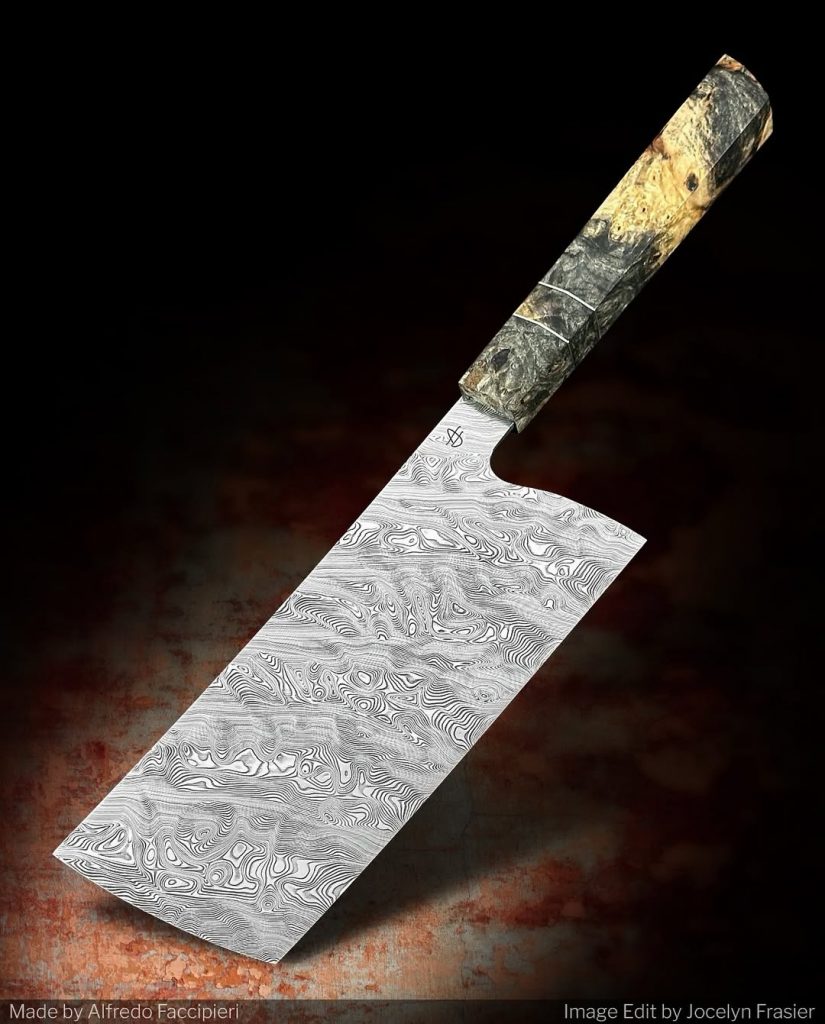
In 2021, I was the first Italian to use Magnacut. No one—not even industrial producers—had tried this steel in Italy. I ordered two bars and made a knife together with my son Riccardo, who also helped design it. Part of that design is present in all my knives. It’s one of my favorites because it gave me the chance to teach something to my son.
What’s the most important aspect of a well-made knife?
I’m a “steel nerd,” so 10 years ago I would’ve said “heat treatment.” Now that I’m older and wiser? I would say a great knife depends on three factors: heat treatment, geometry, and ergonomics. These are essential. I also spend a lot of time on finishing and fit because my teacher taught me that way, and I believe that at high levels, the difference lies in the details.
What motivates you to keep going?
Being part of the knife world is exciting. Sharing results, learning from others, experimenting with new designs, and trying to be “the best at something” pushes you to improve every day. Also, I have to tell you something: when I started making knives, I immediately focused on kitchen knives. Many knifemakers (almost all) told me I was wasting my time. That I should
make “serious knives,” and that custom kitchen knives would never have a market. In Italy, we’re so “behind” that the Italian Guild doesn’t officially allow kitchen knives in the entrance
exam (even though more and more are showing up on tables). So, every day I wake up and dedicate a bit of my success (and failures) to those who didn’t believe in what I was doing. And that gives me an extra push.
Biggest challenge?
I don’t have much time… I’m almost 50 and I have to make every move count. I can’t afford to make mistakes and say “screw it, I’ll start over.” If I were 20, maybe I could. But now I have to carefully evaluate every single step. It’s a bit frustrating sometimes.
What kind of knives do you make?
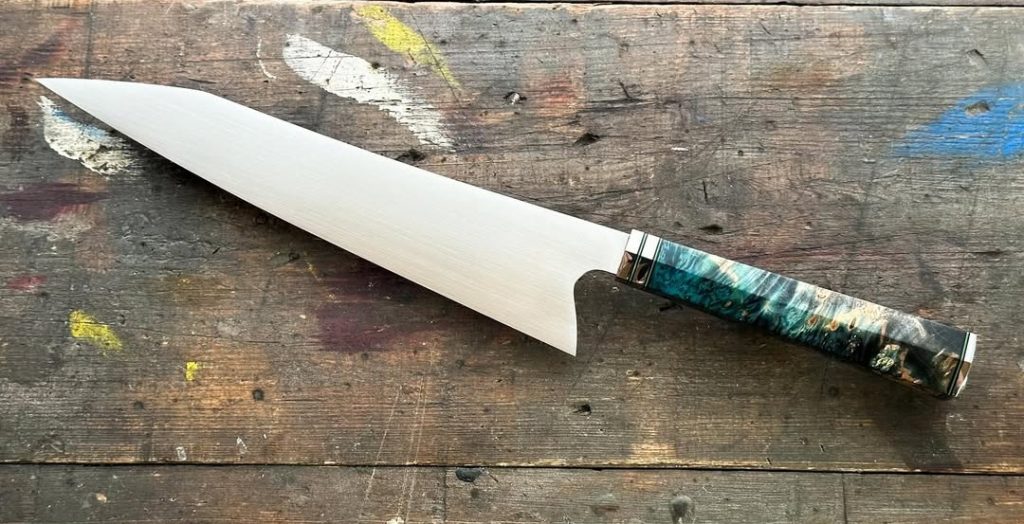
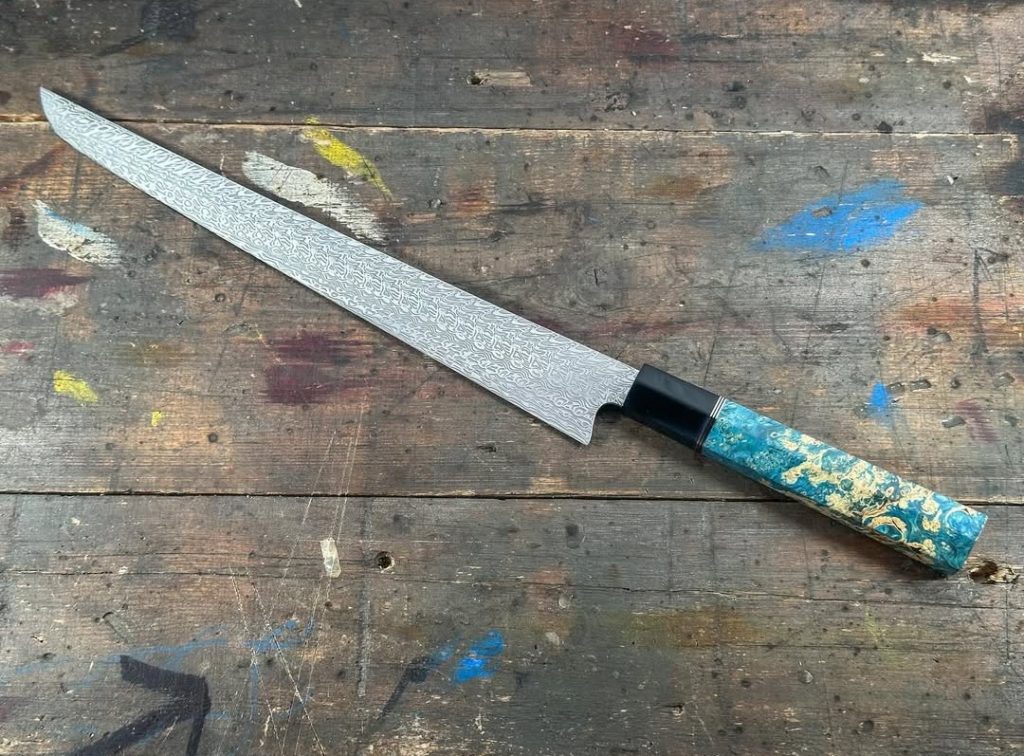
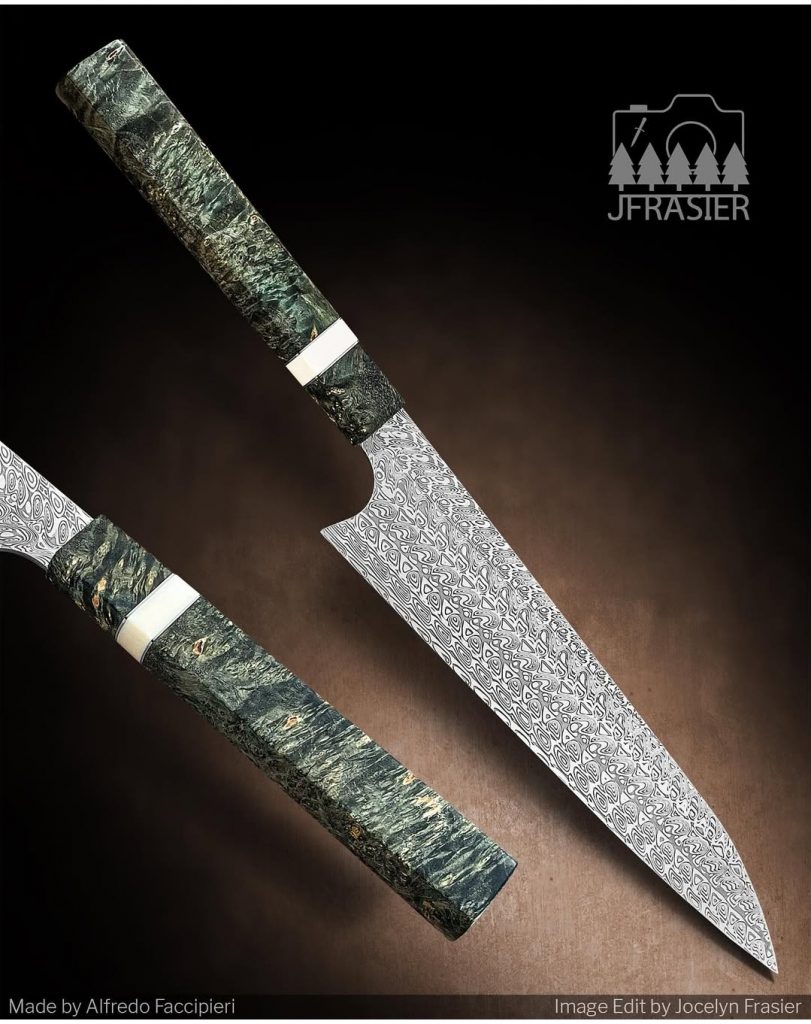
I make stock removal knives (even though I started as a forger). I prefer Japanese shapes, but I think you can see some Italian influence in my blades.
How has your background influenced your approach to knives?
I come from a technical background, so my approach is always: study, understand, and apply. Even in the shapes of my blades. Aesthetics come later. First comes geometry and ergonomics.
Who helped you at the beginning?
My teacher. He gave me direction and helped me avoid many mistakes. And without my wife, I wouldn’t have made it this far.
Who are your influences/inspirations? How do they show in your work?
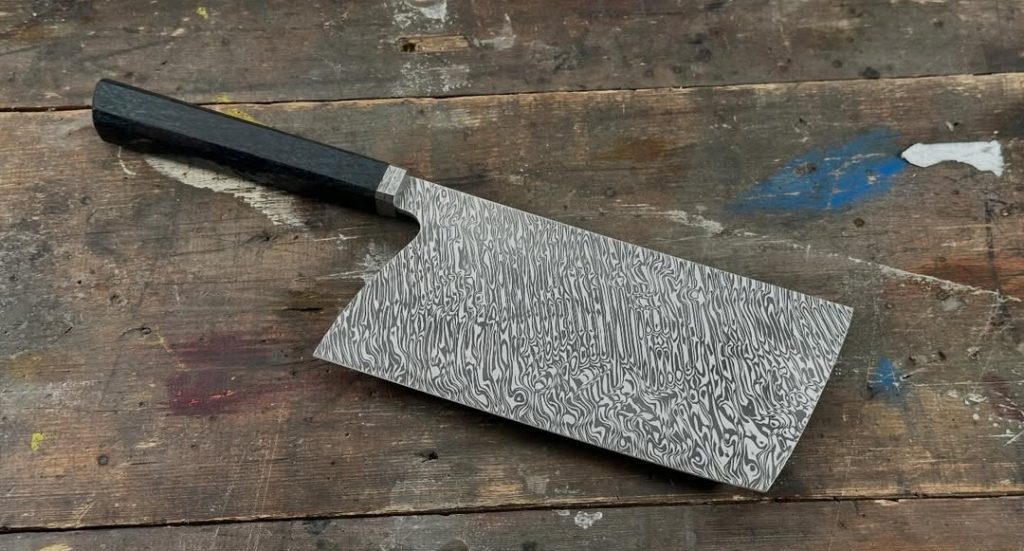
Over the years, I’ve developed my own blade style, and many say it’s very recognizable. That’s a huge compliment. My design is inspired by Japan, but I try to include something of myself and my country in every piece. I’ve made a knife for a three-star chef inspired by a car, others that remind me of Venice, a grand piano, or a Vespa scooter.
Any specific discoveries or revelations in your knife-making journey?
My statistics professor once said statisticians are the laziest people because they count a whole population by sampling a few elements. That made me think, sometimes laziness isn’t bad. It can lead to inventions that make work easier. So, being truly lazy, I have a motto: if you do something three times, you need a tool to help you do it. That’s why I designed a machine to quench blades without ballet or gymnastics moves. Or I used stones attached to an oscillating tool to polish knives.
What’s the perfect knife?
The one I haven’t made yet.
How do you approach a new concept and its implementation?
With my usual method: study, understand, and apply. If something doesn’t make sense or I don’t fully grasp it, I don’t move to production—except in rare cases. Once I apply it, I adjust and refine.
How do you test your knives?
Some things are measurable, others aren’t. For my One line, I had lab tests and hardness analysis done by a specialized company, like in large-scale production. When something is measurable, it’s easier to test. For ergonomics and geometry, the best test is use. After the first run of 50 blades, I slightly modified the shape based on user feedback.
How do you develop a design, choose steel, and refine heat treatment?
My life is full of notes, post-its, and sketches on food wrappers. I have signature lines (like the slight curve on the spine, the finger groove, or the edge flow), and I stretch, shorten, raise, or bend them until I like what I see. Then I move to production. If I like the result, I keep it. If not, I modify it. If it still doesn’t work, it goes into the big bin of failures.
What do you like about RWL34 steel?
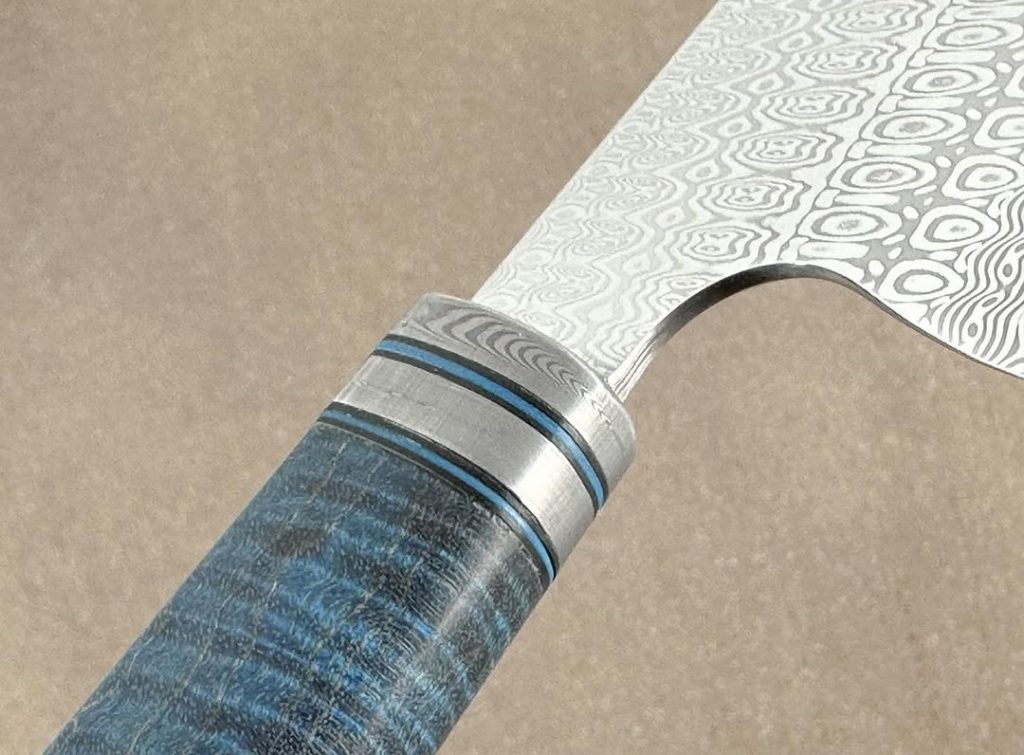
I hate all forms of extremism and baseless opinions: “only carbon steels,” “only stainless,” “only forged,” “only stock removal”… So I don’t have a favorite steel for every application. But if I had to recommend one, I’d say RWL34. It’s easy to work with, and the finish—whether mirror or satin—is beautiful. If treated correctly, it’s very satisfying to use. When I first bought a piece of RWL34 to make a blade. I was told I wasn’t ready to use such a precious
material. Sounds absurd, but it really happened. He said: use it when you know how to respect it, when you can bring out its value. So RWL34 became a goal for me. Now, after all this time, Damasteel asked me to make videos on how to use RWL34. That brought me great satisfaction.
How has the knife world changed since you started?
It’s constantly evolving. Now there are more tools and information available. A good grinder used to be a dream—many built their own because you couldn’t find one (at least in Italy). Same with ovens, mostly homemade and modeled after “American” ones. Now it’s easier and, in some ways, cheaper to get equipment. Information is also more accessible through podcasts, YouTube channels, and groups. But there’s also a higher risk of mistakes. A lot of “decontextualized” info leads to errors. I open a YouTube video and see someone heating a file with a torch to make a knife. If no one tells you that you can’t do the same with stainless steel, or that the video skips tempering, you’re likely to mess up. To all the “influencers” of blades and steel: speak only if you know what you’re talking about!
What’s new for you? Any exciting new projects?
This year I will be attending more international shows than at any other point in my career: Germany, Austria, and Belgium, the Blade Show in Atlanta, and finally the DCI. I’m also working on a major commission for a well-known Michelin-starred restaurant in Venice: designing a mise en place knife with a strong, unmistakable connection to the local territory. I will be one of the knifemakers taking part in the next Edge of Hope. Given that the Italian guild operates under outdated and frankly ridiculous rules and shows little to no respect for those who specialize in kitchen knives, my goal for 2026 is to start laying the foundations for a new certification. It’s still early, but the direction is clear.
To see more of his work, and keep up to date with what Alfredo is up to follow him on his Instagram https://www.instagram.com/alfredofaccipieri/
Leave a Reply