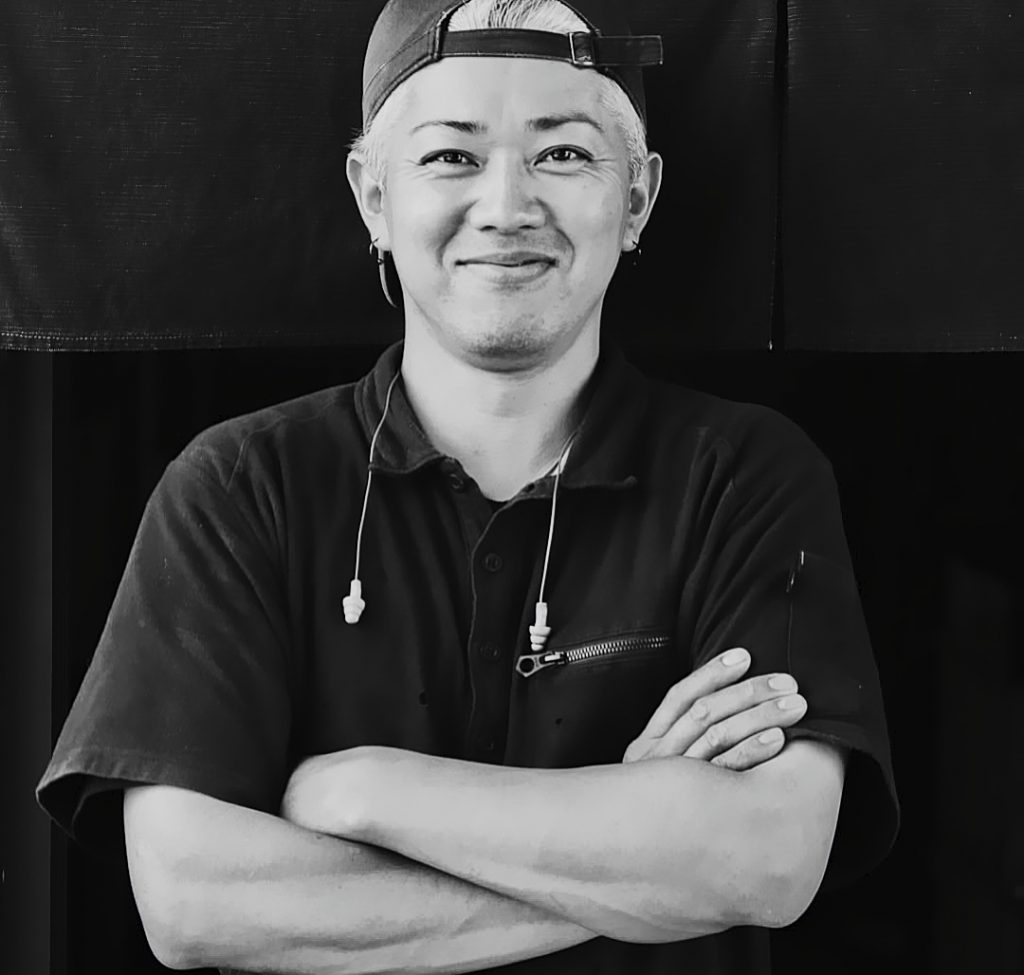
This week’s interview takes us to a workshop where the maker is not only passionate about the craft, but it is also deeply engrained in the history of his family. I found out about this maker after purchasing a sujihiki for myself, and it was absolutely what I was looking for. What I didn’t realize at the time was the story of who the maker was. I am very pleased to share his story with you.
To start off, please tell us a little about yourself.
Hello, nice to meet you. I’m Mutsumi Hinoura of “Tsuchi no Oto” (The Sound of Hammers). Recently, due to disagreements with the third-generation owner, I became independent from Hinoura Cutlery Workshop. This year marks my 26th year in this industry.
What sparked your interest in knives?
I became interested in Japanese knives 25 years ago when I visited the Outdoor Knife Show in Seki City, Gifu Prefecture.
What led you to start making knives? How did you learn?
Since my family business was blacksmithing, I initially started making knives at Hinoura Cutlery Workshop. Initially, the third-generation owner, Tsukasa Hinoura, was ill and not at the factory, so I learned knife making from the second-generation owner, Yujiro Hinoura. It was more like I observed and absorbed his techniques rather than learning them directly. After the third-generation owner, Tsukasa, recovered from his illness, Yujiro retired.
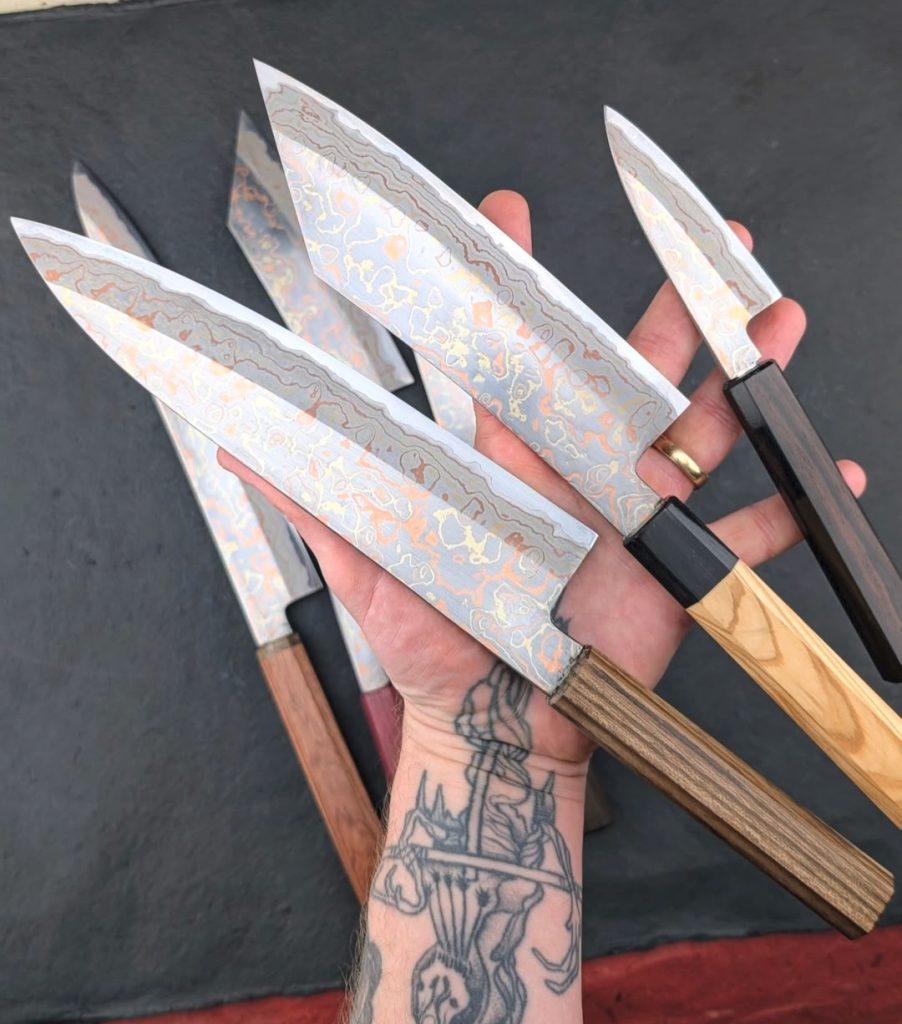
photo credit Knifeware
When did you start making knives?
Actually, I had a job offer in another prefecture, but due to my father Tsukasa’s illness, I started working at Hinoura Cutlery Workshop immediately after graduating from junior college and began making knives.
What did you use to make your first knife?
I think my first knife was a survival knife with a 210mm blade.
Do you have a favorite knife you’ve made so far?
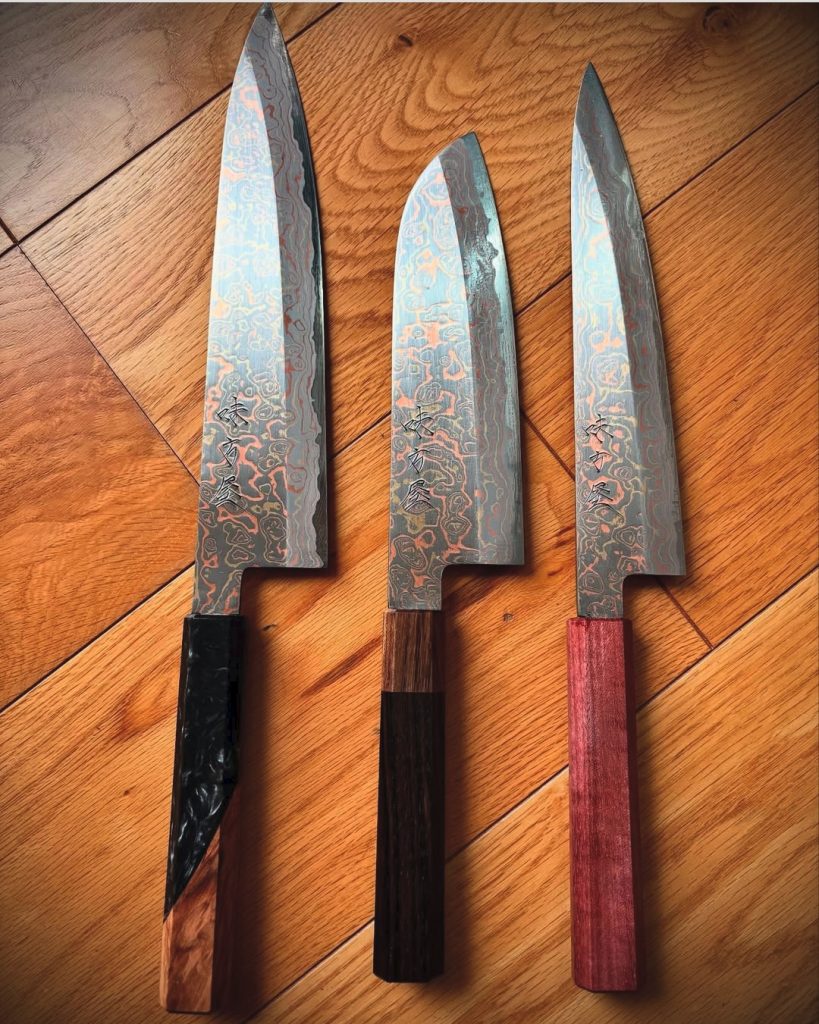
I have many favorite knives, but there’s one that was particularly difficult to make. It’s the knife where I created the Damascus pattern from scratch and wove the handle with that same Damascus pattern. It’s my most memorable knife.
What is the most important element in making a high-quality knife?
It is making the knife from the user’s perspective.
What keeps you going?
What motivates me is the recognition of people all over the world.
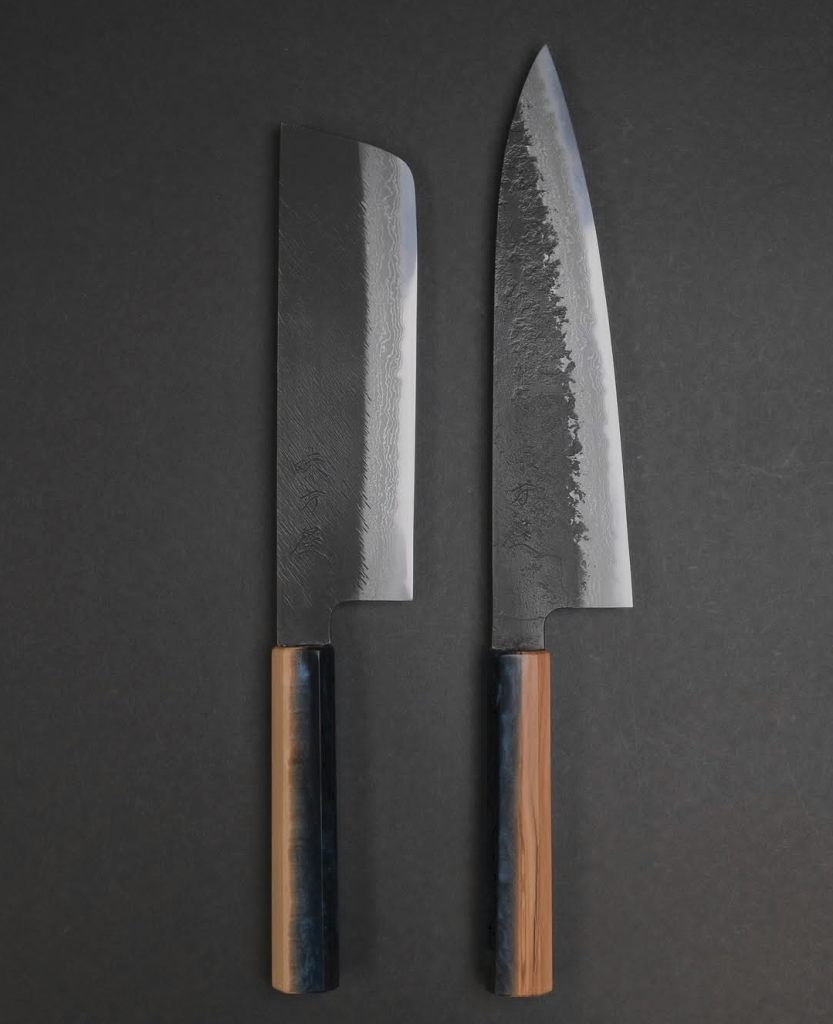
photo credit AI & OM knives
What is your biggest challenge?
Having to become independent after the third generation.
What kinds of knives do you make?
I make many kinds of knives, including kitchen knives, hunting knives, and machetes.
How has your background influenced your approach to knife making?
Throughout my 24 years of knife making, I’ve spoken with many people, both those involved in knife making and those who aren’t. This has instilled in me a desire to pass on this skill to future generations.
Who supported you in your early days?
My grandparents. I learned a great deal from them.
Who has influenced or inspired you?
A knife maker who shares information about knives on social media.
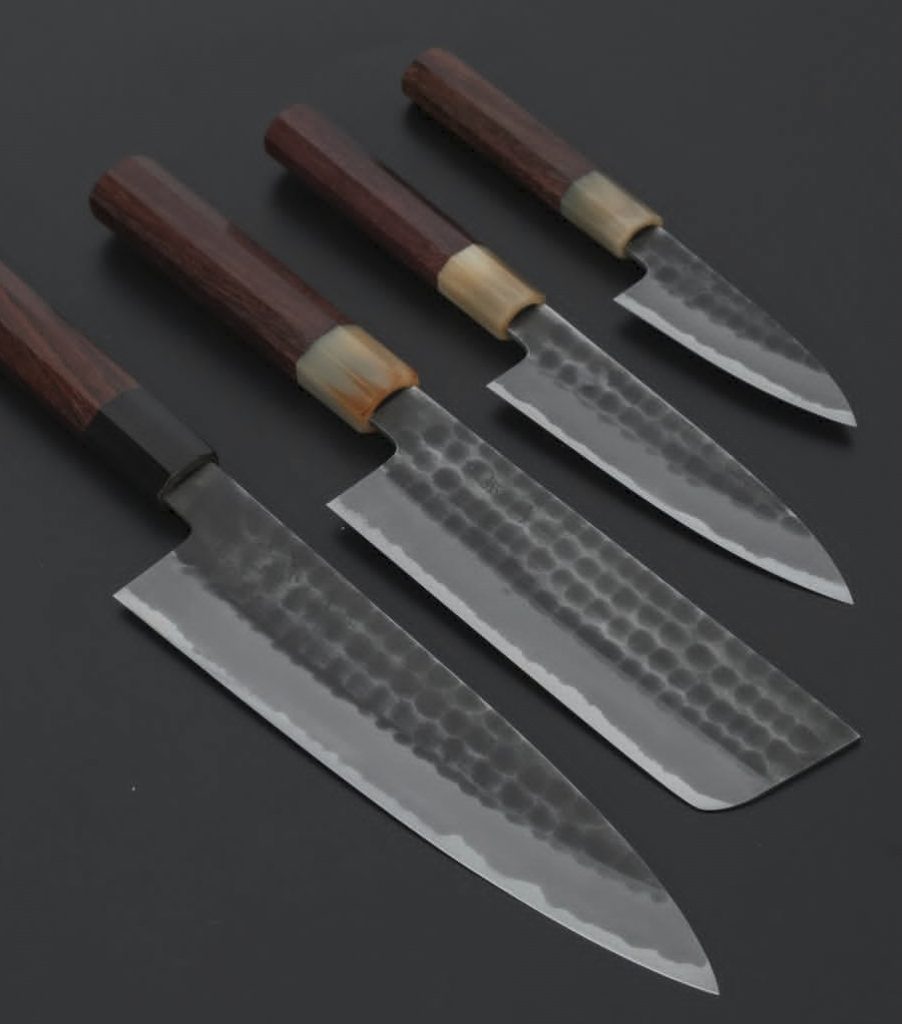
photo credit Hitohira
How do you think that inspiration is reflected in your work?
I try to create prototypes when those inspirations align with my experience. Even if they align, they don’t always result in a product.
Have you had any specific breakthroughs or discoveries during your knife-making journey?
There haven’t been any groundbreaking advancements that have overcome specific difficulties or obstacles, but I feel that hints to such breakthroughs are hidden somewhere. Those hints have led to progress and breakthroughs.
What is a perfect knife?
A knife suited to the user.
How do you approach new concepts and their realization?
I believe that our business partners will learn about our basic thinking and new initiatives by sharing information on social media.
How do you approach knife testing?
I don’t test everything, but I do try things like checking the blade angle and thickness against the blade’s thickness by touching it with my fingernail or cutting the hair on my arm.
How do you develop designs, select steel, and fine-tune heat treatment?
I don’t make major changes to the design. Because the blade design is already the most user-friendly design. If I were to create my own design, there would inevitably be some aspects that make it difficult to use.
Regarding steel selection, I would like to try steels that show the effects of forging.
Heat treatment is electrically controlled to some extent, but I believe it’s important to ultimately check it with the human eye. To solidify that understanding, you need to perform an overwhelming number of cuts to ingrain that absolute sense of temperature into your mind.
Do you have a favorite steel and what do you like about it?
I like white steel. Because I think it’s the type of steel that requires the most skill, and it’s easy to sharpen and produces a good edge.
How has the world of knives changed since you started making knives?
I think there are now many types of steel with good quality that don’t require forging. Also, I feel that many different styles of blacksmiths have emerged.
What are your future plans? Could you tell us about any new and exciting projects?
My future plans primarily focus on getting the Damascus knives that customers have been waiting for over five years at Hinoura Cutlery into their hands. I also have many other things I’d like to do, such as collaborations with other blacksmiths, Damascus knives with over 300 layers, and traditional Japanese steel.
To keep up to date with what he is working on, follow him on Instagram at https://www.instagram.com/mutsumi_hinoura/ his work can also be found a many different retailers around the world.
Leave a Reply