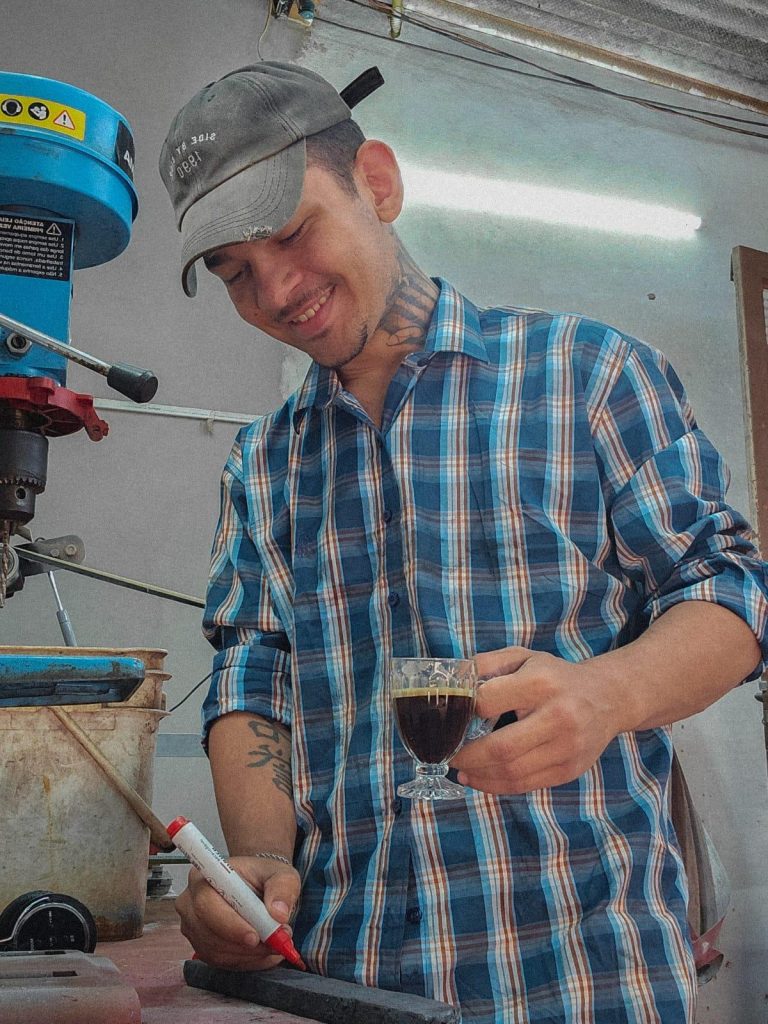
This week’s interview takes us to Brazil and the workshop of Fellipi Porto, a talented young smith who had desire and passion first and used those to fuel his growth as a maker. I am very excited to share the story of this extremely talented artisan.
What first sparked your interest in knives?
My interest began long before knifemaking became part of my life. As a child, I would try to sharpen every knife in the house using ordinary stones, usually ruining them in the process. My mother could never figure out what was happening—until one day she caught me in the act. (laughs)
As I got older, that curiosity grew through role-playing games, especially Skyrim, with its blacksmiths, weapons, and world built around forging. That eventually led me to research knifemaking, particularly Japanese kitchen knives. I was fascinated by the way they cut and wanted to understand how they were made so that, one day, I could produce something with that same level of performance.
What inspired you to pursue knifemaking, and how did you learn the craft?
I have always had a natural desire to create things. Even as a child, I participated in science fairs at school and was constantly experimenting, building, and trying to understand how things worked.
My education in knifemaking was largely self-directed. I learned through trial and error and, perhaps most importantly, by being willing to accept criticism. I never completed a formal knifemaking course or earned any certifications. My education came from practice, mistakes, observation, and the guidance of people with more experience than I had.
When did you begin making knives?
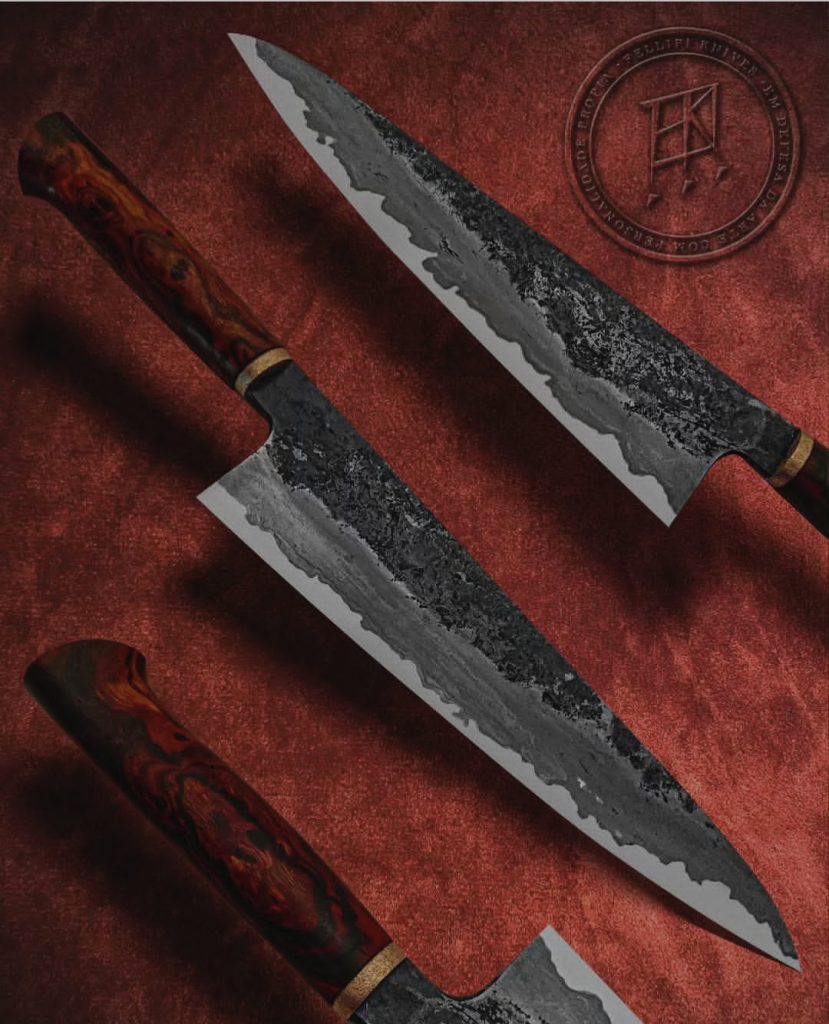
I do not remember the exact date when I made my first knife, but I consider 2016, when I was 16 years old, to be the year I officially entered the market. That was when I made my first sale to a customer outside my hometown.
I believe I made my very first knife when I was around 13 or 14.
What materials did you use for your first knife?
I remember making the blade from 1075 carbon steel and using Brazilian walnut, known as imbuia, for the handle.
Do you have a favorite knife that you have made? Tell us about it.
Almost everything in my life seems to carry some kind of symbolic meaning, so it is difficult for me to choose one particular knife as my favorite.
There are certain pieces, however, that make me stop and simply admire them after they are finished. Sometimes I look at the completed knife and genuinely wonder how I managed to create it. It is a difficult feeling to describe—a combination of pride, surprise, and gratitude.
What is the most important quality of a well-made knife?
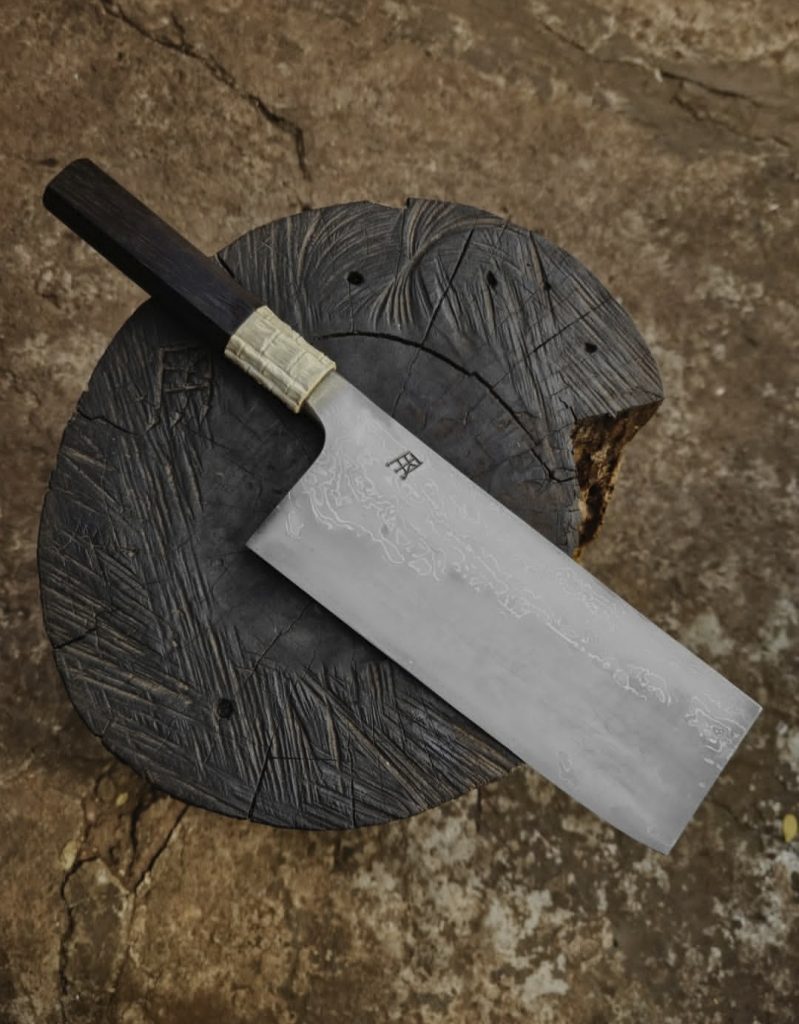
Within my area of work and my own philosophy, performance is unquestionably the most important quality.
I used to joke with friends that I would rather own an unattractive knife that cuts exceptionally well than a beautiful knife that does not perform. Aesthetics matter, of course, but they should never come at the expense of function.
What motivates you to keep going?
That is a powerful question.
Whether we are talking about life or my profession, what keeps me motivated is the privilege of being able to continue evolving—both as a knifemaker and as a person.
What has been your greatest challenge?
One of my greatest challenges is meeting deadlines. I received late diagnoses of ADHD and OCD, and when circumstances fall outside my control or a plan is disrupted, I can experience episodes that directly affect my concentration and productivity.
There is also the physical challenge of working in a very simple shop with a low roof, especially during the summer, when temperatures in my region can reach around 42°C, or 108°F, while I am standing beside a forge.
Aside from those challenges, I believe that with patience and persistence, I can usually find a solution.
What types of knives do you make?
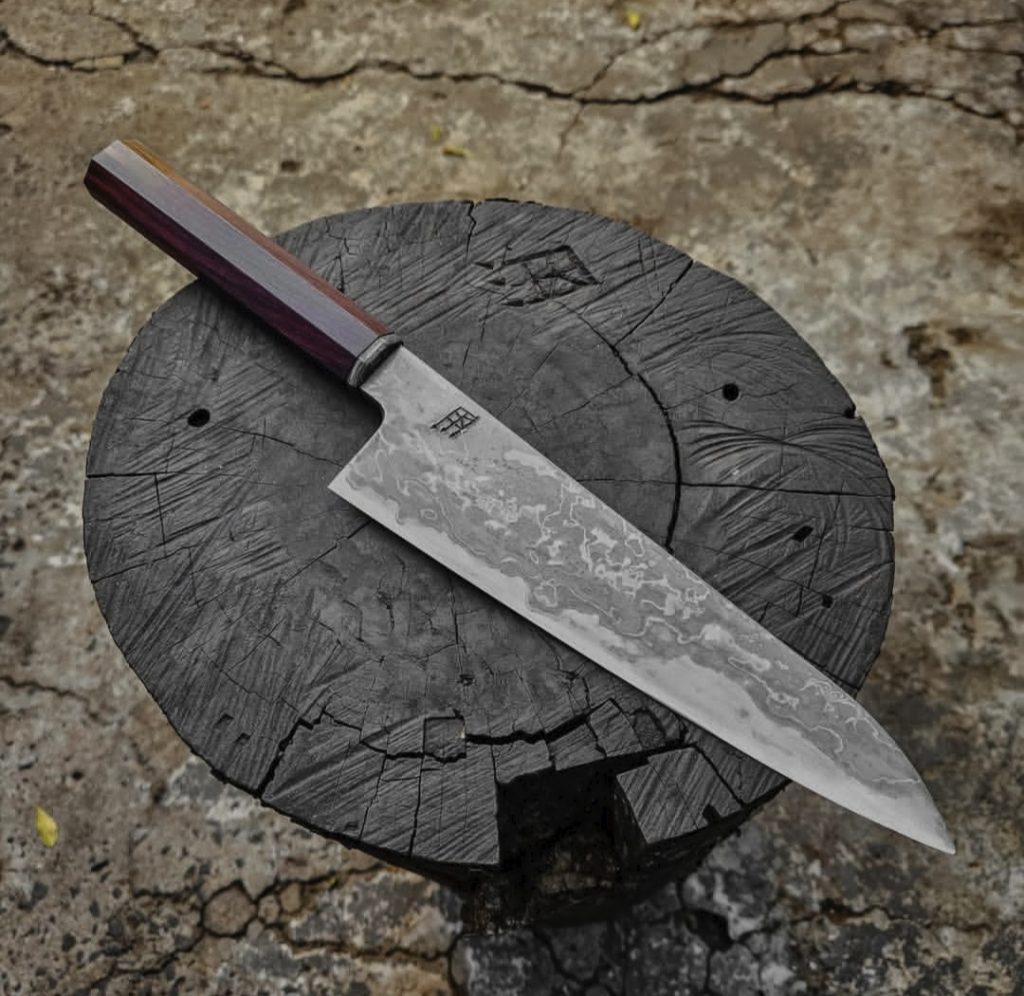
Today, I focus exclusively on kitchen knives.
I have made a few hunting knives and once attempted a Bowie knife, but I found that kitchen cutlery is where my interests and abilities are most naturally aligned. That is the area in which I chose to specialize.
How has your background shaped your approach to knifemaking?
My background has taught me to approach the craft with uncertainty in a positive sense—the understanding that I can always improve.
I rarely feel completely satisfied with what I know or what I have achieved. I place a great deal of pressure on myself, and although that can be difficult at times, it has also pushed me to refine my work continuously.
Who helped you when you were starting out?
I would say that I experienced two major beginnings in my career.
The first involved Bruno Itoyama. He saw some of my earliest knives and, in a humorous but honest way, began pointing out my mistakes. More importantly, he always explained where I needed to improve and why. He had taken formal courses and was already a highly skilled knifemaker, so he taught me many of the fundamental principles of the craft.
Later, I learned a great deal from the videos produced by Berardo Facas Customs. His work played an important role in helping knifemaking grow and reach a broader audience in Brazil.
After that, the renowned knifemaker Lucas Gregianin taught me about forge welding. With his guidance, I was able to produce my first San Mai blade.
My second major beginning came when Eric of Rei Hamono gave me an extraordinary opportunity to study Kasumi finishes and traditional stone polishing. His standards and attention to detail raised the quality of my work considerably. He has an almost surgical eye for imperfections and subtleties that I was not yet able to recognize. He became an extremely important person in my development.
Who are your greatest influences and inspirations?
My influences are not limited to knifemaking. I draw inspiration from artists and creators in many different fields.
When it comes to aesthetics and craftsmanship, some of the knifemakers I admire most include Rodrigo Sfreddo, Hazenberg, Julian Antunes, Lucas Gregianin, Andrey Navarre, and Moisés Barbosa of Moisés Knives.
Some inspire me because they push the craft to its highest artistic level. Others inspire me through their ability to execute simple ideas with extraordinary precision.
In Japanese knifemaking, I greatly admire makers such as Jiro, Munetoshi, Nakaya Heiji, Shigefusa, Kato, Takeda, and Moritaka. I have had the opportunity to handle knives made by some of them, and those experiences had a significant impact on my understanding of quality.
In terms of leadership and business management, I also admire the way Eric of Rei Hamono conducts himself and his ability to teach, guide, and develop others.
How do those influences appear in your own work?
I believe they appear in subtle, almost subconscious ways.
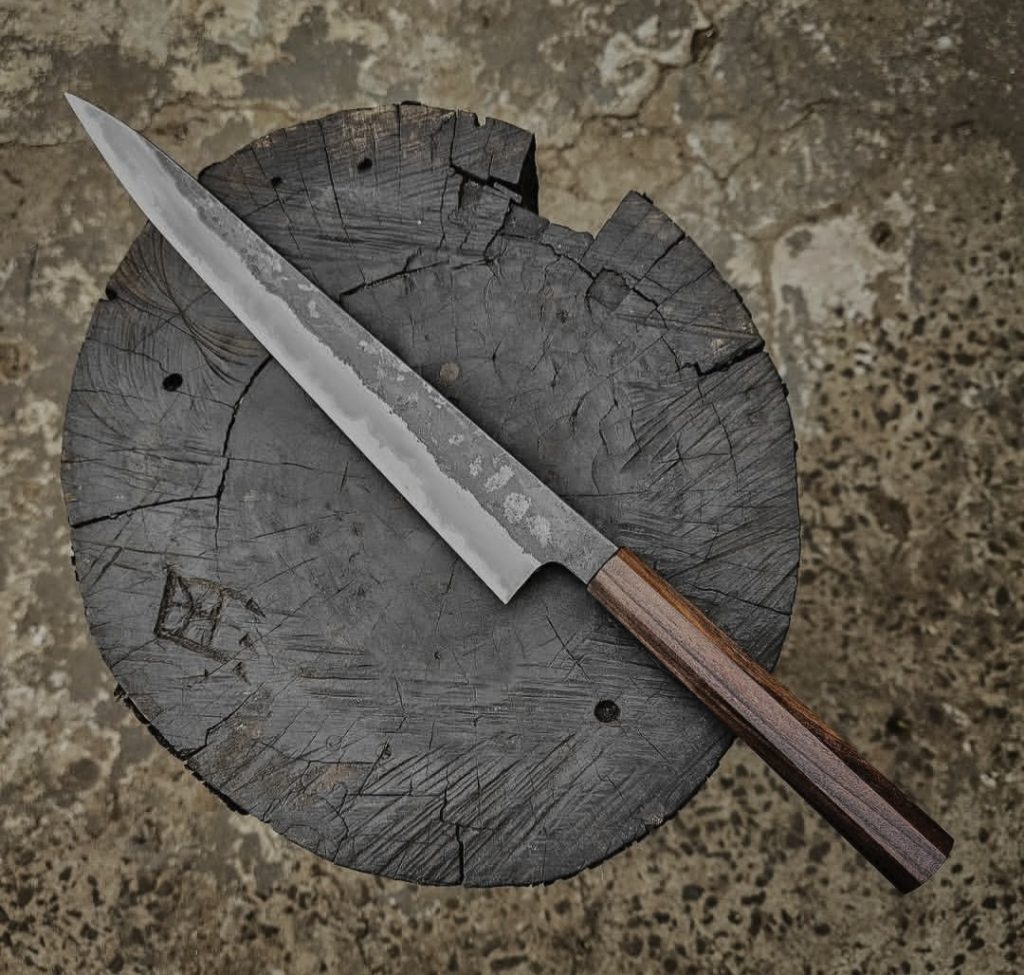
They may be present in the curve of a blade, the distal taper, the handle geometry, the fit and finish, or the balance between artistic expression and function.
My influences and experiences also shape the way I conduct myself professionally, even when I am not consciously trying to imitate anyone.
Was there a particular discovery or breakthrough in your knifemaking journey?
Yes. One of the most meaningful discoveries was developing the clay mixture I use to create a hamon.
I spent a great deal of time studying, testing, and adjusting the mixture before I was able to achieve reliable results. Even today, I do not follow one perfectly fixed formula, but the process taught me a tremendous amount about experimentation and observation.
Another important development came from the knifemaker Hazenberg, who introduced me to a technique for bringing out the hamon with powdered abrasives. Building on that idea, I developed my own mixture and process, which created a finish reminiscent of traditional Japanese stone polishing.
The results were beautiful, and I expect to return to producing Honyaki knives using that approach in the near future.
What is the perfect knife?
To me, the perfect knife is one that achieves a harmonious balance between visual beauty and functional performance.
How do you approach a new concept and introduce it into your work?
I begin by evaluating my sales and understanding how my customers may respond to the idea.
Rather than introducing a completely new concept all at once, I prefer to incorporate it gradually. I make small changes, observe the response, and refine the design until the idea becomes naturally established within my work and accepted by the market.
How do you test your knives?
I perform practical cutting tests after working the bevel on a Shapton #220 stone.
I test the blade on foods that tend to bind or create resistance, such as carrots, ginger, and apples. If a knife passes through those ingredients cleanly, I can usually be confident that it will perform well on most other foods.
In the past, I also intentionally broke the tips of test blades to examine the grain structure after heat treatment. I no longer do that regularly because I have developed a high degree of confidence and consistency in my heat-treatment process for 52100 steel.
I perform the heat treatment with a forge and a simple oven. On one occasion, a customer took one of my knives to a university and had it tested with a Rockwell hardness tester. A water-quenched 1095 blade measured 64 HRC. Today, I generally keep my 52100 blades at approximately 63 HRC.
How do you develop a design, choose a steel, and refine the heat-treatment process?
When developing a new design, I rarely look exclusively within the world of knifemaking for inspiration.
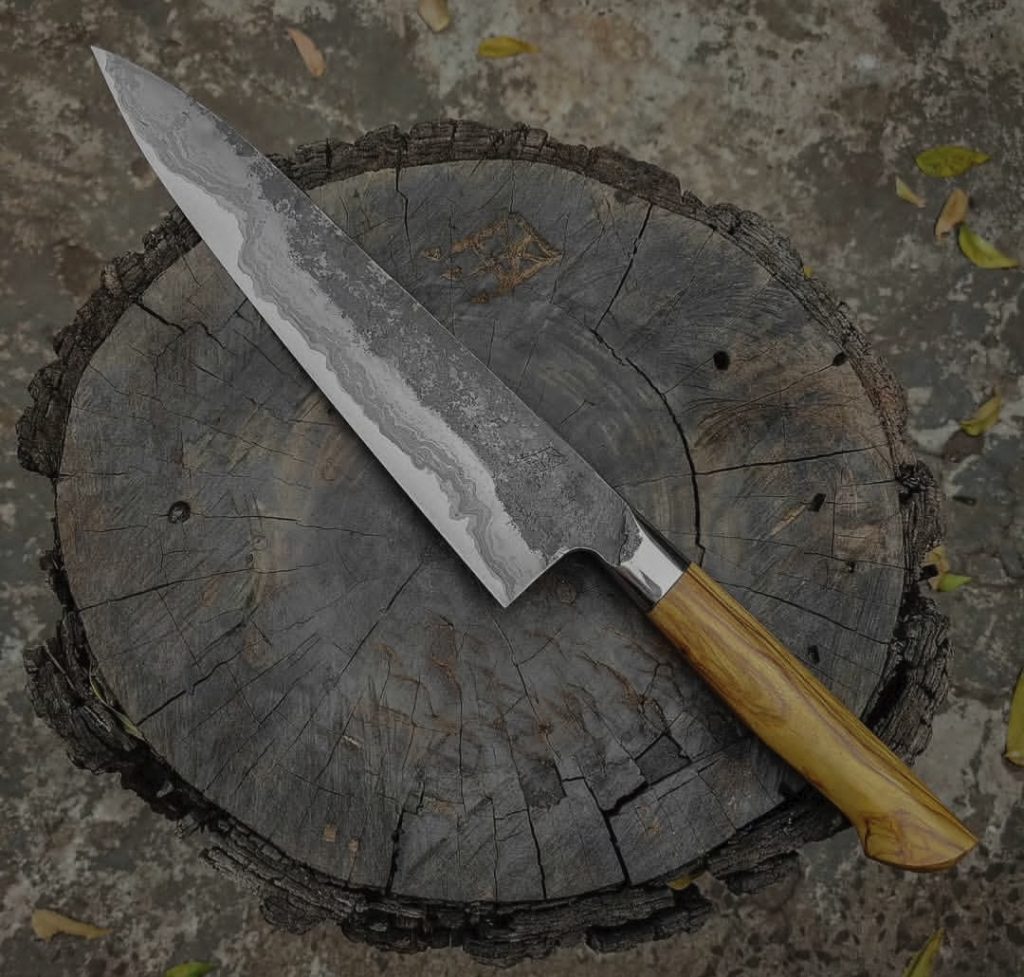
I study nature, trees, animals, mechanical components, architecture, classic automobiles, and sports cars. I often find useful lines, proportions, and transitions in objects that appear to have no direct connection to knives.
Photography is also one of my hobbies, and I believe it has had a strong influence on the way I observe composition, balance, light, shape, and proportion.
As for heat treatment, I perform the process freehand, using the forge at relatively low temperatures and relying on the experience I have developed over the years to read the steel visually and understand its behavior.
What types of steel do you like to work with?
I have always been drawn to relatively simple, “clean” carbon steels such as 1095 and Shirogami. Their compositions are largely based on iron and carbon, generally with approximately 0.95% to 1% carbon, and they gave me excellent results when I was willing to study them closely and remain persistent.
To be completely honest, I once had a certain prejudice against alloy steels such as 52100 and O1. I assumed that the additional alloying elements might interfere with cutting performance. That belief was based more on intuition than technical understanding.
Once I began working with 52100 and learned how it behaves, my perspective changed completely. Today, I understand how to extract excellent performance from it, and it has become the primary steel I use.
How has the knife world changed since you started?
I may be mistaken, especially because I have always been fairly reserved and somewhat removed from large knifemaking groups.
Still, I have the impression that after the pandemic, more people began to view knifemaking primarily as a commercial opportunity. Before that, the craft seemed to me to be more closely connected to artistic expression and personal identity.
I do not say that as a criticism of today’s knifemakers. The growth of the field has created many positive opportunities. It has increased sales, strengthened the market for tools and materials, and helped provide income for many families.
There is room for everyone, and there is a customer for every kind of knife.
So, to the new generation of knifemakers, my message is simple: Welcome.
What are your next projects? Is there anything new and exciting you can share with us?
I usually avoid revealing projects too early because I do not want to create expectations around something that may change or fail during development.
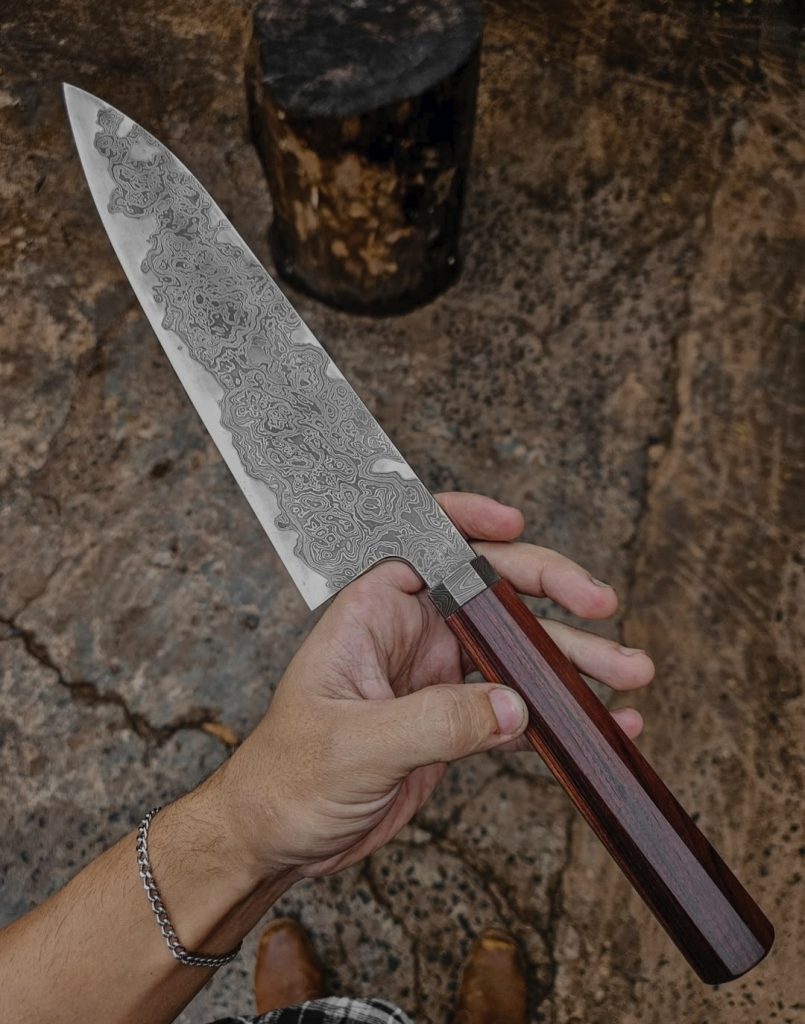
However, I can say that I am working very hard on projects involving Warikomi, River Jump patterns, and Honyaki construction. For now, that is all I am willing to reveal. (laughs)
There is one final point I would like to share.
Nearly every knife I make is still produced with equipment I purchased gradually at the beginning of my career. The machines are old, but I have learned how to get the very best from them. My forging press, for example, is often underestimated, but it has never let me down.
I do plan to improve and modernize my equipment over time, but I have great respect for the tools that helped bring me this far.
My first machine was a disc grinder. To buy it, I sold an old bicycle for R$100. I was still R$20 short, but somehow I managed to find the rest.
That small purchase marked the true beginning of everything I have described here.
To keep up to date with what Fellipi is up to follow him on Instagram at https://www.instagram.com/fellipiknives/
Leave a Reply