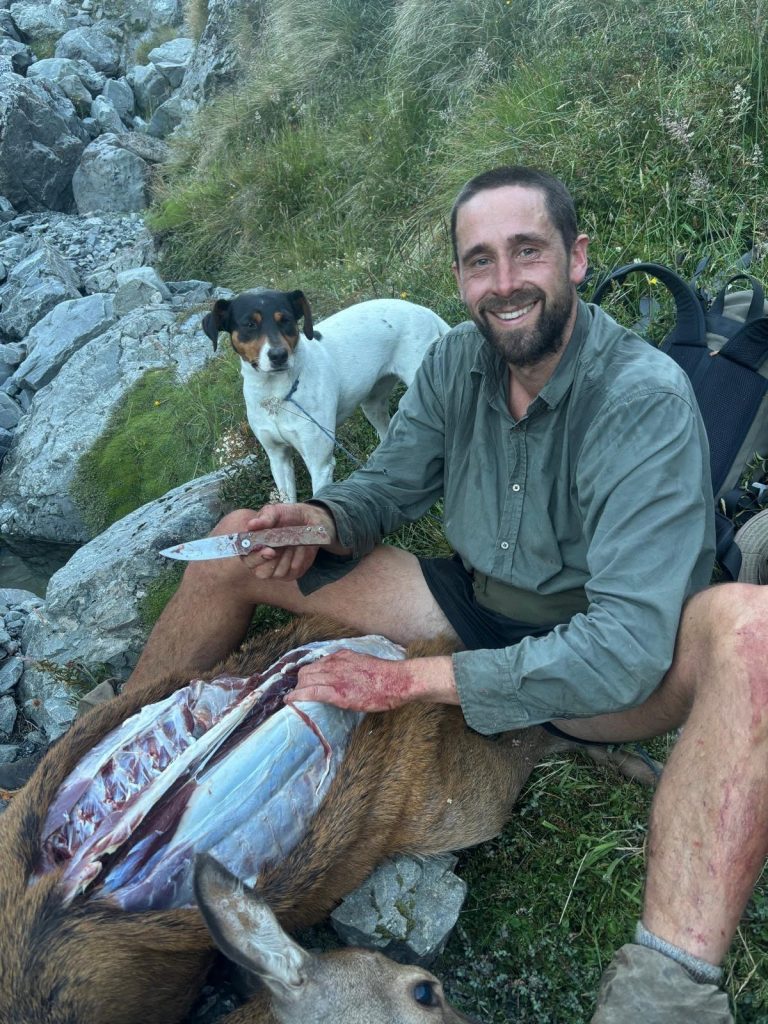
This week’s interview is a showcase of art and function. It was that intersection that really excited me about handmade kitchen knives, and Sam Harrison is about as perfect an illustration as you can find. I really enjoyed getting to know better how his mind approaches this medium. I am very happy to be able to share his story.
To start off, please tell us a little about yourself.
I’ve been a full-time artist my whole adult life but have taken up knife making in the last seven years. Before knives, I was making long bows as a hobby but quickly realised there wasn’t much of a market for them in New Zealand. I spend as much time as I can out in the hills hunting and fishing. I recently got married and my wife and I try to do as much surf as possible. We’ve got a dog Tui who is joint to me at the hip.
What sparked your interest in knives?
Being creative, I’ve always loved making things. Doing lots of hunting, fishing and cooking, I’ve always been fascinated with knives. I was that kid at the market standing stuck to the knife table. I met Jonathan, from JM Knives, he was just getting into making knives, but he spent ten years sharpening people’s knives at a market. I made the first one under his supervision and that the start of it all. It quickly became a complete obsession, and it still hasn’t worn off 8 years later.
What inspired you to do this and how did you learn?
Being an artist, I’ve always had to create something from nothing. I have found making knives a lot less stressful than making artwork. I call it my art therapy.
What did you make your first knife with?
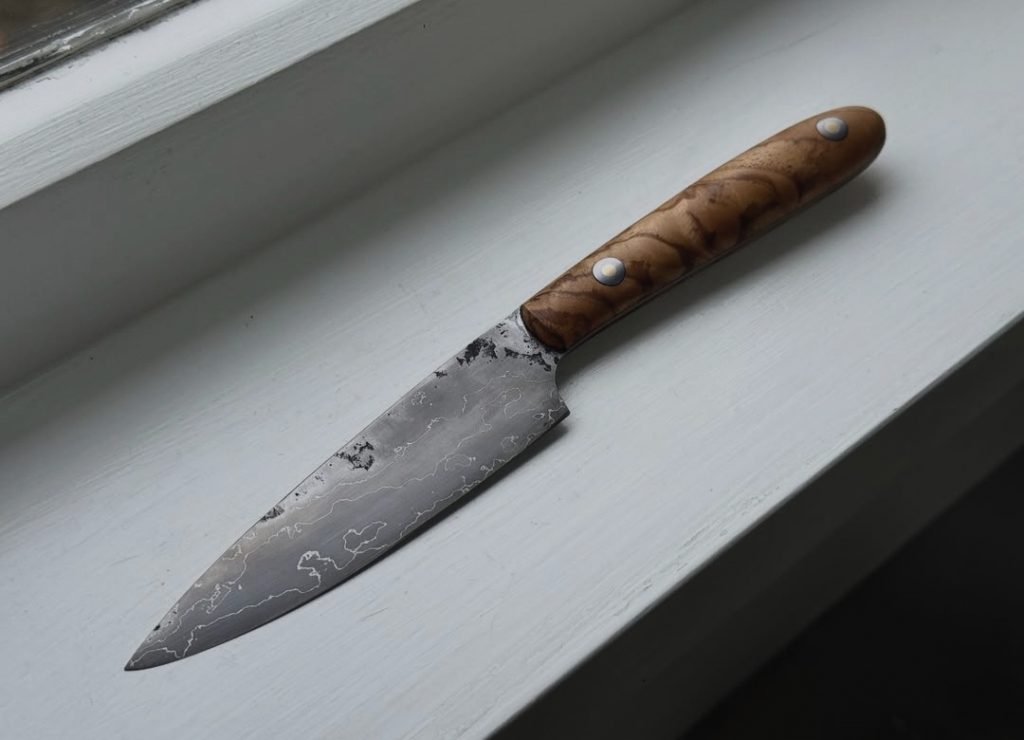
The knife I made was a hunting knife. I call them steel sandwiches now. It was just a basic stock removal with wood sandwiched on either side. I look back at the earlier knives and realise I had no idea what I was doing. I was just copying what I saw around me, and what I liked.
What is the most important aspect of a well-made knife?
Form and function. For me a knife has to feel good and look good, and also do the job it’s made for well. Coming from an art background I’ve always liked to find new ways of doing things, and create. This has lead to coming up with my own innovations.
Do you have a favorite knife you made, tell me about it?
Every meal I have, is the best meal I’ve ever had (apart from the crap ones). In the same way, every new knife I make, is the best knife I’ve ever made. As every knife seems to feed the knives to come, and the innovations and skill development is always reflected in the final product. Maybe for me the most exciting knives are the lightweight folders. I feel like I’ve come up with my own design and they are ultimately useful and practical to have on you at all times, and make light work of a deer.
What keeps you going?
The constant desire to create and the fact that I’m completely obsessed. I love refining ideas and developing new skills and trying new things. To date I haven’t had a single pattern or knife repeated, each knife is a complete one off, six or seven hundred deep now. I guess it helps to pay the mortgage too.
What’s your biggest struggle?
Biggest struggle is having enough time in the day to make all the knives that I want. Unlike the artwork, knife making seems to be a constant flow state. I can easily suck up hours each day without having to think.
What kind of knives do you make?
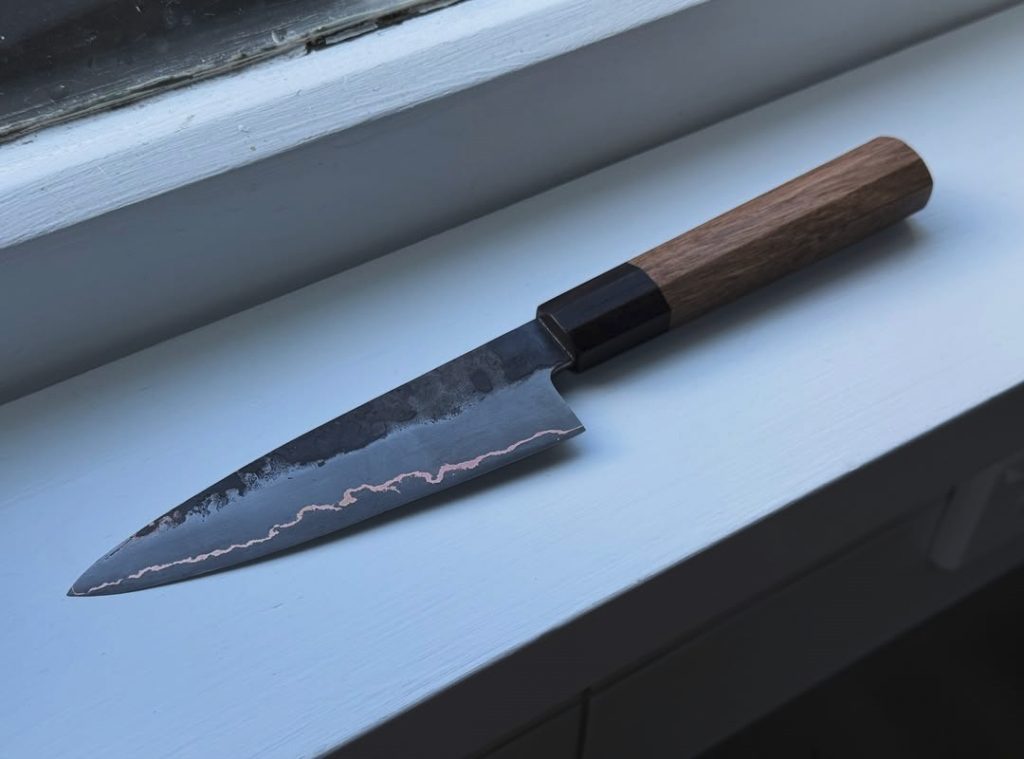
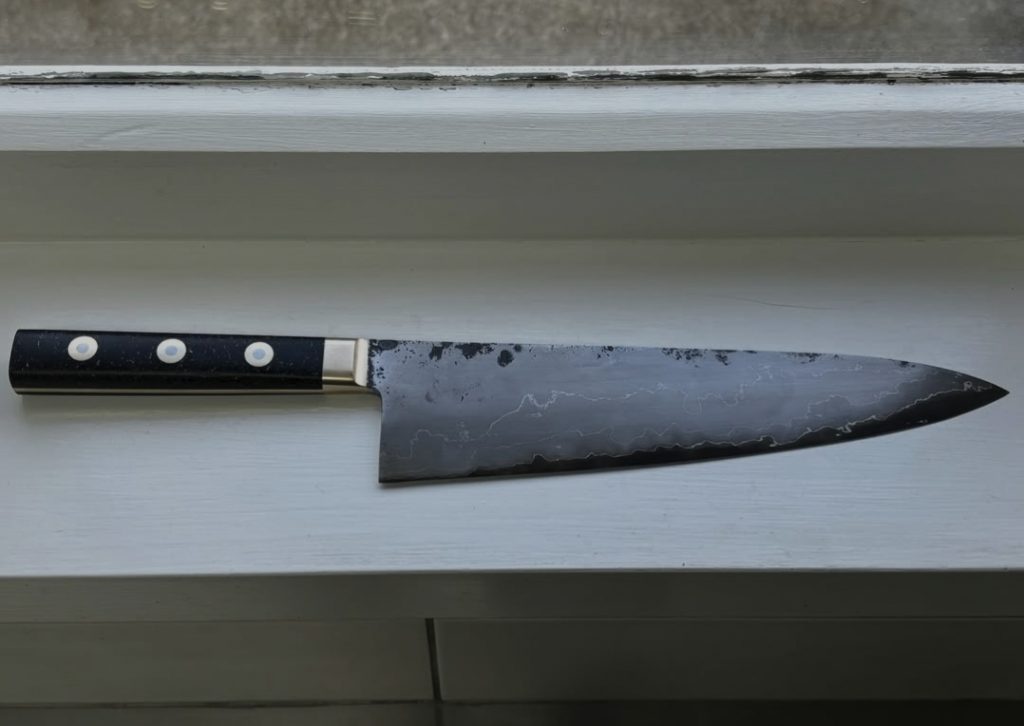
I started out making simple hunting knives, which quickly escalated into any and every knife under the sun (apart from fantasy knives). I like to keep knife making interesting, so I am always working across the board, making kitchen, hunting and folding knives.
Who helped you early on?
Early on: Jonathan (JM Knives) was the biggest help getting into knife making. His wealth of knowledge and ability to retain information is like no other. I always thought he was the intellectual side of knife making for me, and I was just practical and loved making stuff. But working together and sharing a workshop, I have learned everything I need. One of the best things that really taught me how to forge knives, was learning in a coal forge with no power tools, just a hammer and anvil. This meant that when the workshop expanded and we got more tools i.e. gas forge and a roller mill, we already had a good grasp of how to forge out a knife.
Who are your influences/inspirations?
One of my favourite knife makers is Masataka Fukda. I feel like the Japanese fetishise knives, in the best possible way. They often do things which are outside the box, making ugly attractive.
How do you think that inspiration translates into your work?
I feel like Masataka Fukda is constantly trying new things. And somehow making the weird things very attractive. This is what I am always trying to do.
Any specific breakthroughs or revelations in your knife making journey?
One of the most exciting design innovations I came up with was the bolster design I make, which I haven’t seen before on a hunting knife. This has also translated really nicely into the kitchen knives and has kept evolving over time. I am now making the same bolsters off round bar, which creates a continual flowing line where the handle meets the bolster.
What is the perfect knife?
The perfect knife is the knife that looks good in the hand and does the job it’s designed for with ease.
How do you approach a new concept and that concept’s implementation?
Having access to such an awesome workshop has meant the boundaries are limitless when approaching new concepts and ideas. I love machining and playing on the mill and lathe. I always find new materials open up new ideas and new designs, be it, a funky bit of timber or antler.
How do you approach knife testing?
I’ve always been a bit of a snob and liked nice things. So, when it comes to knives it’s hard to settle for anything less. I also absolutely love using a good knife in the kitchen or in the field dressing an animal or filleting a fish.
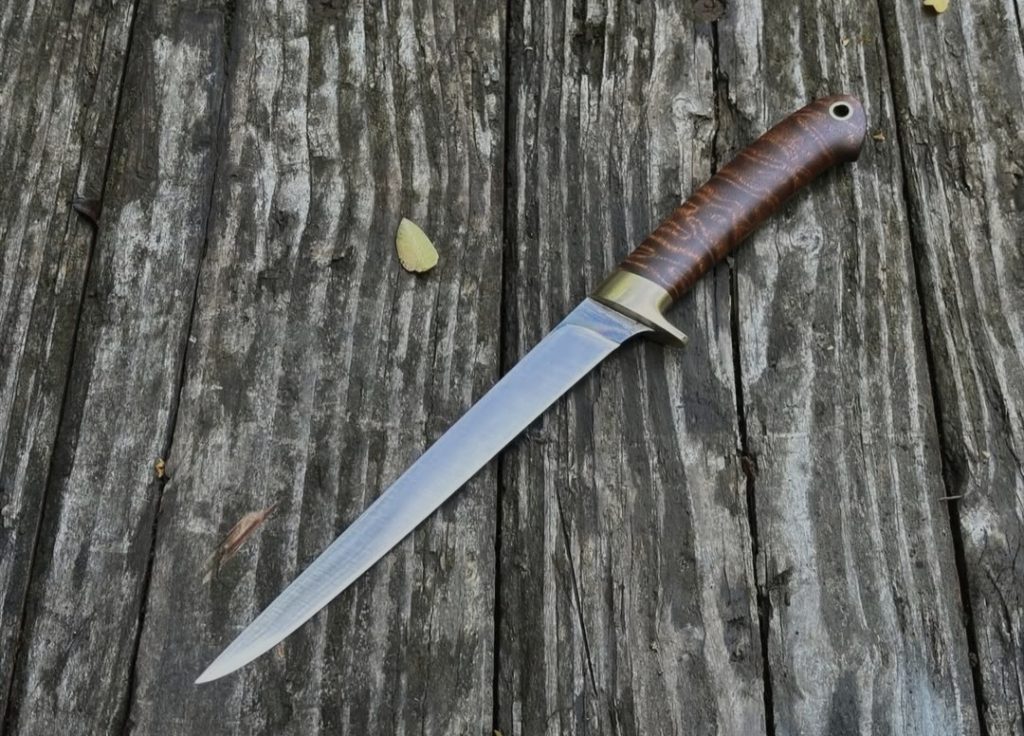
How do you develop a design, select a steel, and fine-tune a heat treatment?
A lot of my metallurgy has been learned from Jonathan. Again, his knowledge and understanding of metal is far beyond anything I’ve ever seen. I’ve spent hours picking his brain, asking why steels are the way they are, and which ones perform best. I practically develop my designs by learning from previous knives. Though I started of copying a lot of stuff I liked, I now take most of my inspiration from previous knives I’ve made myself. As a result, I feel like I’ve developed my own style. Initially my steel knowledge was quite limited and I got most of my heat treatment done by SSM. As Jonathan and I have expanded our practice, we quickly realised we needed and could do everything ourselves. Jonathan also built a roller mill which has been an invaluable tool in the workshop, this has allowed us to laminate and make our own steels. Now we are predominantly using steel we have made and heating everything ourselves.
What are your favorite steels to work with?
Steel is awesome, and the more I learn, the more excited I get about it. I predominantly use 1084 and 15N20 steel, as it’s very durable, robust and easy to heat treat. I’ve also played with 01 tool steel which is great for the folding knives and a lot of the earlier stock removal knives were made from this. However, it’s not nice to forge, that where 1084 and 15N20 are great. Recently we have been looking into and trying new steels. Now most of the blades I make are forge welded mild steel with 1084 or 15N20 core, and nickel to create a defining line between the two steels.
How has the knife world changed since you started?
The knife world has gotten bigger and bigger since I started. You start off in a little bubble thinking you know what a knife is, then you realise eight years down the track that you had no idea. The possibilities still seem endless.
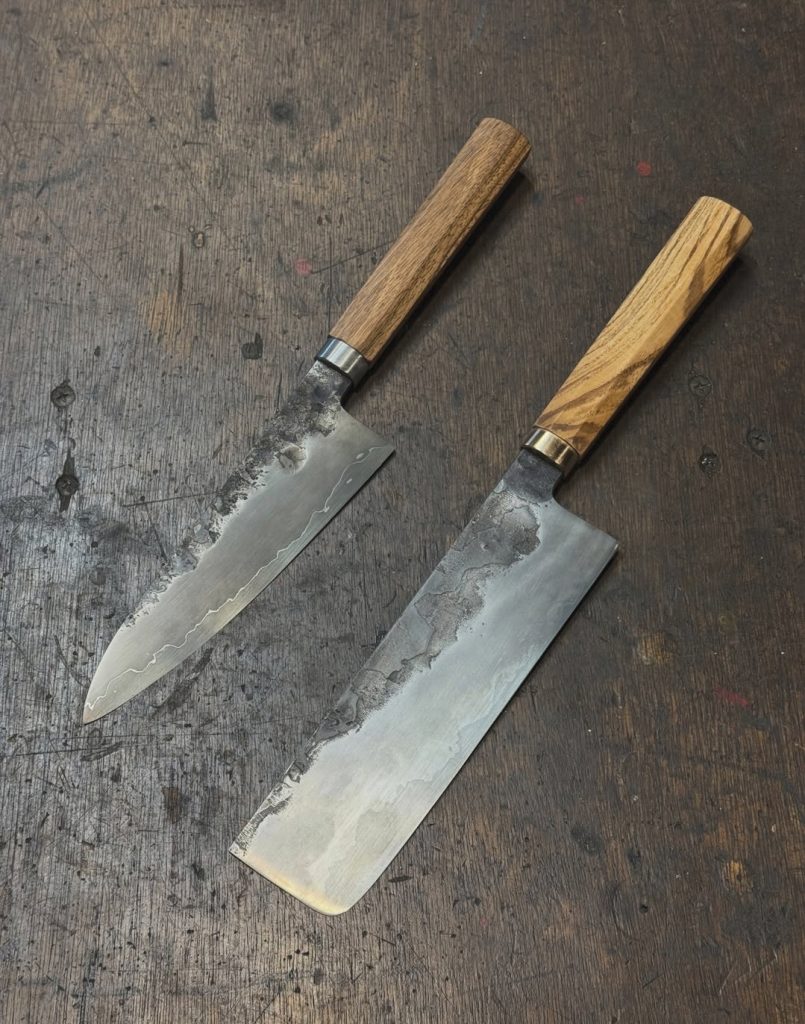
What’s up next for you? Any exciting new projects to tell us about?
Everything is still ridiculously exciting. I always have between 20-30 knives on the go and often have no idea what I’m going to be doing when I go into the workshop. Most days I get a whole pile out and when I get board of one job, I do something completely different.
To keep up with what Sam is working on follow him on Instagram https://www.instagram.com/samharrison.knives/ don’t miss his link to his art account while you’re there.
Leave a Reply