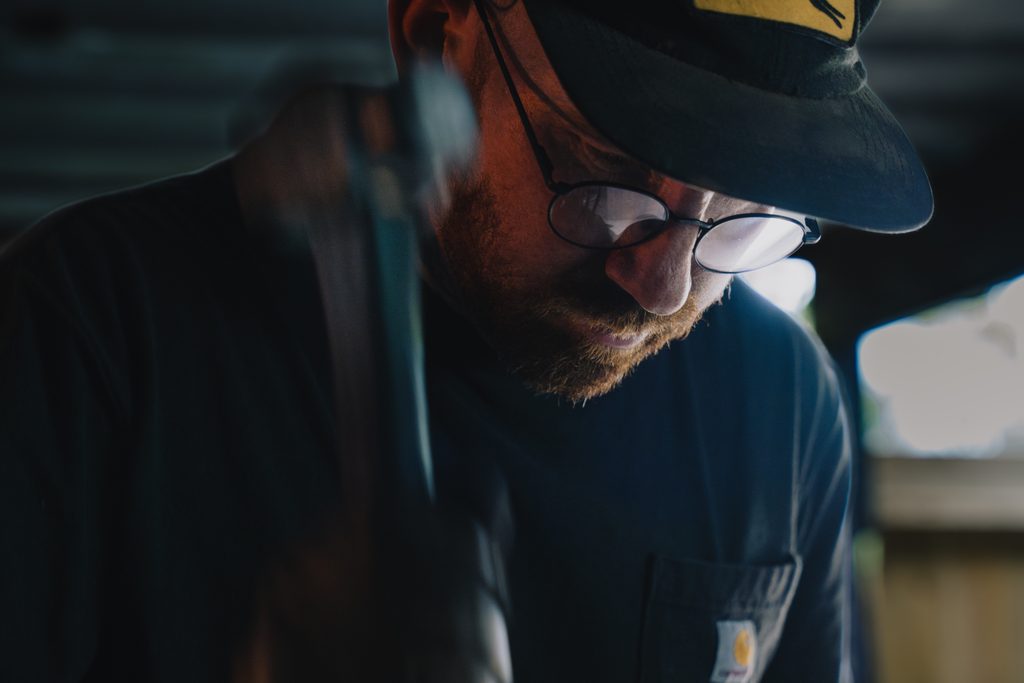
This week’s interview brings to my mind comments I have heard over the years about the fact that sometimes that what you plan to forge becomes something different. Life can be complicated, but hopefully you end up in the best place for you. I have greatly enjoyed getting to know this maker, and am very pleased to be able to share his story.
To start off, please tell us a little about yourself.
I’m Hayden Scott, and I make knives under the name Champion Knives. I was a chef for 25 years, cooking around the world and also involved in the making of TV shows, cookbooks and opening restaurants during that time. After covid lockdowns, I needed a life change, so turned my hobby into fulltime work in order to be closer to my family, and spend more time doing things that matter to me.
What sparked your interest in knives?
I have enjoyed using knives from a young age but never considered making them. Around 2017, I met John Hounslow-Robinson on a work trip to Tasmania. Watching him forging blades was like witnessing black magic, and it totally started an obsession that I had to pursue. I had used knives all my working life, but I never considered how they were made.
What did you make your first knife with?
The first thing I attempted to make was an oyster knife, from some scraps under my house. I learnt pretty quickly when the tip bent that there was more to metal than I understood. I started rehandling vintage knives and blades for a few years, when I had time. A large focus for me was to build a personal connection to the knife, through the selection and working of those materials. This is an ethos that is at the centre of what I do. Connecting with people through food and making things has always brought me joy.
Do you have a favorite knife you made, tell me about it?
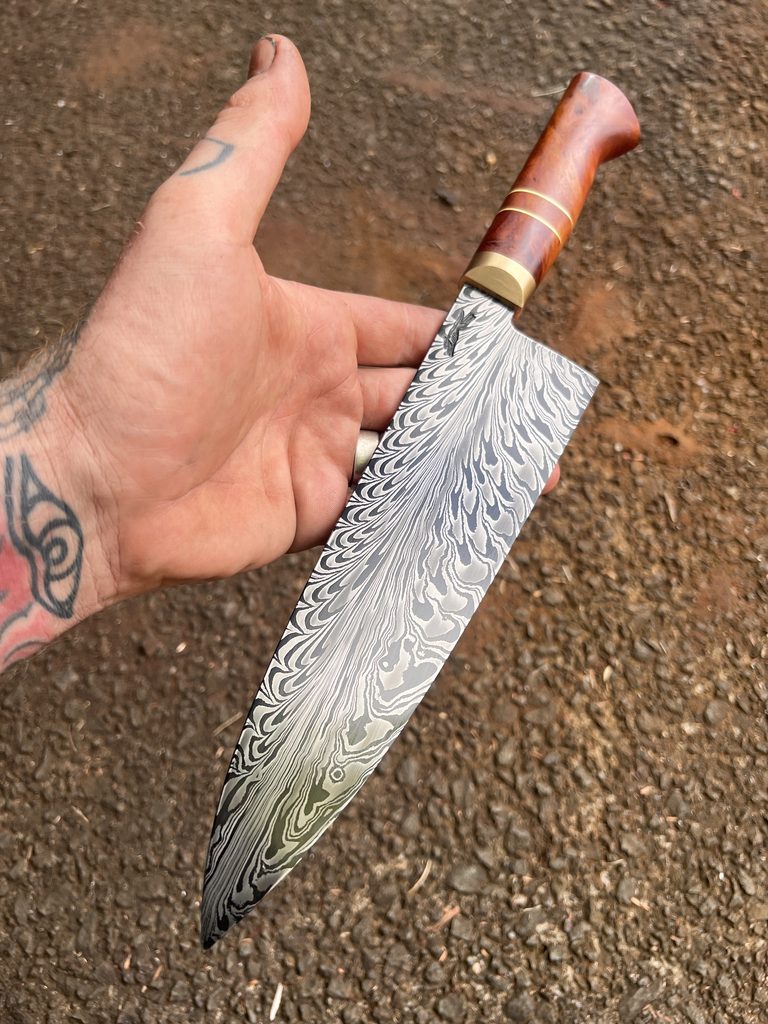
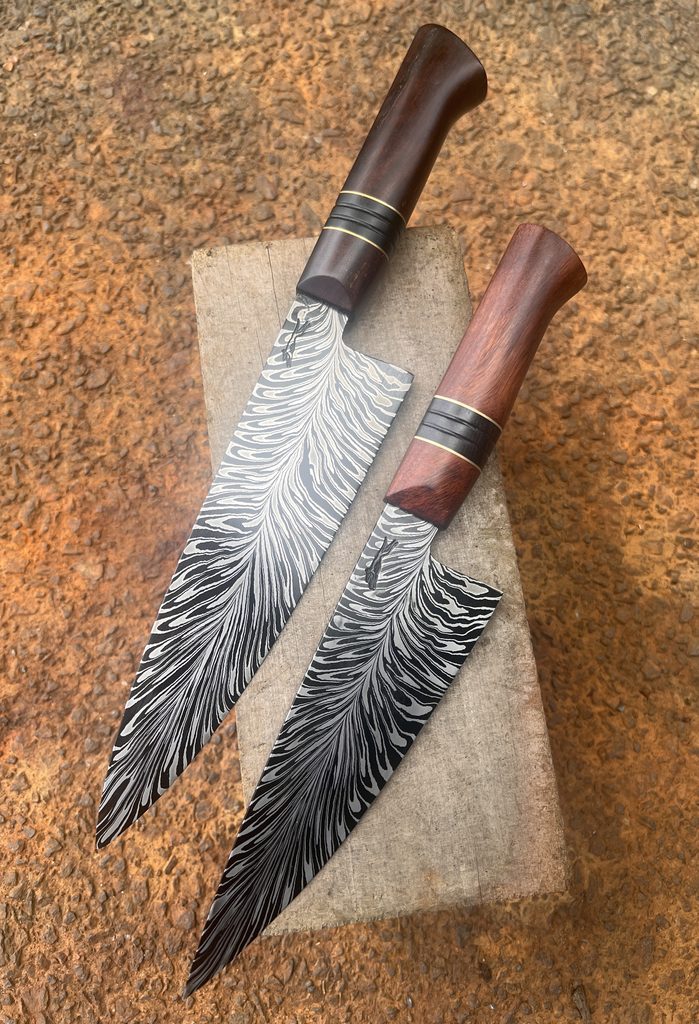
The ones that stick with me, are the ones that make me suffer. Pushing yourself to a new level, on the edge of success and failure, always stays with me for a long time. I made several feather damascus kitchen knives in the past year, and they are always a stretch of my skill, knowledge and endurance. I feel a massive pressure to succeed, so when things work out, it’s such a great feeling. Testing yourself is hard, but never seeing what you are capable of is excruciating for me.
What is the most important aspect of a well-made knife?
I think it’s a balance of several elements. Performance, design and soul. I want my knives to be beautiful in their own way, but also used daily, so people can get the true value from them. I believe that every time you use a handmade knife, you get to connect to the maker, possibly the materials or the person that gifted it to you. They allow us to connect constantly, which is important to me.
What keeps you going?
I have a mind swimming with ideas, and never enough time to make them all happen. I love to challenge myself, and every knife is an opportunity to learn and grow your skills. As a person, I have learnt more about myself in the last 2 years as a full-time knife maker than the past 20. The constant feedback loop of what you think you can do, and then how it turns out really helps you know yourself. I’m always excited for the potential of the future.
Biggest struggle?
Balance. I love to make knives, and now that I do that full time from home, I have to remind myself that time away from making things is super valuable. Go and visit other friends and makers, get out of my workshop and my own head for a day, and keep making decisions about my time based on things that are important to me.
What kinds of knives do you make?
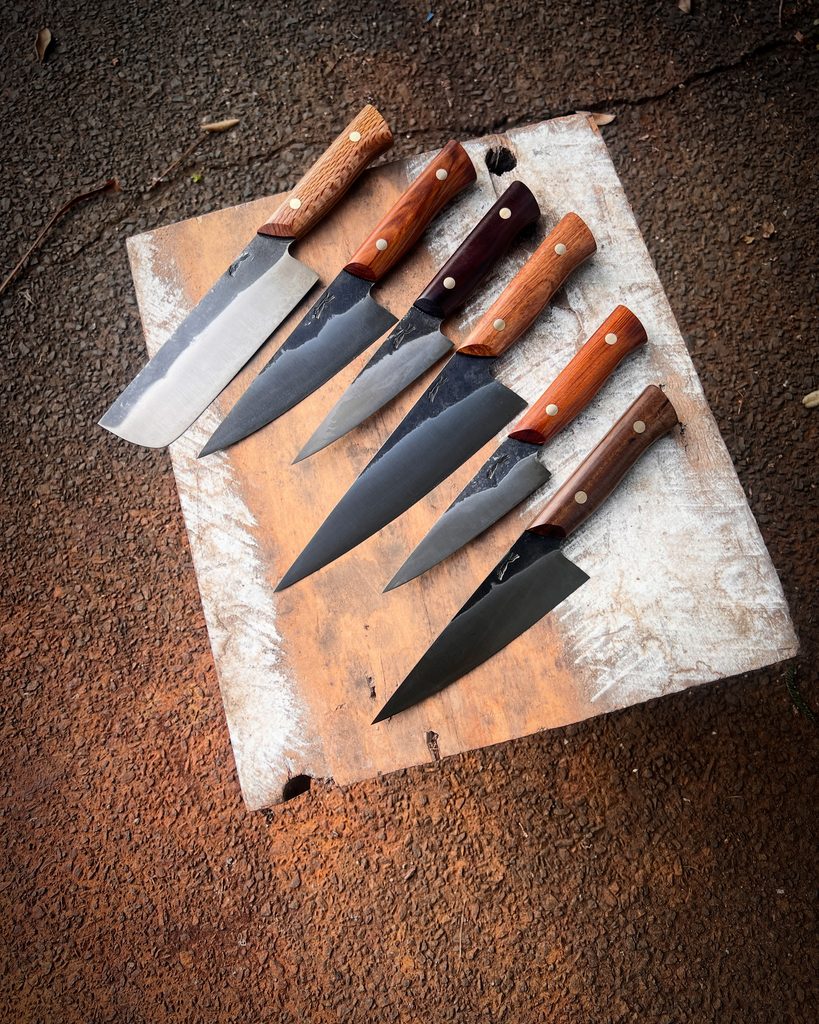
I mostly make kitchen knives, but have started to dabble with pocket knives. Things that can be used daily!
How did your background affect your approach to knives?
Having cooked for 25 years, I have so much experience standing at a cutting board and using knives. Having an understanding of use is super valuable when it comes to designing and making a knife. It’s fun to make specialty knives I have used, like yanagiba and deba, now that I have the understanding how to make them myself.
Who helped you early on?
Tons of YouTube, always asking questions from those who are doing that kind of work, being open to failure in order to learn more. You can learn something from everyone if that is your mindset. This year I have been making an effort to travel around and work with other makers. Make knives their way to evaluate my processes,and also enjoy some company. Chatting online is awesome, but nothing compares to sharing some laughs and doing some work together. I try to comment on people’s work that is inspiring and let people know when they have a positive impact on me.
Who are your influences/inspirations?
I could list so many knife makers whose work I find inspirational, that I don’t know where to start. The talent and the diversity is kinda overwhelming. I draw heaps of inspiration from many makers, artists, musicians. Anyone who is following their passion and doing it as much as they can, is super inspiring to me. Also, people who have created their own small businesses and are making them work, that is certainly an important part of being able to make knives a sustainable thing.
Any specific breakthroughs or revelations in your knife making journey?
A lot of people think success is selling lots of knives, but for me it’s selling fewer, high value and meaningful knives which makes this endlessly enjoyable. I chose to pursue knife making as a career to spend more time being creative and have time for the people that I love. It’s a balance of making a living and making things for the joy of creating.
How do you approach a new concept and that concept’s implementation?
I take an idea, and I get to work. I don’t draw knives out very often, as I make a lot of similar profiles. I like to work with the materials, and see if I am capable of turning them into the object I envisaged. It’s a sympathetic, more sculptural approach. That said, knife making is basically just hours of grinding and reduction, so best to start, see how things develop, and problem solve along the way when needed. I approach it like cooking.
How do you approach knife testing?
I cut lots of carrots, and I use the knives to make a dinner before finishing and making them available. I try to keep this part simple and use them as any cook would.
What do you like about patterned steel?
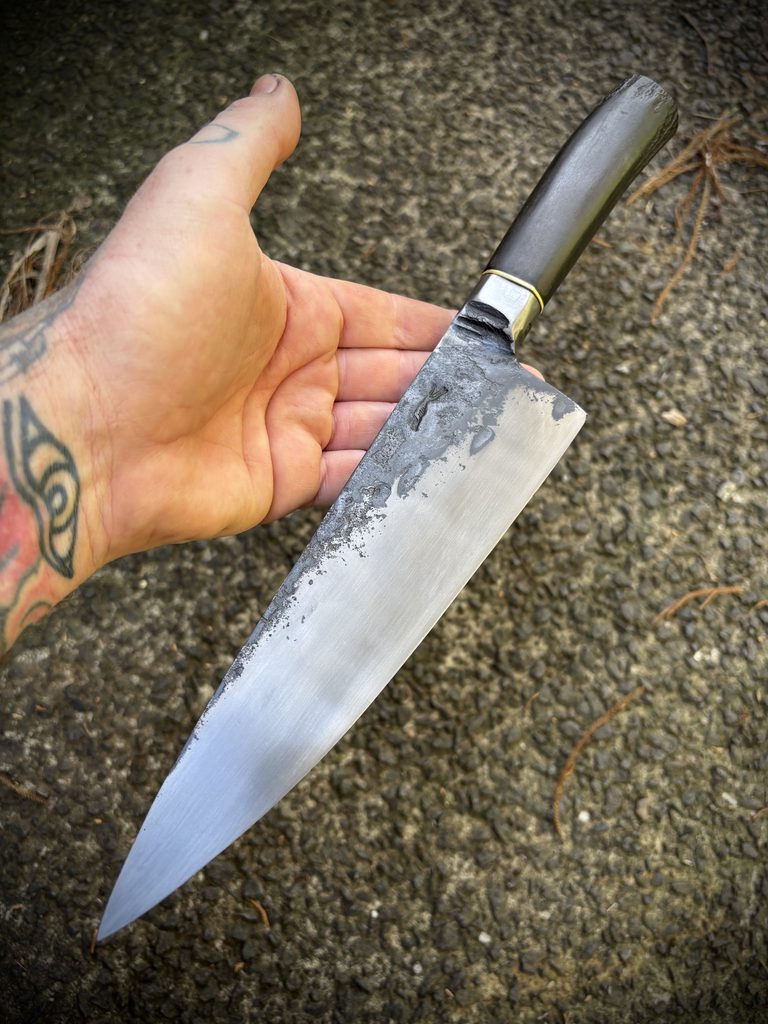
I love making patterned steel, the challenge, the physicality of that, and the reward of getting that all the way to a beautiful knife is endlessly enjoyable. Doing difficult things helps us grow, and that’s something I always move towards. I don’t do much with stainless, as I love the character of carbon steel, and the ease of working with it. My aesthetic is about showcasing the transformation of the materials, and celebrating the processes.
What’s up next for you? Any exciting new projects to tell us about?
This year is flying, with heaps to keep me busy in the workshop. I have started a special project with a friend which ties in to my history as a chef, so stoked to share that once it all comes together. I am planning to visit some more makers in NZ, and would eventually like to make some overseas trips to learn and collaborate with others. Life is short, so gotta make your dreams happen!
To keep up with what Hayden is working on head over to his website https://championknives.squarespace.com/knives and give him a follow on Instagram https://www.instagram.com/championxknives/
Leave a Reply