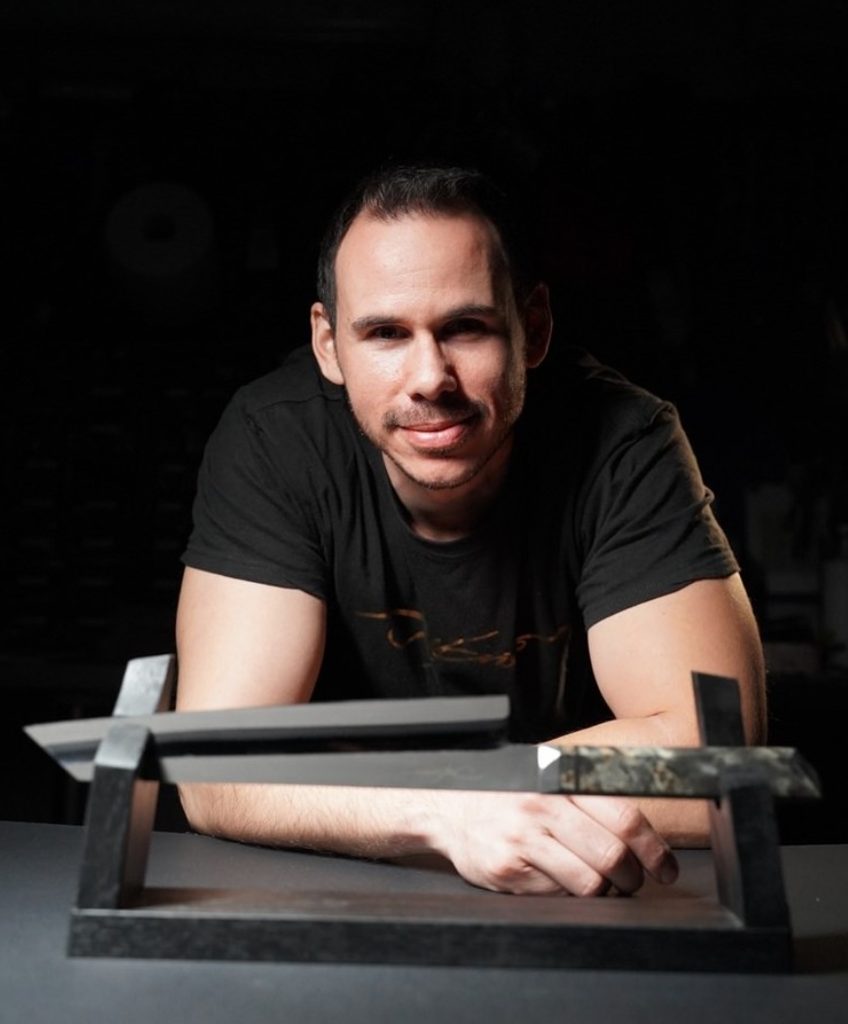
This week’s interview brings us to a maker that captivated me from the first moment I saw one of his creations. My chef’s will tell you that you taste a meal with your eyes first, and when you see this maker’s work you cannot help but get excited about the meal. And then I saw his cutting demonstrations, and I knew it was going to taste as good as it looks. And that is the highest compliment I can give. I am very excited to share his story.
To start off, please tell us a little about yourself.
My name is Drakopoulos Stylianos Christos, which, if you combine it creatively, you get Dikristo.
I’m from Kalamata, Greece, and I now live with my family in Athens, where my workshop is also located. I love making handmade things, anything that requires full attention and care.
Handmade knives, bread, beer, you name it, as long as you put your heart into it. I’m rapidly heading toward 44 years old.
What sparked your interest in knives and when did you start making them?
I’ve always been into knives, with a small collection from a young age, but I never thought I would make one myself. Later on, when I was living alone as a young adult, I developed a strong passion for cooking. That was the real spark that sent me down the rabbit hole.
I was constantly trying to find the best recipes, use the best techniques, and of course the best tools. And what is a cook’s right hand if not a knife? I was always disappointed with the knife
quality that was available within my reach, so I decided to make a knife that would meet my own quality standards.
Fun fact: the life-changing decision was made literally overnight. One night, while cooking, I said, “Tomorrow, I will make a knife.” The next morning, I went out and bought a steel scrap, a piece of wood, and a file, and that’s how it all started.
Fun fact number two: a couple of days after finishing my very first knife, I decided to leave my previous steady and profitable desk job, during Greece’s major recession, and fully commit to
knifemaking. It was an overnight decision, but I knew this was what I was meant to do. That must have been around 12–13 years ago, with the last 10 years being fully professional.
How did you learn?
It was a time when knowledge was scarce. YouTube didn’t have the tutorials it has today, knifemaking in Greece was, and still is, at a very early stage, and I preferred to test my limits and learn things on my own. So, I followed the old trial-and-error path. It was extremely frustrating, both psychologically and financially, for many years, but it ultimately gave me a very deep and different insight into the making process. I had to experiment with many approaches, techniques, and materials, and that experience now allows me to create different grinds, finishes, and to approach knives from many different angles.
Do you have a favorite knife you’ve made?
I like all kinds of knives: mirror polished, brut de forge, simple and complex, so I really can’t choose just one. I also never make the same knife twice. Each knife is unique and has its own personality and beauty. It’s like choosing a favorite child.
What is the most important aspect of a well-made knife?
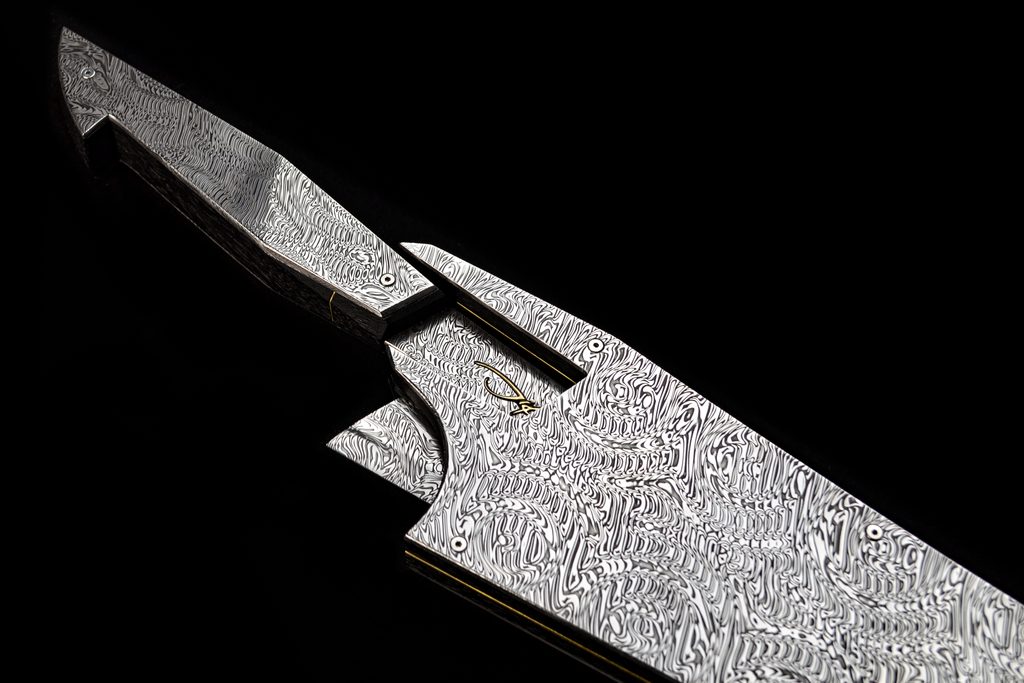
My purpose is to create functional art. Blade geometry, shape, steel selection, and proper heat treatment are absolutely essential. Fit, finish, and aesthetics are also very important, especially when you’re talking about high-end knives.
What keeps you going?
As long as I feel creative, have new ideas to implement, and get that rewarding feeling when looking at a completed knife, I’ll continue.
Biggest struggle?
I struggle a lot, honestly. Trying to stay creative while implementing new ideas without compromising functionality is one part. Continuing to improve myself after all these years is
another. Lately, social media has become a serious challenge for many knifemakers, and that’s definitely something to deal with as well.
What kinds of knives do you make?
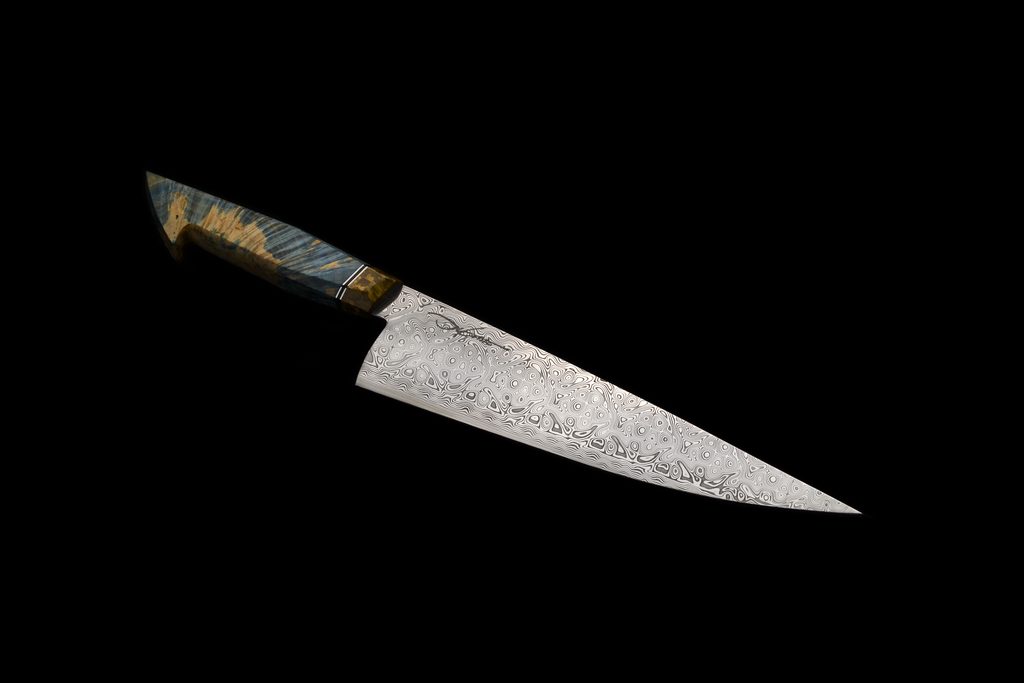
I specialize in high-end kitchen knives.
Who helped you early on?
My wife, who supported me from the very beginning, even when everyone else had doubts about leaving a well-paid job during the crisis to pursue knifemaking. After the first difficult years, my entire family was there to actively support me.
Who are your influences or inspirations?
I try to avoid direct influences, so I intentionally don’t look much at other knifemakers’ work in order not to be affected. That being said, inspiration can come from anywhere: a rock, a landscape, or even a sports car.
What is the perfect knife?
The perfect knife is the right shape, made with a specific steel, at a specific hardness, with a specific geometry, for a specific task, and a specific user. It can be a matte-finished blade with a micarta handle, but also a san-mai Damascus blade with exotic woods, titanium, and engraved details on the handle.
How do you approach a new concept and its implementation?
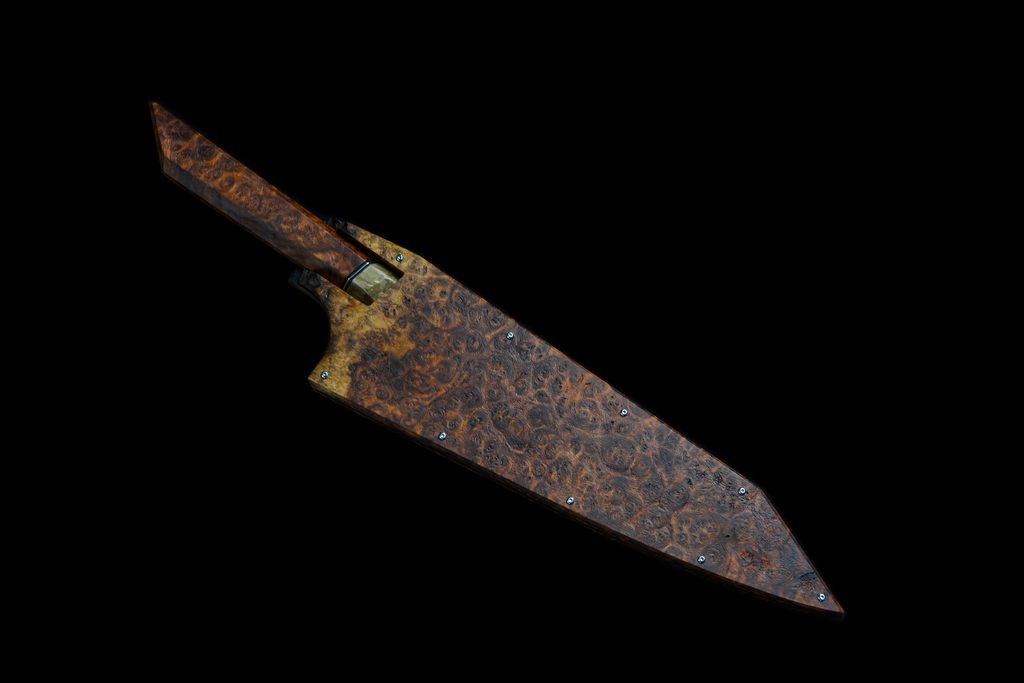
I rarely start with a fully formed idea that I immediately implement. When that happens, it usually results in very unique pieces that appear from time to time. Most often, everything starts with a general blade concept, and I evolve it step by step from there.
How do you approach knife testing?
In the field, I test with carrots, cherry tomatoes, and potatoes. For specialty knives, such as deboning or bread knives, testing happens in their respective environments. In the workshop,
my hardness tester confirms that the heat treatment and liquid nitrogen process performed as intended.
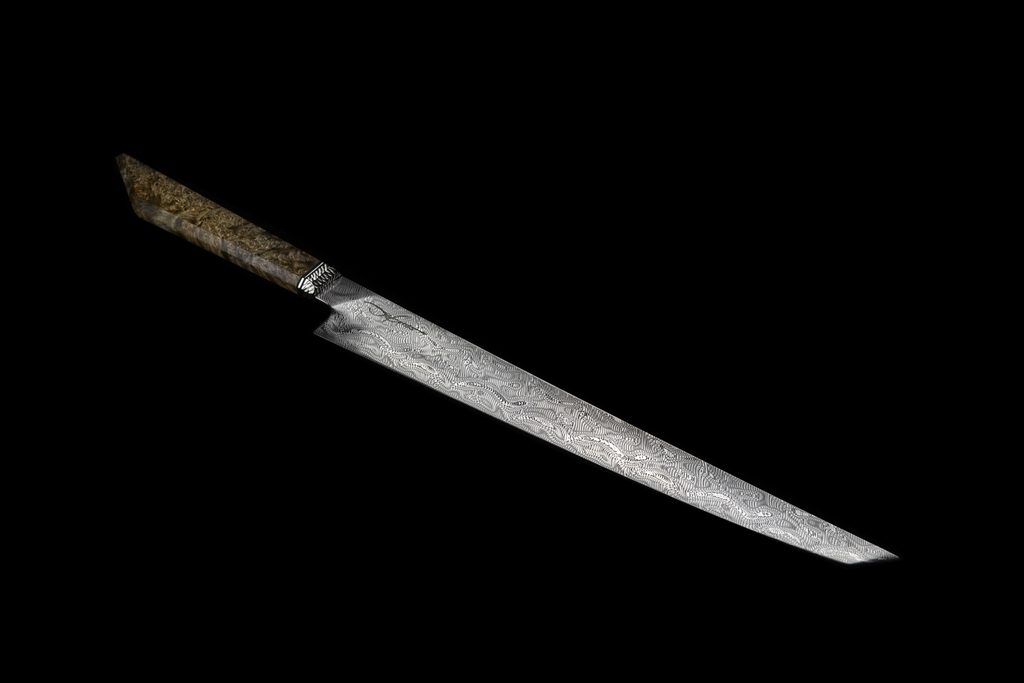
How do you develop a design, select a steel, and fine-tune heat treatment?
I develop the design based on the specific task, and once everything is correct in terms of geometry, I try to make it as beautiful as possible. There are also rare occasions when the final
design just pops into my head. Steel selection depends on the intended use and the end user or market. A yanagiba for a knife enthusiast will have a completely different steel and hardness
compared to a gyuto used daily by a line chef. Heat treatment protocols don’t change very often. When it comes to optimal heat treatment, most things are well established for each steel, and it all comes down to tempering. When new steels enter the market or when I receive a suggestion, I always do thorough research and testing before changing even a small part of the process.
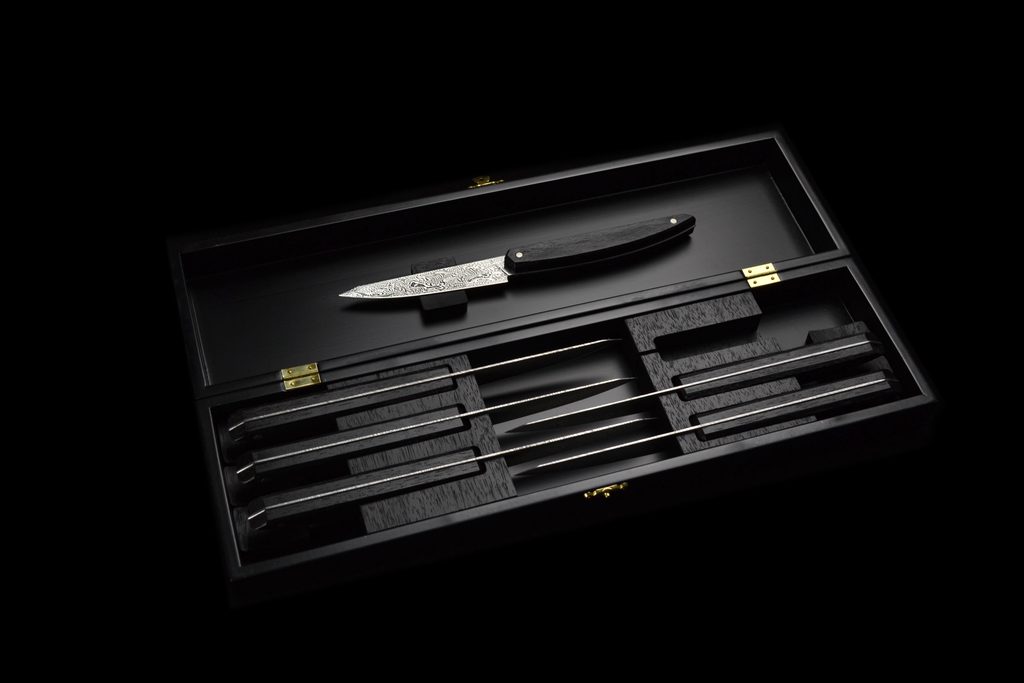
How has the knife world changed since you started?
Dramatically. Knowledge used to be limited to a few specialized forums, materials were hard to source, knife steels and techniques were far less refined than they are today. I remember a time when you couldn’t even buy a 2×72 belt grinder or a proper heat-treat oven for knives within the EU. These things have changed significantly over the years. Today, there are many
more knifemakers, consumers have a huge variety to choose from, but at the same time global demand has declined.
What’s next for you? Any exciting new projects?
I have hundreds of projects running simultaneously in my mind, but everything takes time, mainly because I’m a one-man operation and I like to personally oversee every step of the
process. That said, the most important upcoming project is the likely release of a more accessible knife line for professional and home cooks, hopefully sometime in 2026.
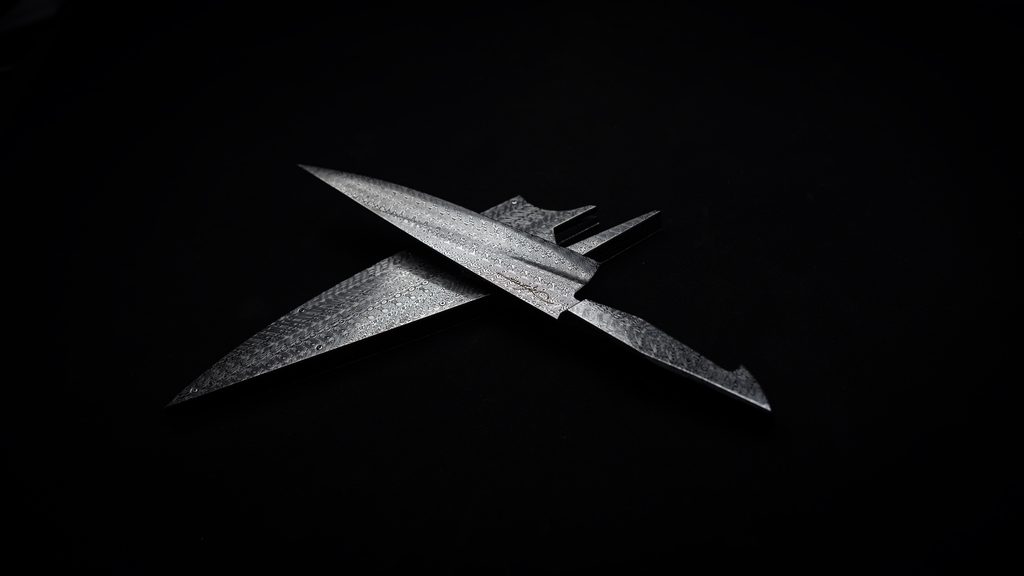
To keep up with what Drakopoulos is working on head over to his website www.dikristo.com and follow him on Facebook www.facebook.com/dikristo and Instagram
www.instagram.com/dikristo_knives
Leave a Reply