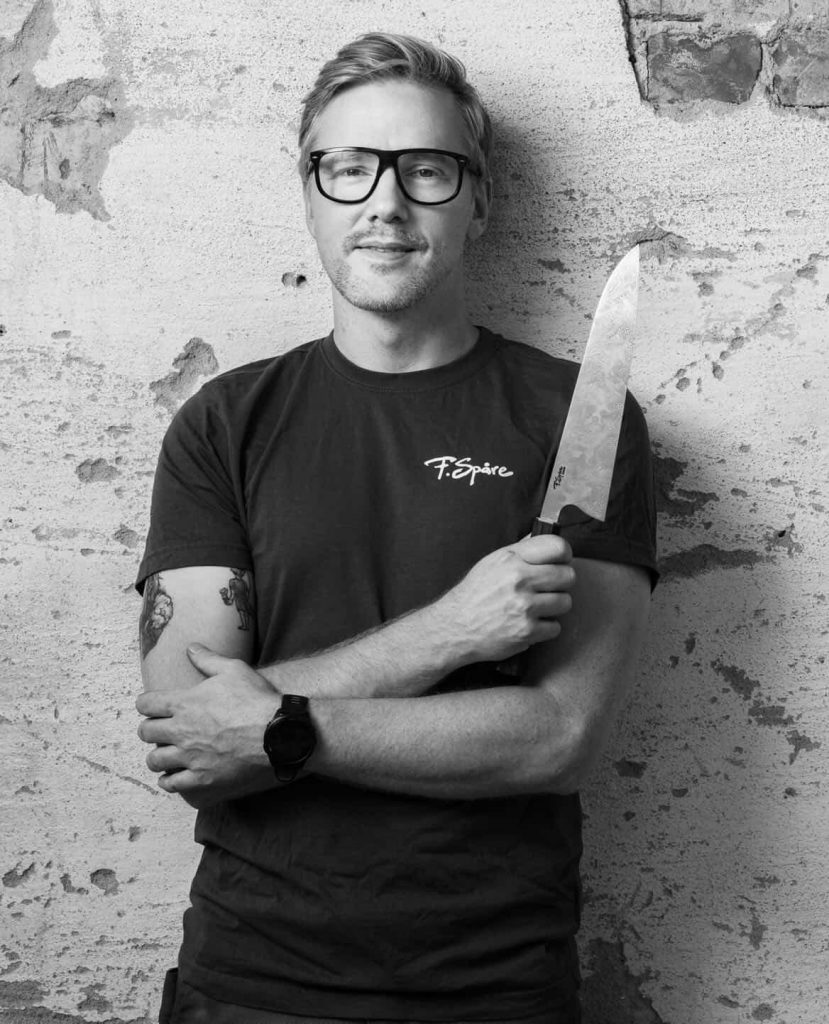
This week’s interview is with one of the first Swedish maker’s that grabbed my attention. His style which is a great combination of rustic and elegant is certainly beautiful, but they never lose sight of the tools they are and have a great reputation for performance. He has been wonderful to get to know better, I am very happy to be able to share his story.
To start off, please tell us a little about yourself.
My name is Fredrik, I’m 45 years old, and I live in the middle of Sweden in a town called Örebro, where I work full-time as a knifemaker in my own workshop just outside town. I have a daughter whom I adore, and in my spare time I love working out and going on adventures.
What sparked your interest in knifemaking?
I initially started with knifemaking when I began hunting. I was looking online for a do-it-all hunting knife and came up short. So, full of confidence, I decided it couldn’t be that hard to make one myself and went at it. Big surprise—it didn’t turn out all that great. So I tried again and made a few more. Eventually, I had a whole stack of them lying around the house. By then, I had gotten really interested in the whole process and decided to start making chef’s knives instead. I have a background in the kitchen, so it was easier to sell kitchen knives to old colleagues than it was to sell hunting knives—all in the interest of funding my new obsession.
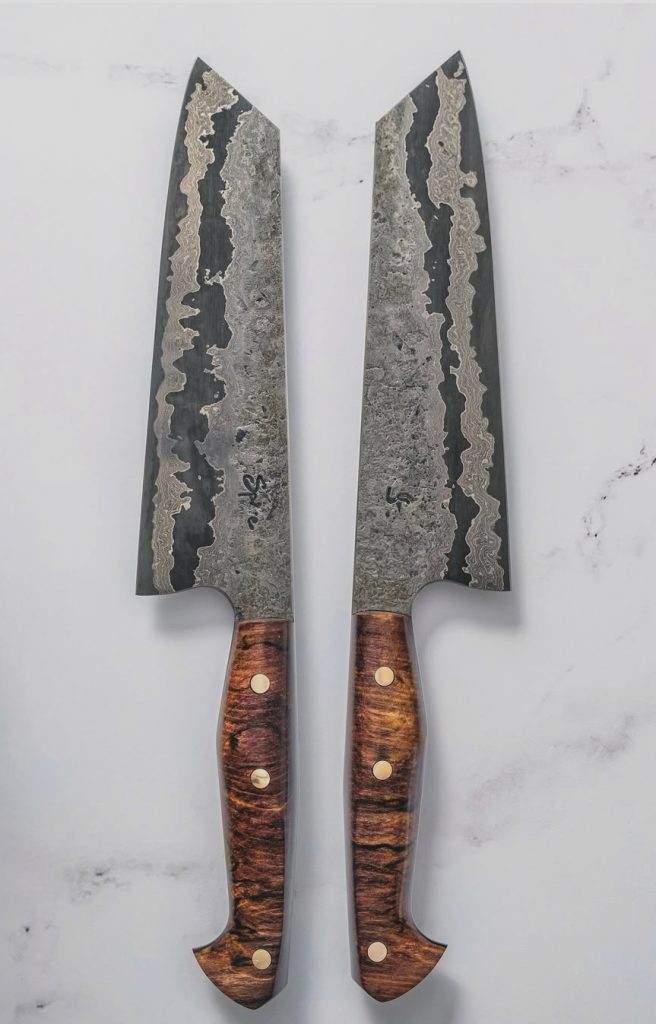
photo credit @kitchenknifeguy
And how did you learn? Who helped you early on?
With some feedback from more experienced knifemakers, such as Patrik Carlvik (Smedja Aspen) and Robin Dalman (Dalman Knives), I kept improving and learning with each knife. I started by buying ready-made blades, but pretty quickly got myself a belt grinder and a heat-treating oven. After a year or so, I began dabbling in forging my own damascus and laminates—all from my two-car garage, where I lived at the time.
Do you have a favorite knife you made, tell me about it?
My favourite knives I’ve ever made are the ones I made alongside Mattias from Steel by Lundbergs. We collaborated with Damasteel AB to raise money for charity; we made twelve knives!
What kinds of knives do you make?
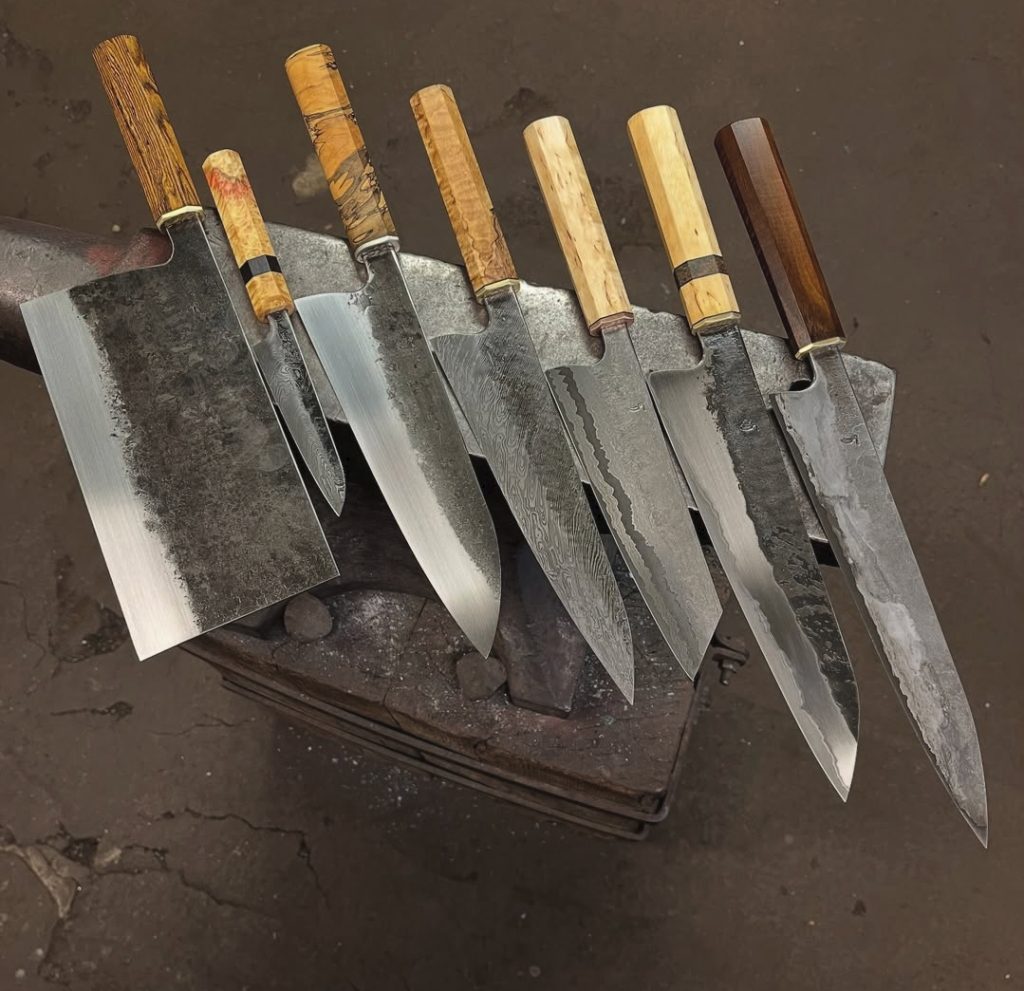
Nowadays I make 99% chef’s knives and 1% hunting knives—probably because they are so much more fun to make. All the details required for a great knife are really accentuated on thin, hard blades, and that keeps me motivated to improve with every knife I complete.
Biggest struggles?
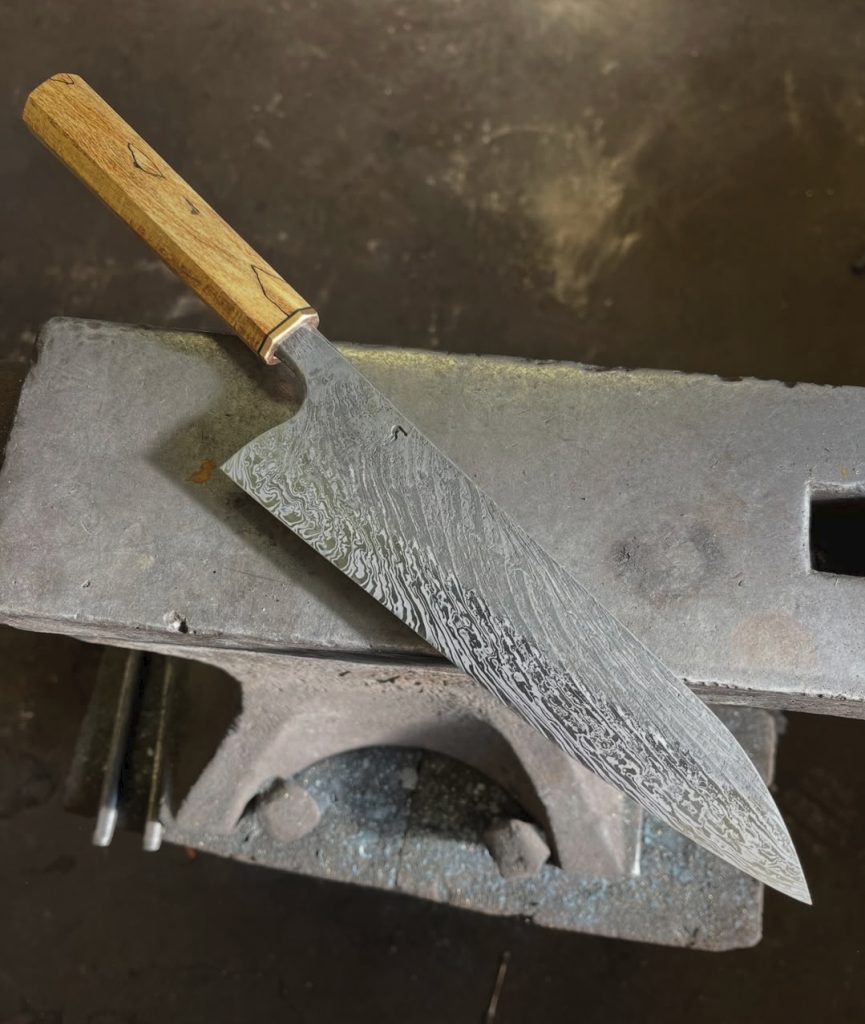
The struggles I’ve had during my almost seven years of making knives are mostly practical ones: which steel for which purpose, what temperature for a forge weld, etc. Pretty normal challenges for someone who is self-taught, and probably pretty important to keep learning. Back when I started, there were no Larrin Thomas, Knife Steel Nerds, or virtual classes one could take to learn all this. I had to study datasheets for different steels and read up on what others used. Nowadays, with online stores carrying more or less everything a beginner could need, starting out would be so much easier. It’s a great time to get into knifemaking!
You have pretty regular forging classes, what do you like most about that?
Teaching others is probably the best way to learn. I host a lot of classes where people come to make their own knives, and with all the questions and mistakes that happen during these classes, it really keeps me on my toes! It has also helped me streamline my own processes, and I’m a real sucker for making things more efficient.
Do you have a favorite steel to work with?
My personal favourite knife steel is one called 1.2419. There’s really only one downside: it’s only available in limited dimensions. I’ve done some serious testing with that steel, both through long-term passarounds and by experimenting with intricate variations in heat treatment, and I’ve come to love it. I’ve used it in everything from stock-removal knives to damascus billets, and it just keeps delivering. I can absolutely recommend it to anyone looking for an affordable, high-quality carbon steel.
My second favourites are, of course, Damasteel (world-class stainless damascus made here in Sweden) and Apex Ultra (made by the amazing Tobias Hangler in Austria—it’s everything 1.2419 is, just more).
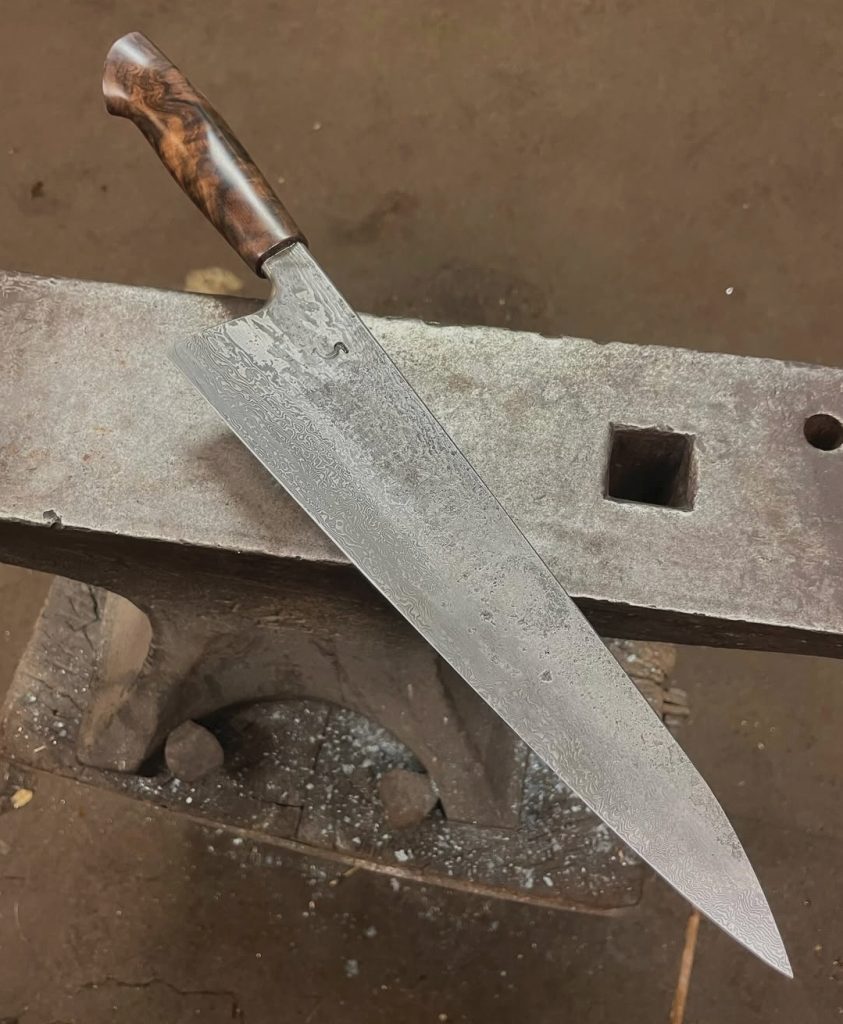
To keep up to date with what Fredrik is working on head over to his website https://www.spareknives.com/ and follow him on Instagram https://www.instagram.com/fredrikspare/
Leave a Reply