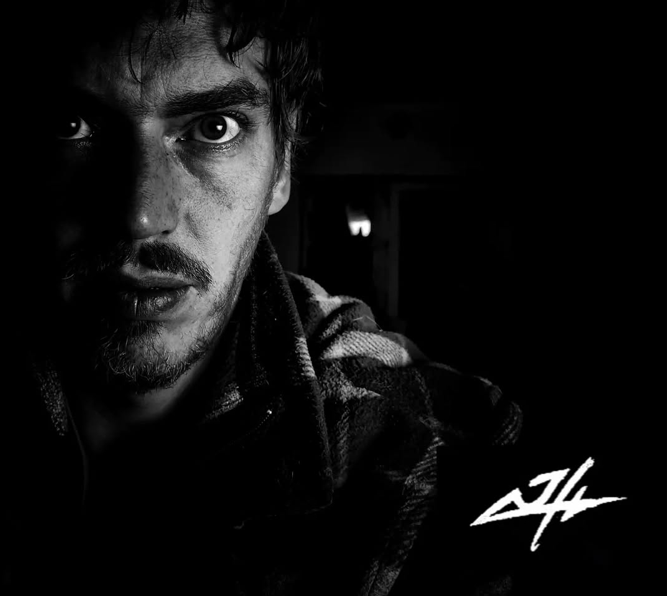
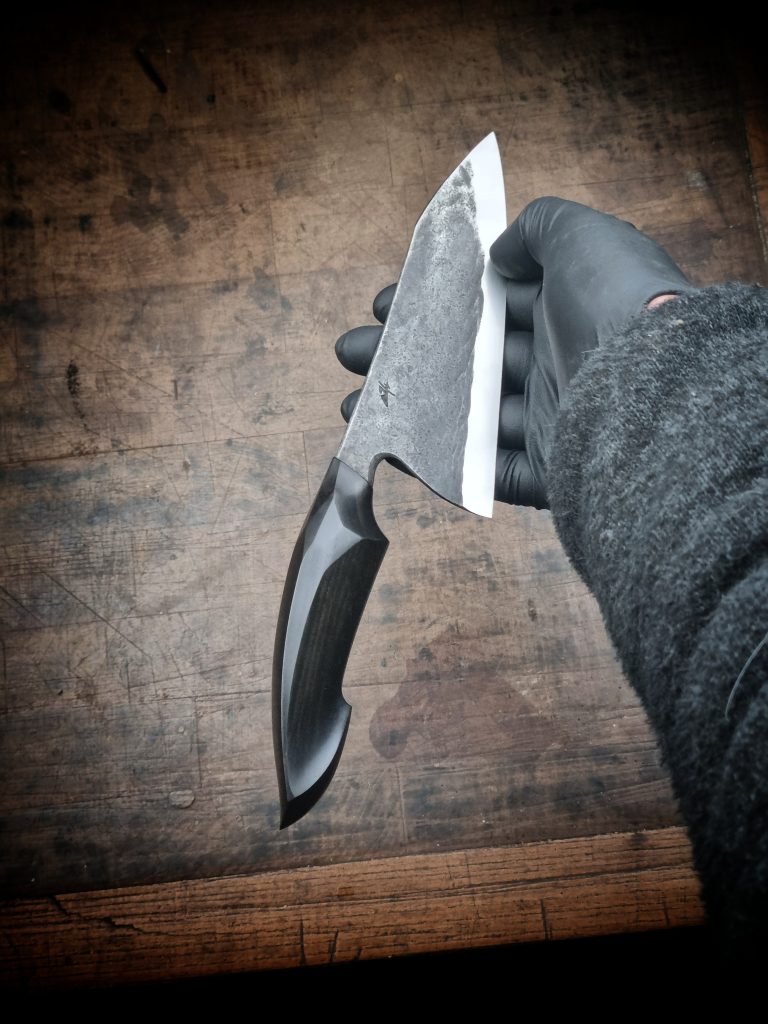
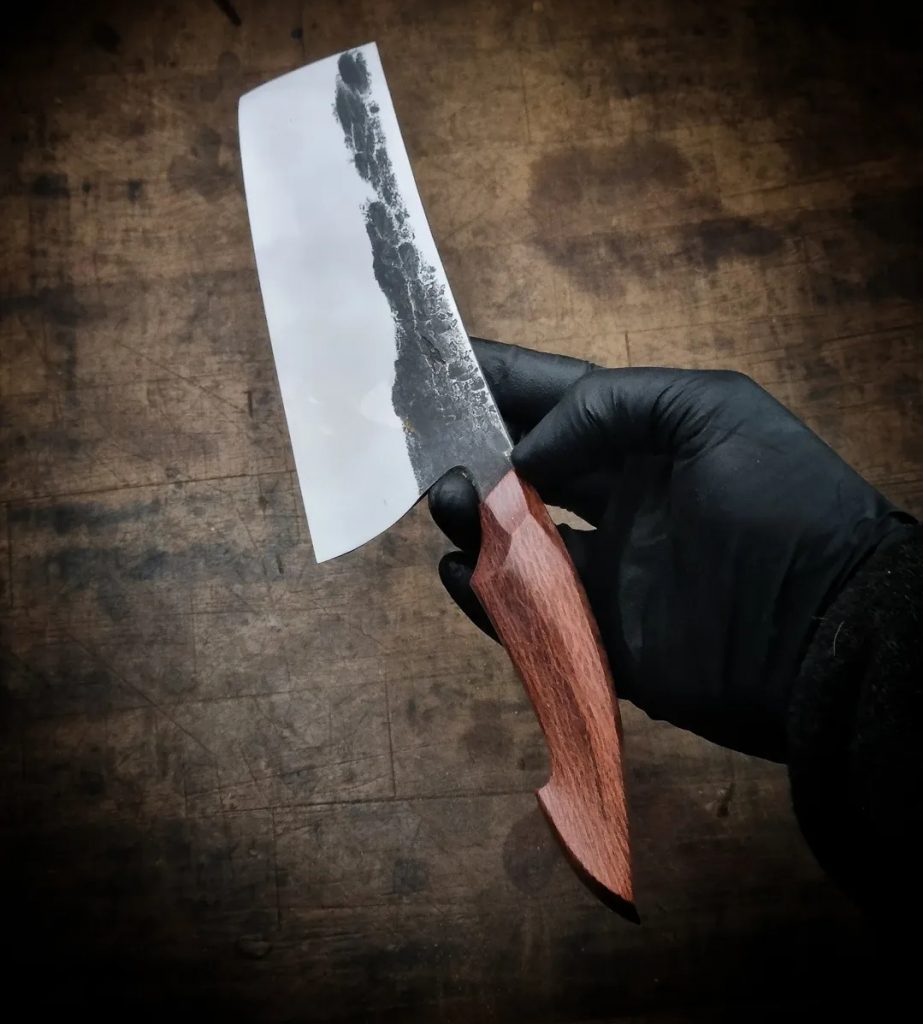
This week’s interview takes us to a maker who has a very defined style. His faceted handle work is phenomenal. I have been drawn to his work from the start. It has been a pleasure to get to know him better. I am very pleased to be able to share it.
To start off, please tell us a little about yourself.
My name Jelle Hazenberg, 37 years old. Born in Holland and moved to Ireland when I was 19.
What sparked your interest in knives?
I bought a little forged neck knife and showed it to somebody, and they asked if I made it, then I asked myself, why didn’t I make it? And so was hooked instantly. I started saving up and studying online straight away.
What inspired you to do this and how did you learn?
After a few years of making knives by trial and error, and researching online, they started to get a little bit better. Then I got really excited about the potential of making an actually good knife.
When did you start making knives?
10 years ago.
What did you make your first knife with?
Hitachi white #2 and Olive wood for the handle.
Do you have a favorite knife you made, tell me about it?
I have many over the years. It’s often the latest knife made. If it has some new element and if it came together particularly well it becomes a favourite.
What is the most important aspect of a well-made knife?
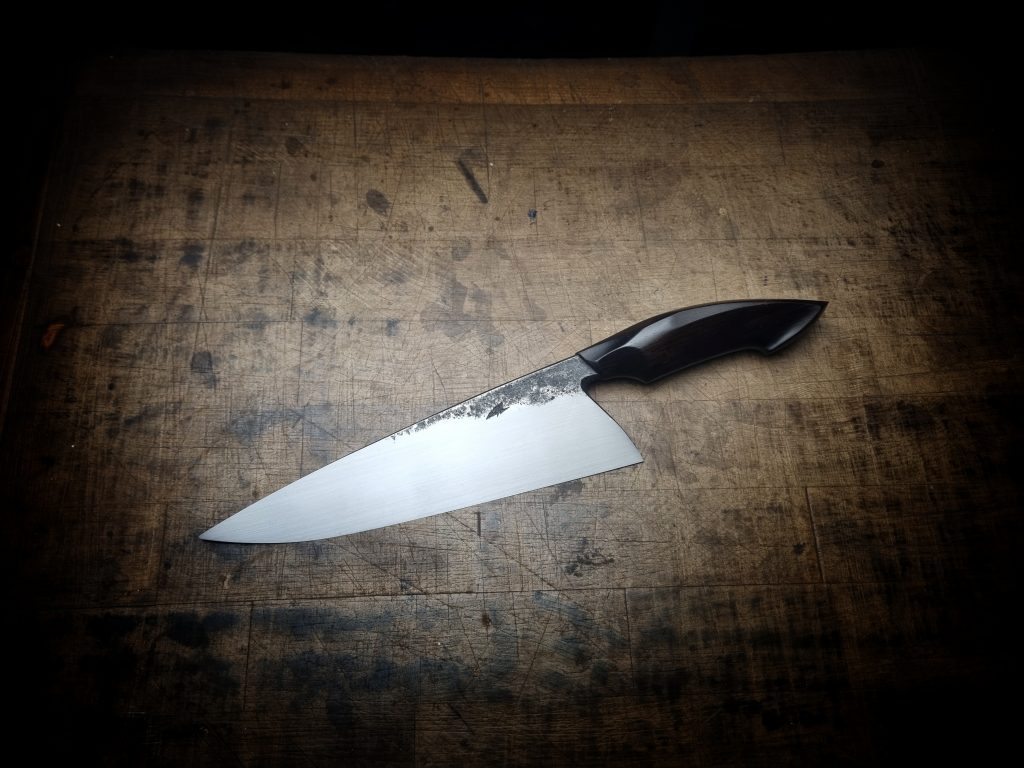
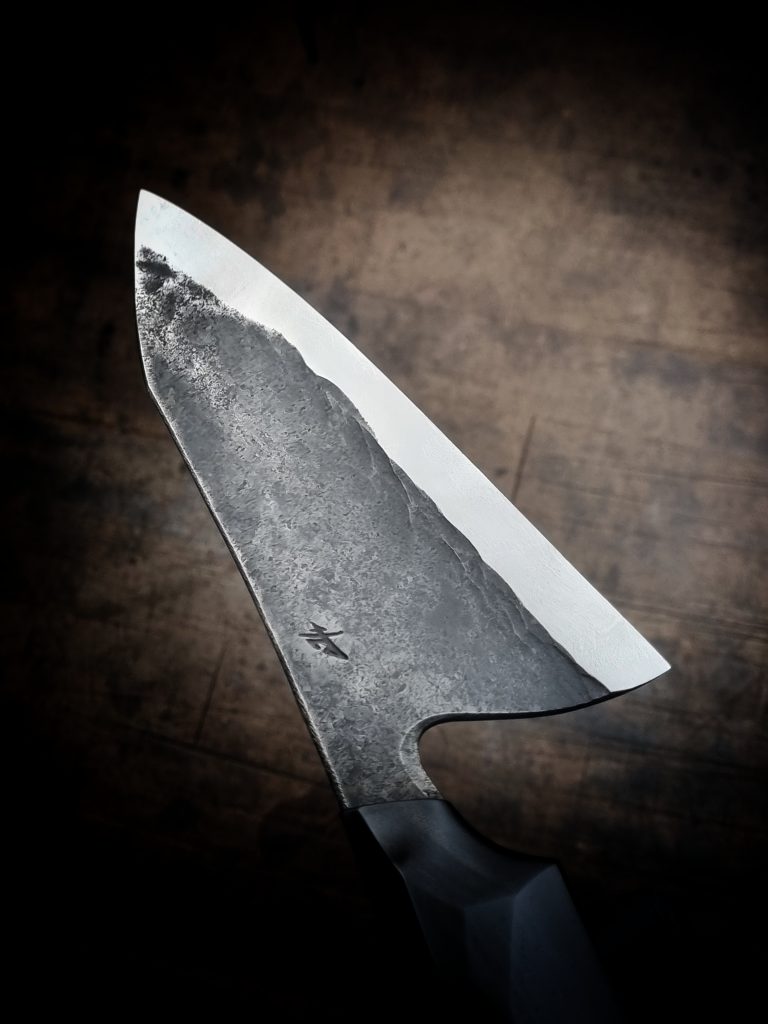
To me there are a few elements, performance, heat treatment, geometry, edge profile, weight, and balance. Ergonomics, no hots spots after using it for a few hours. And Aesthetics, nice looking profile, a dynamic form to the handle, nice detail in terms of sculpting the handle, or a beautiful handle material.
What keeps you going?
Finding improvements to make.
Biggest struggle?
Making it nicer without repeating myself too much. Making incremental changes that go in the right direction.
What kinds of knives do you make?
Mostly kitchen knives.
How did your background affect your approach to knives?
I worked in a kitchen, which made me appreciate performance and ergonomics. I used to draw a lot when I was younger, so sketching and designing was quite natural.
Who helped you early on?
Every maker I’ve reached out to online has been helpful.
Who are your influences/inspirations?
Sam Lurquin.
How do you think that inspiration translates into your work?
His style has become very much my style. A mix of aggression and elegance.
Any specific breakthroughs or revelations in your knife making journey?
Once you do the basics well, you can do whatever you want.
What is the perfect knife?
It doesn’t exist I think. For me what comes close, is one that is fun to use and visually striking.
How do you approach a new concept and that concept’s implementation?
Try it out, expect to make many mistakes. Keep doing that until it works.
How do you approach knife testing?
I usually know if a knife will cut well as I’m making it. When I do something different such as a hollow forged blade, I’ll do some test cutting as I’m grinding and sanding to make sure it cuts well.
How do you develop a design, select a steel, and fine-tune a heat treatment?
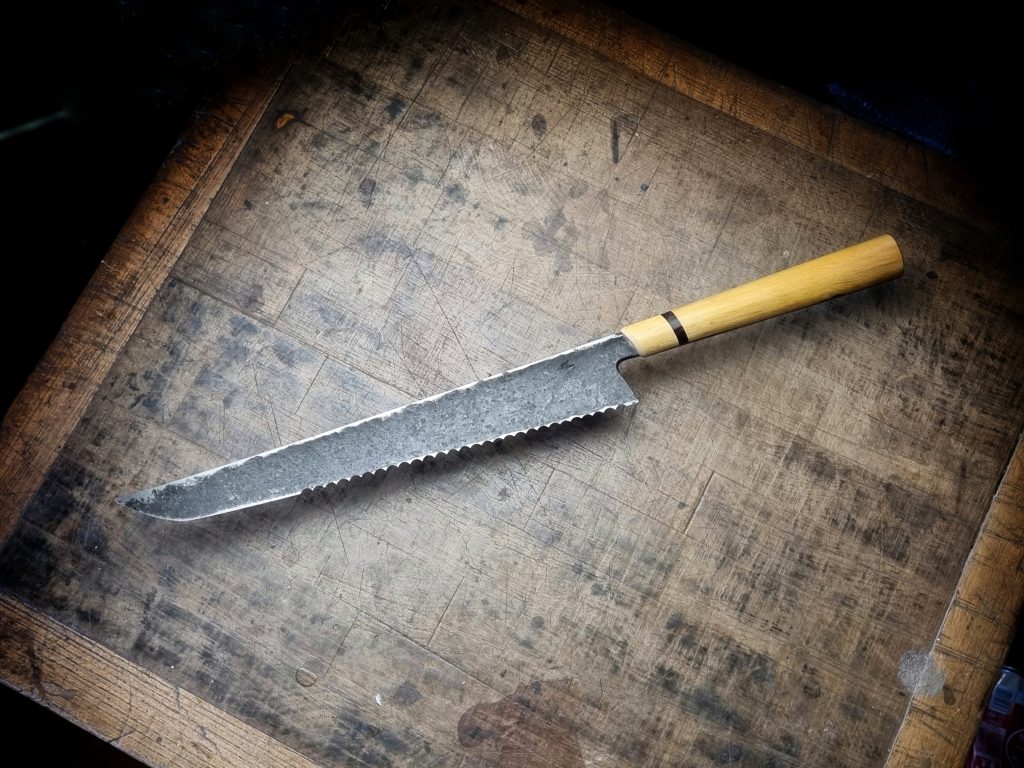
My design has developed very slowly over the years. Trying different things on each knife while maintaining what I liked in the previous knife I made.
I like a simple high carbon steel, for its performance, and the potential for hamons.
I heat treat in a gas forge by eye. The first few years were terrible in terms of heat treatment. Slowly with experience and testing, it became easier.
How has the knife world changed since you started?
Lots of new young makers are popping up.
What’s up next for you? Any exciting new projects to tell us about?
I enjoy making magnetic knife stands these days.
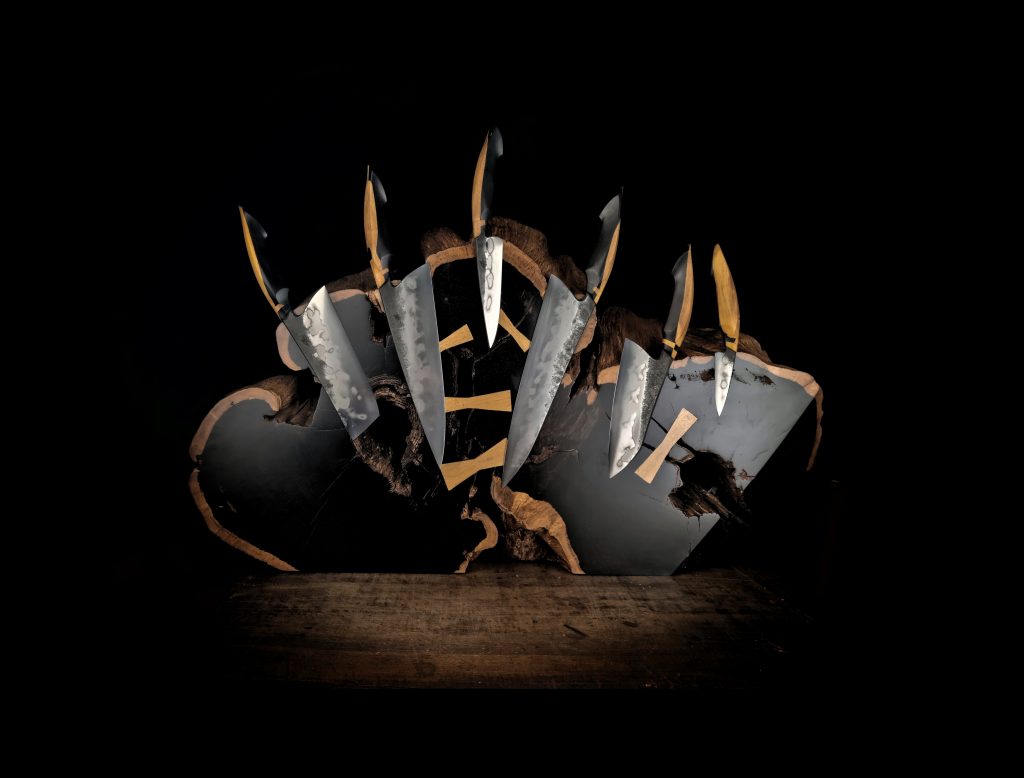
To keep up to date with what Jelle is working on you need to be following him on Instagram https://www.instagram.com/hazenbergknives/
Leave a Reply