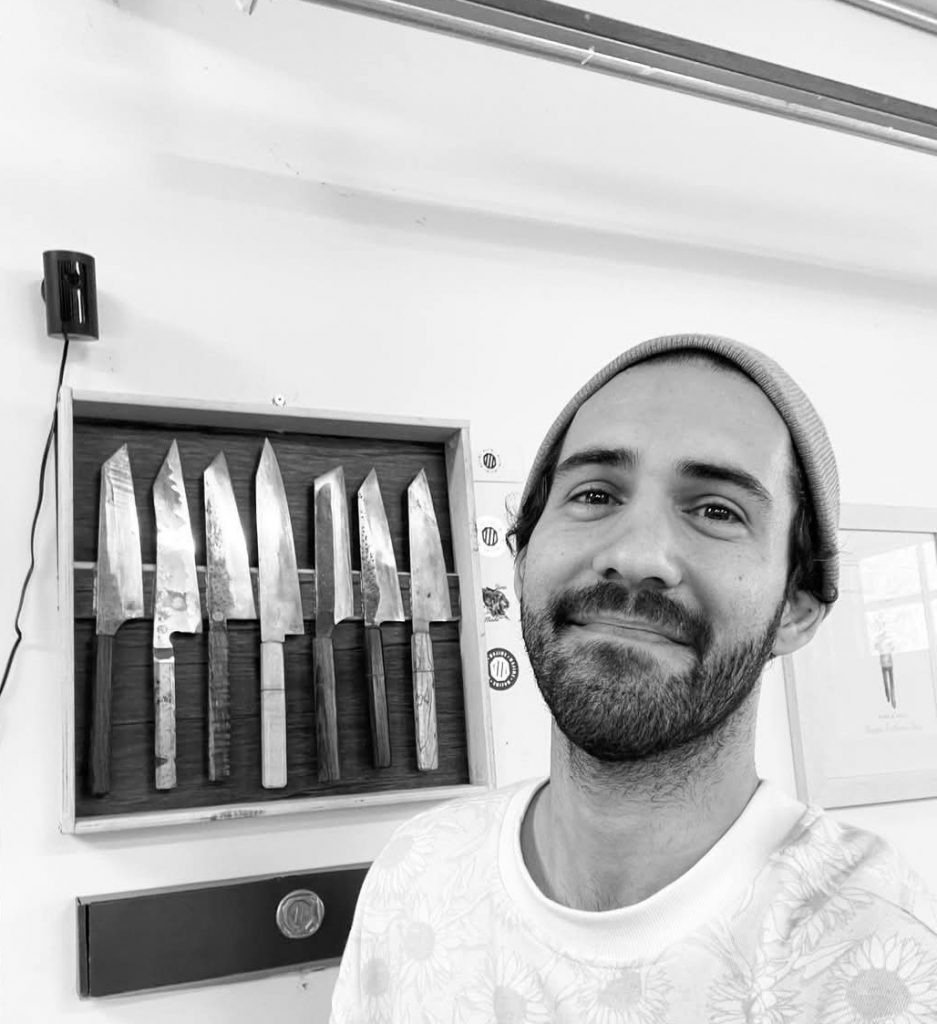
This week’s interview brings us to a chef turned knife maker. The name he chose for his brand “Majime” means earnestness, sincerity, and seriousness. When I considered this against the work I have seen him make, and the manner in which he approached answering my questions, I believe that this brand stretches beyond the steel to the person behind it. It has been eye-opening getting to know him better, and it is a real pleasure sharing part of his story with you.
To start off, please tell us a little about yourself.
Hey, I’m Max. I live in Atlanta now—moved here a few years ago from Long Beach with the fam, and honestly, it’s been pretty awesome. I was born in South Africa and came to the U.S. when I was 10. Lost the accent pretty quick, mostly because asking for a “rubber” in class (I meant eraser, obviously) got me some looks. So yeah… had to adapt fast.
Nonetheless, I was a chef for close to a decade and transitioned to making knives when my son was born, realizing that the most important thing is time, and I would never be able to do that if I remained a chef. No regrets there.
What sparked your interest in knives?
On my break during work in Beverly Hills, I walked across the street from my restaurant into Yoshihiro cutlery. That moment of seeing true craftsmanship sparked my interest but moreover curiosity on if I was able to do it. Little by little on my one day off week, I would fool around making absolutely dreadful knives, but it was thrilling to say the least.
What inspired you to do this and how did you learn?
The most critical thought about being a chef really was time. Time for family, time for my wife and even myself. I’ve always dreamed of making something that I love and sharing it and finding a balance in life. Making knives was that medium.
I learned honestly through failure… and definitely the wonderful knife making community.
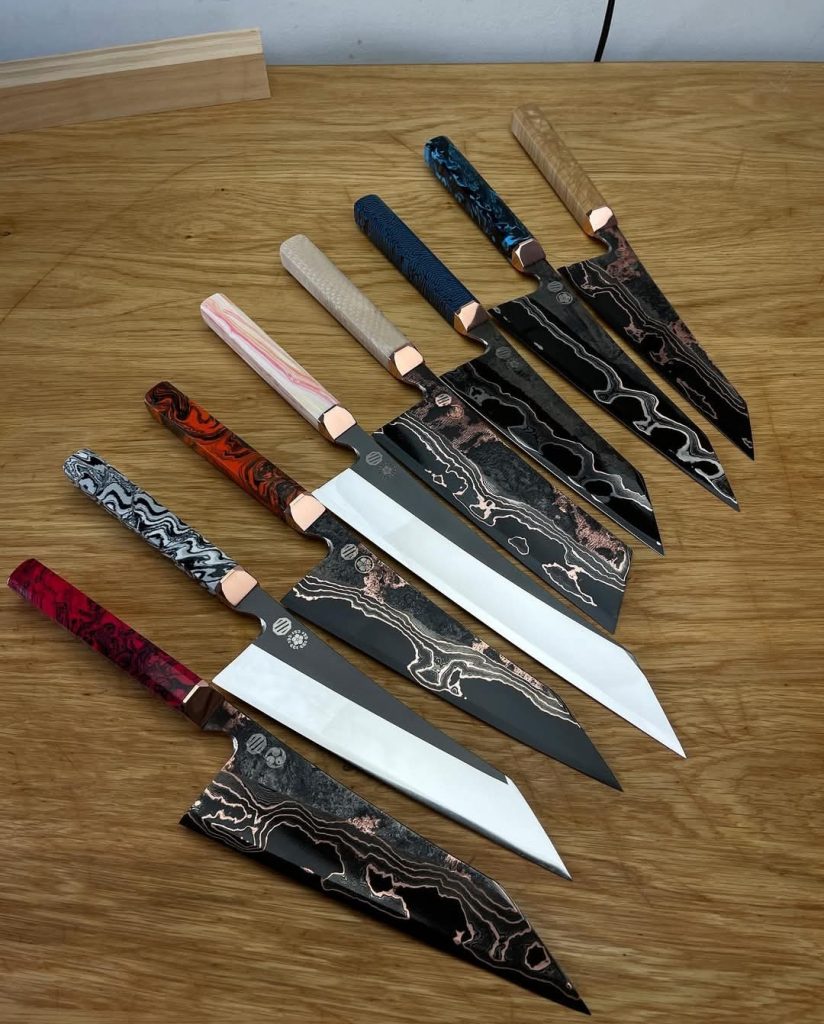
When did you start making knives?
2019
What did you make your first knife with?
The cheapest steel I could find was 1095 so definitely played with that steel a lot.
Do you have a favorite knife you made, tell me about it?
I don’t think I have any favorites. The curse of being a maker, or maybe it’s all in my head, is I am never truly satisfied with what I make because opportunities are always there.
What is the most important aspect of a well-made knife?
Oof…Edge Geometry.
A cheap steel can outperform the most expensive steel when it’s ground right.
What keeps you going?
It is hard to stay self-motivated. I think what keeps me going is reminding myself of the bigger picture of what I do. Not only to provide for myself and for my family, but to find purpose in paying it forward. I think if I just sold knives, I wouldn’t be happy. Finding a way to help in fundraisers, contributing to causes that help communities, individuals or organizations gives me purpose.
…. also my kids’ tuitions.
Biggest struggle?
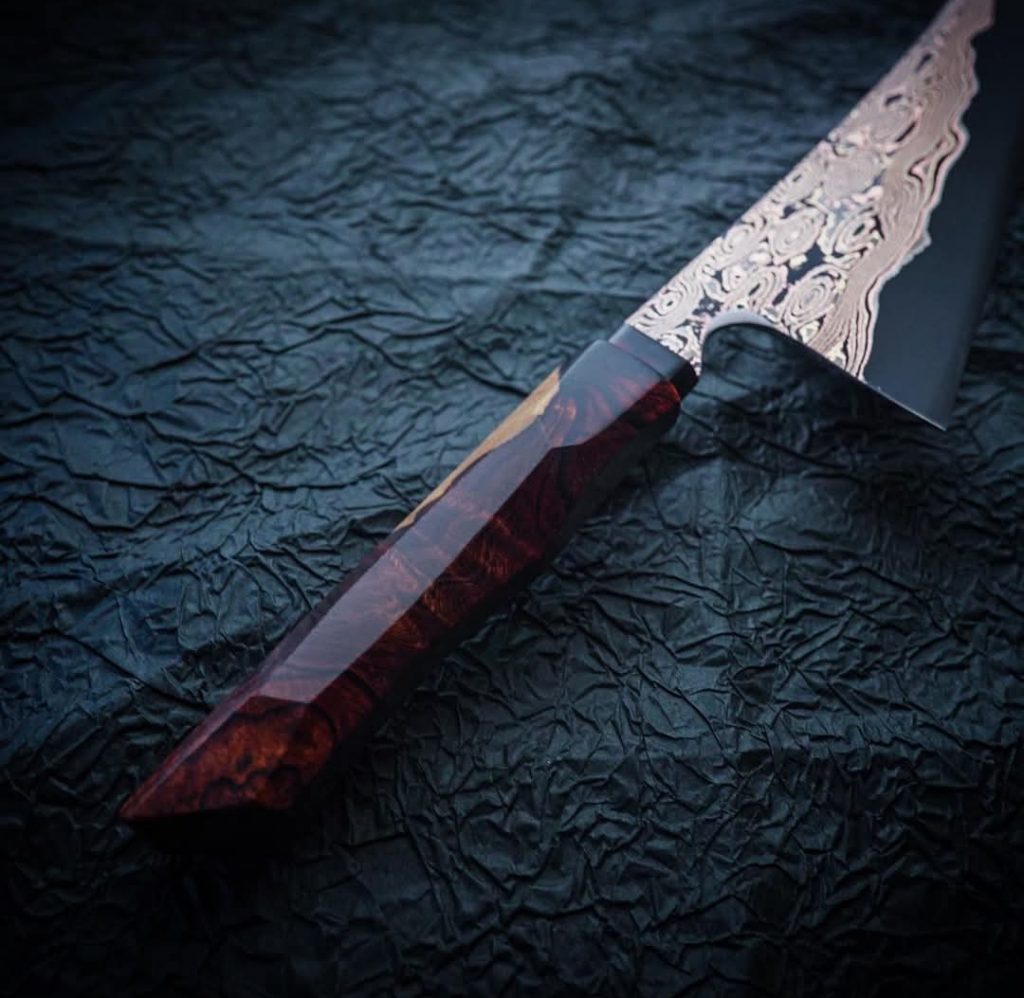
The biggest struggle… oh God the vulnerability… is the looming fact that eventually my work becomes irrelevant or forgotten and nothing is permanent. When you own your own business there is always a fear of loss. Whether it be of relevance, interest, or the business itself. I am always trying to adapt and many times I have failed and hit my head over those choices, but they have led me here and I am grateful to still be in it while my health is still good.
What kinds of knives do you make?
Japanese inspired solely because those were the only knives I had in my knife roll.
How did your background affect your approach to knives?
I think being a chef and having that mindset of the knife needs to perform over any aspect gave me the constant push to progress in my work.
Who helped you early on?
I messaged a lot of makers when I first started, and everyone was really vague in answers… I get it. When I messaged Quintin Middleton, he responded within a minute, gave me his number, and we jumped on a call with complete walkthroughs. We still talk every month and catch up with one another. He’s one of the best makers I have met. True sincerity.
Who are your influences/inspirations?
No one specifically. I tend to be inspired by anyone, even outside of knife making, that is passionate of what they do and find a way to contribute to community. Those types of individuals also remind me of how I can also do my part.
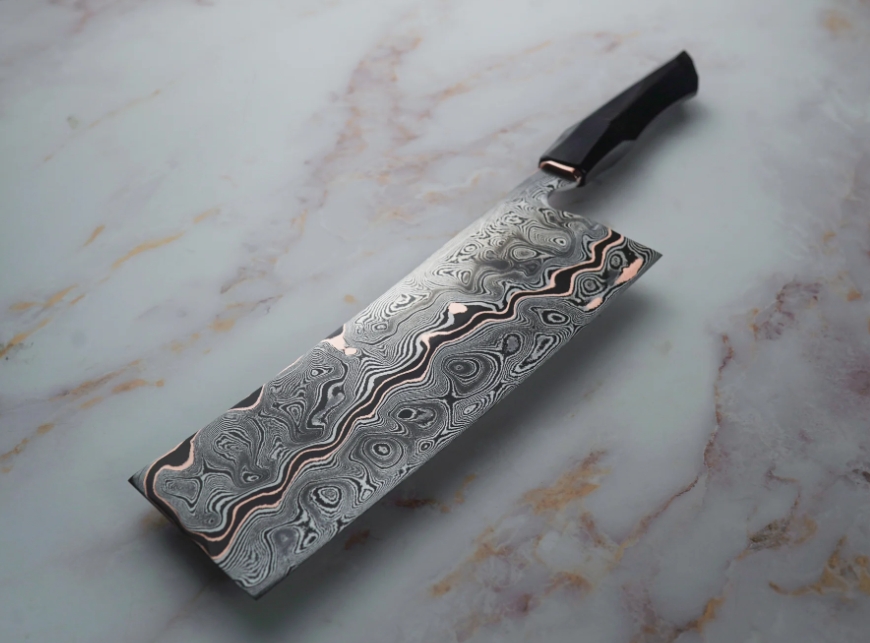
How do you think those inspirations translates into your work?
I think I am asking myself that same question…
Any specific breakthroughs or revelations in your knife making journey?
The breakthrough is just knowing that the pursuit of progress over perfection is the most important aspect.
The revelation is acknowledging that there will never be a… See question below.
What is the perfect knife?
There is no perfect knife.
How do you approach a new concept and that concept’s implementation?
Because I have started YouTube and meeting chefs around the country… I get to see first-hand how chefs use their knives in their space. I build the technique into the concept of a knife, and it has been very fun to see that pan out.
How do you approach knife testing?
There are two things I test for.
Edge retention, cutting a lot of practical things for a long time to see if I got the heat treat and grind right.
And honestly… cutting a carrot. The most basic vegetable can indicate how well a knife performs.
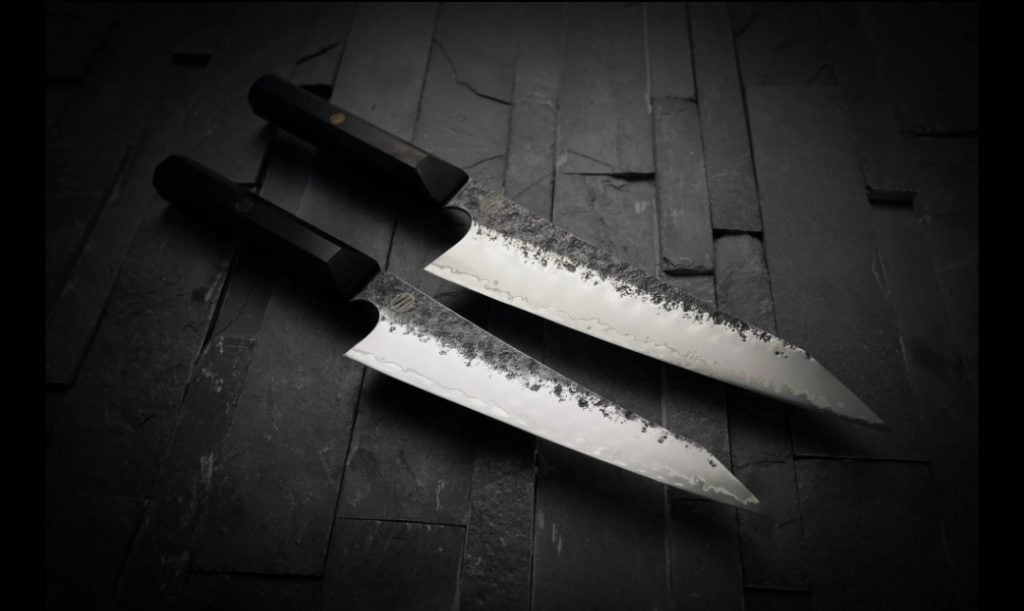
How do you develop a design, select a steel, and fine-tune a heat treatment?
I just try a bunch of designs. Not all of them are pre-planned. Visually I imagine to myself “oh that’ll look awesome” and I just try it. 90% of the time… it never looks good but that’s what it is all about… fooling around and seeing what clicks.
Any favorite steels?
I think for the longest time I was chasing down what’s the best steel to work with. What has the best attributes, etc.
As a knife maker, and not a blacksmith, I am able to pick a bunch of stock steels and focus on really tuning my grinding process. This is the most important part of knife making over anything else.
How has the knife world changed since you started?
As a maker and business owner, it’s not just about creating something great—you also have to think about how to make it marketable and competitive. That means reading up on business, learning how to edit content, writing better emails to your subscribers, and tightening up your workflows. The demand for visual content is non-stop and honestly exhausting, but it’s necessary if you want your business to grow.
It’s no longer enough to just say, “Hey, look what I made!” and hope it sells.
The knife world has changed in that everyone’s gotten really good. And that’s a beautiful thing. There are so many talented makers out there creating stunning work. There’s room for all of us in this space, but we have to keep adapting behind the scenes to stay competitive. What many don’t realize is that the business structure, the systems, the communication, the planning are just as important as the product itself.
Instagram restrictions have made things harder for makers, but there are still plenty of ways to grow. It takes a lot of energy to adapt, but it’s totally possible.
What’s up next for you? Any exciting new projects to tell us about?
All I care about is the continuation of making knives I love, filming chefs on YouTube and sharing their story. It has been a roller-coaster of a journey, but it has been worth it.
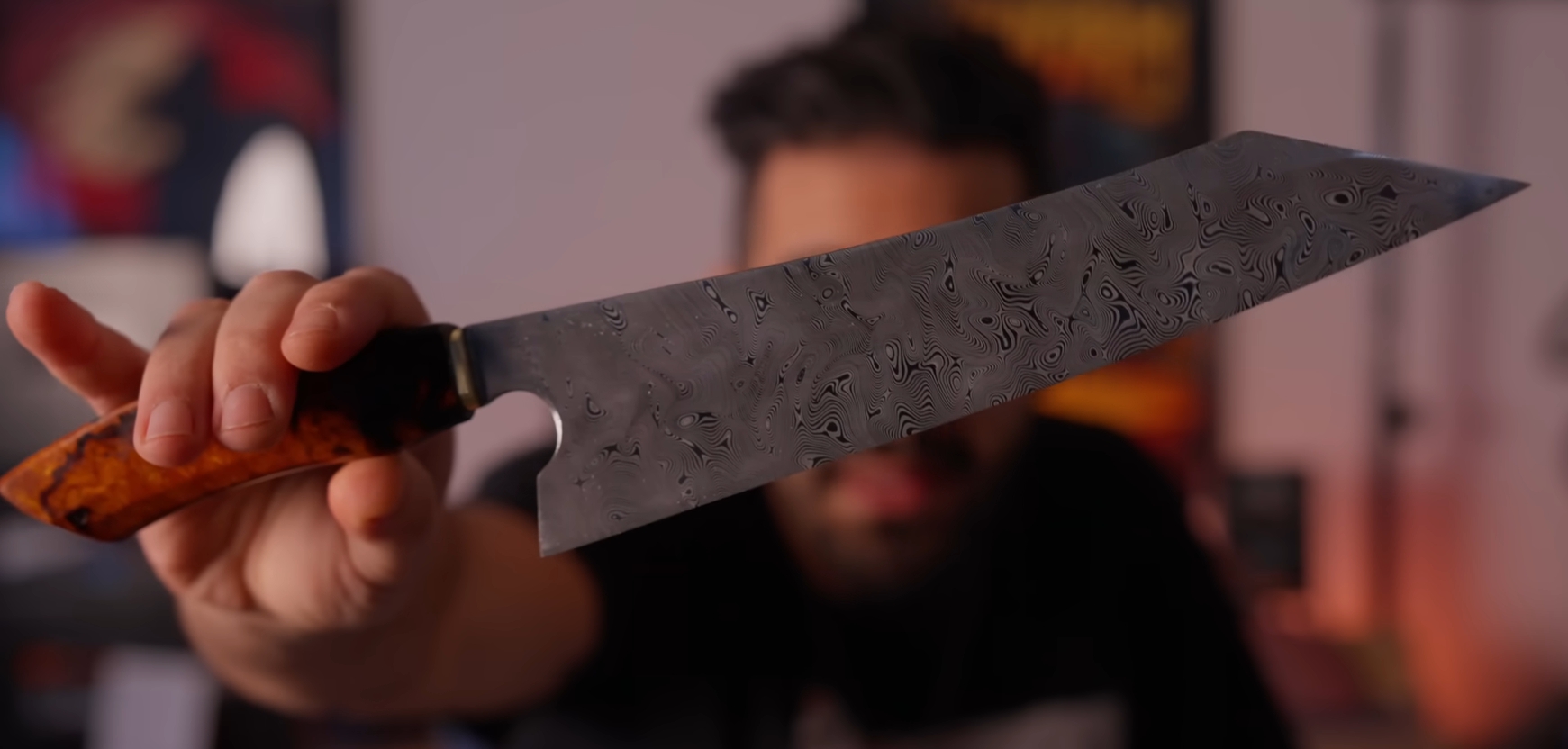
To keep up to date with what Max is working on head over to his website https://www.majimeknives.com/ follow him on Instagram https://www.instagram.com/majimeknives/ and certainly do not miss out on his video content and subscribe to his YouTube channel https://www.youtube.com/@TheMajimeChronicles
Leave a Reply