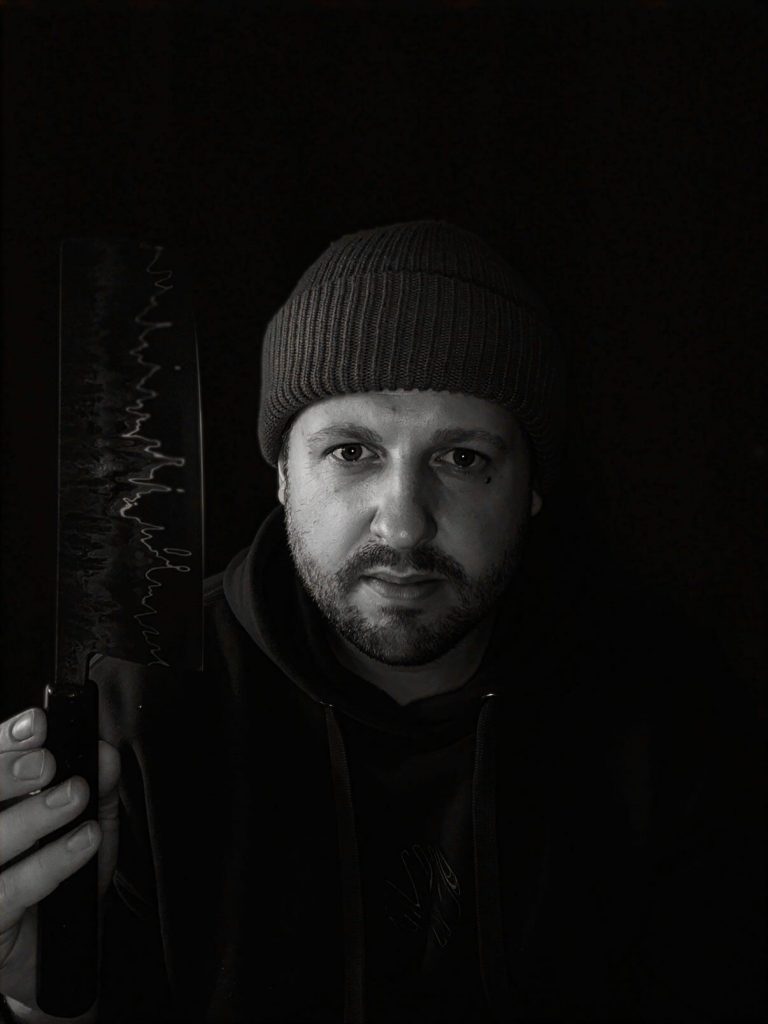
This week’s interview brings us to the workshop of a maker that I have been following for quite some time, and it has been so wonderful to see his style and output evolve. I heard it described that he takes pride in what he does, and it shows. No matter where you look in the timeline of his making history you will see the same desire to make the best knife he can make, it is a great approach, and one I would like to emulate more myself.
To start off, please tell us a little about yourself.
I’m Martin Kaanbjerg, the maker behind MK-Knives Denmark. I build performance-first kitchen knives— think lean grinds, tuned food release, and wood that feels alive in the hand. I’m Danish,
stubborn about details, and happiest with a forge running and coffee on.
What sparked your interest in knives?
Two things: the honesty of a tool and the feeling when a cut is effortless. A knife is the simplest design brief in the world and the hardest to master. That tension hooked me.
What inspired you to do this and how did you learn?
It started as a nights-and-weekends obsession. I read a lot of books, asked makers too many questions, YouTube, and let failure teach me fast. My learning curve was equal parts heat-treat
spreadsheets and blistered and cut fingers.
When did you start making knives?
2018 — one knife turned into a habit and an interest and then a workshop in 2022.
What did you make your first knife with?
A piece of basic tool steel, a cheap grinder, a basic homemade forge, and a leftover block of hardwood. The grind was clumsy, the handle too blocky — but the spark was there.
Do you have a favorite knife you made?
All my knives have a special place in my heart. I don’t think I have one favorite, but if I need to pick one I’m particularly proud of, it’s the knives with my sculpted handles. It’s not for everyone’s taste but I really like the looks of them!
What is the most important aspect of a well-made knife?
Geometry you can feel. Steel choice matters, heat treat matters — but if thickness, taper, and convexity aren’t right, nothing else saves it.
What keeps you going?
The next marginal gain. One cleaner transition at the heel, one better etch contrast, one degree more stability at the edge. Also: messages from chefs after a brutal prep day saying, “didn’t put it
down.”
Biggest struggle?
Biggest struggle is definitely time! I do this part time, so having time is a major struggle. Hard to do scale business without time!
What kinds of knives do you make?
Mostly kitchen knives: Gyuto, Bunka, Petty, Sujihiki, Nakiri. But actually, whatever the client wants, I can make.
How did your background affect your approach to knives?
I come from a data/finance world (and the coffee industry), so I treat a blade like a roast curve: profile, heat input, dwell, quench — then cup/taste… or in my case: cut/feel. Everything is measured, repeatable, and iterated.
Who helped you early on?
A chorus of makers who answer DMs at weird hours, the KKF crowd, and local friends who weren’t precious about sharing process.
Who are your influences?
Japanese discipline, European boldness. I admire people who refuse compromise in geometry and finish — the ones whose knives you recognize across the room.
What other knife makers impress you these days?
Those pushing laminates and controlled grinds while keeping knives usable — the blend of art and ruthless utility always gets my respect.
Any specific breakthroughs or revelations?
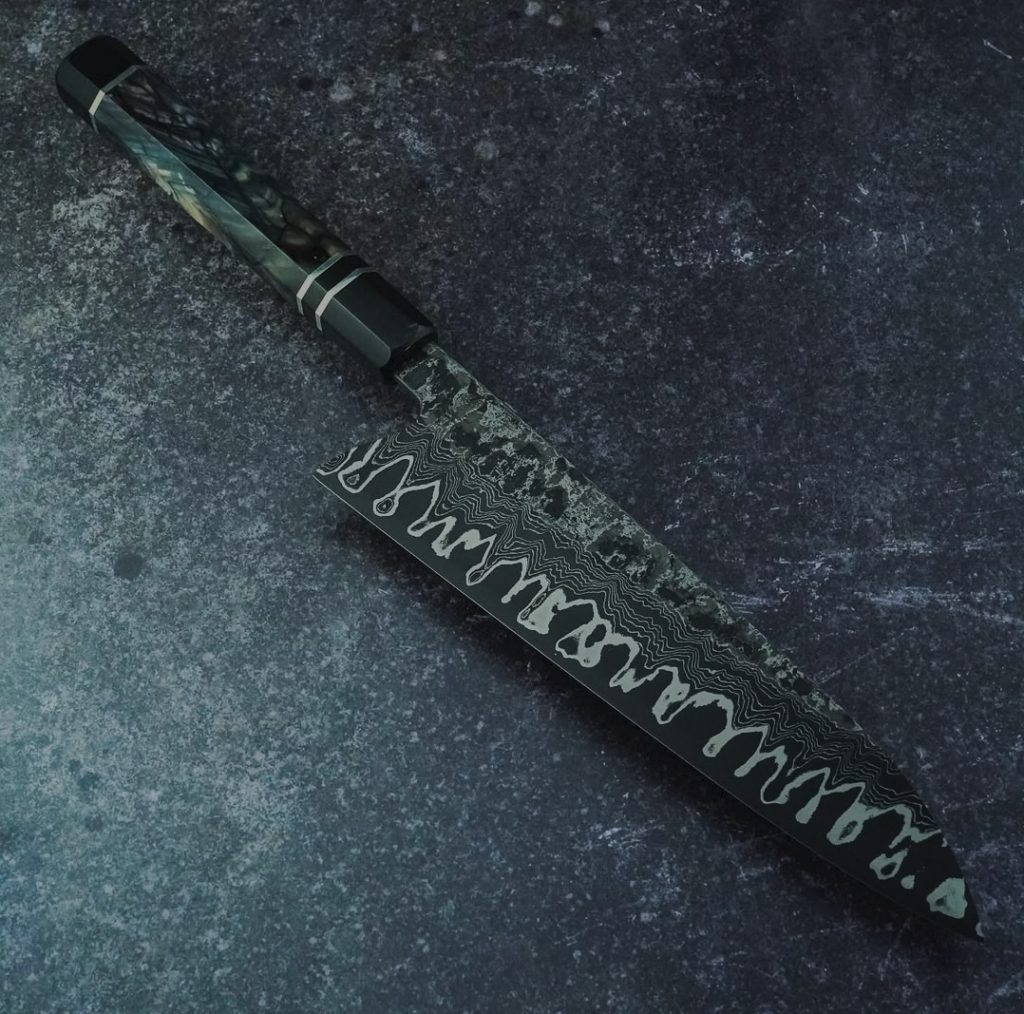
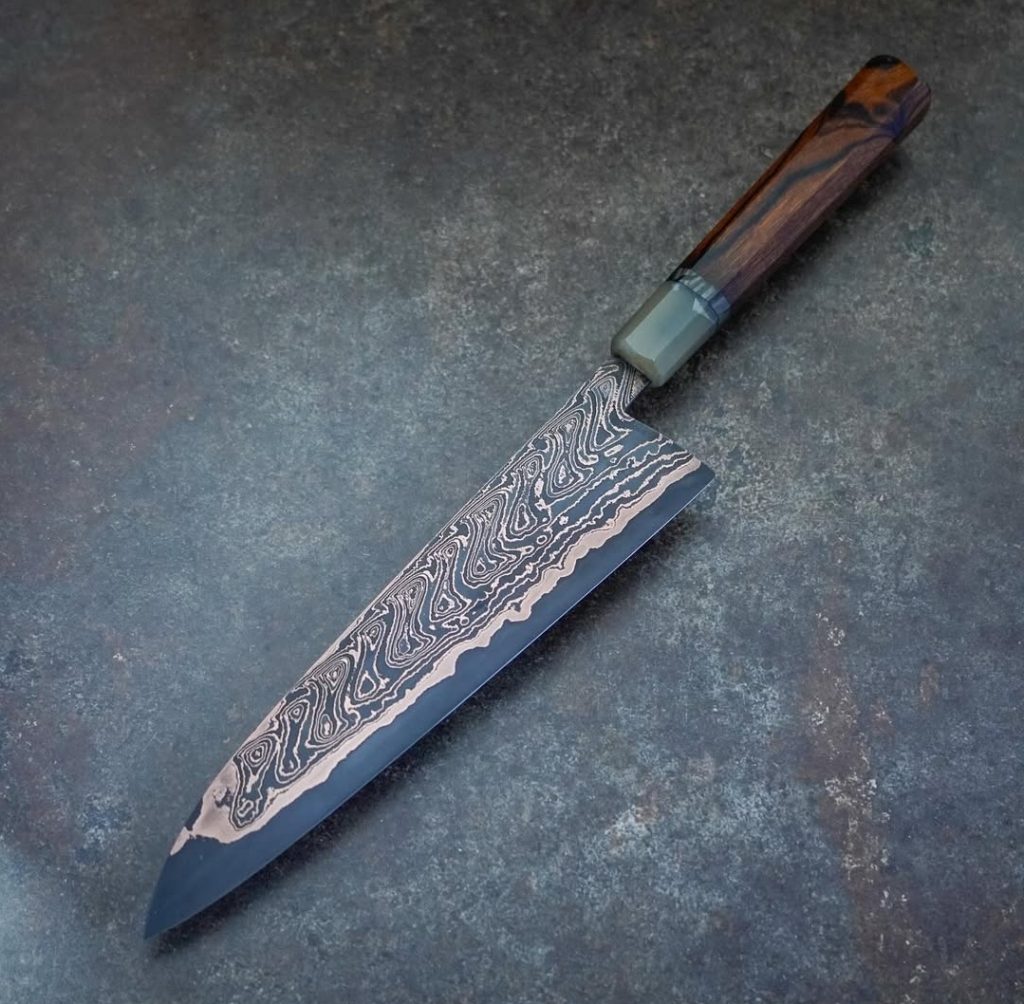
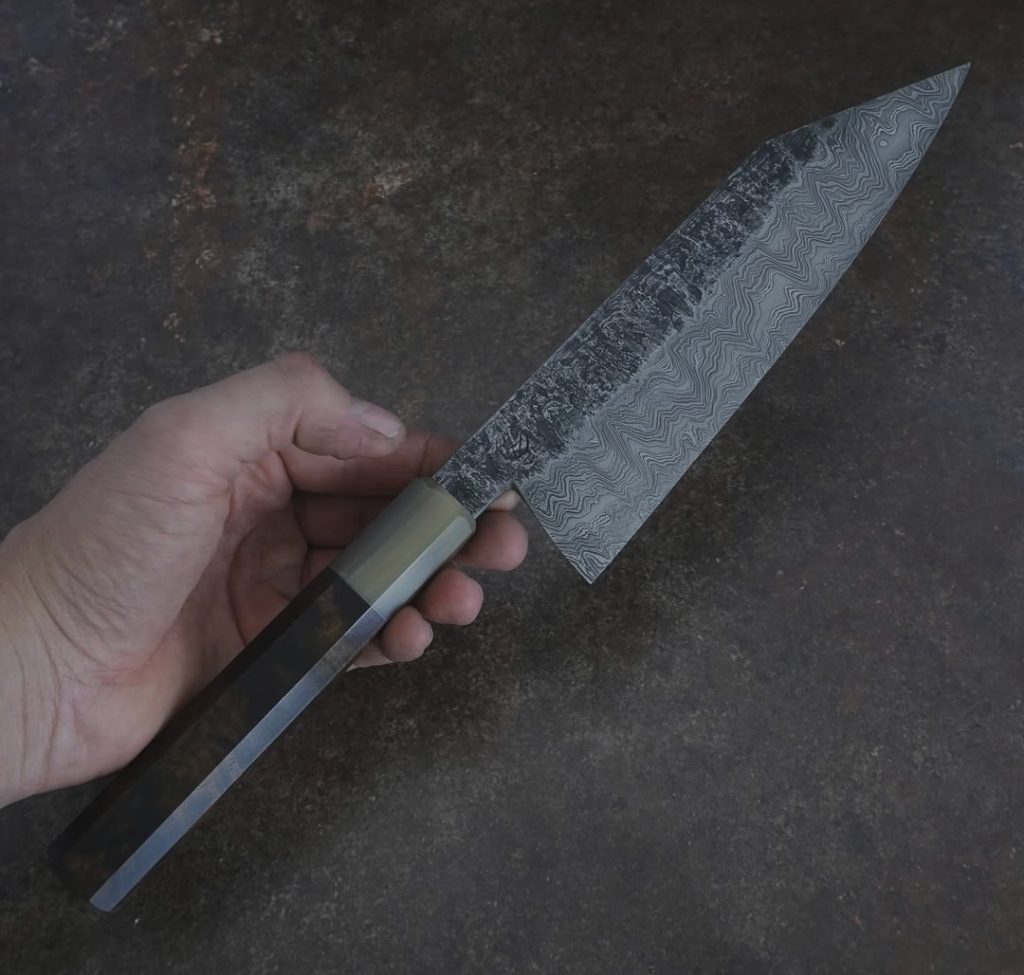
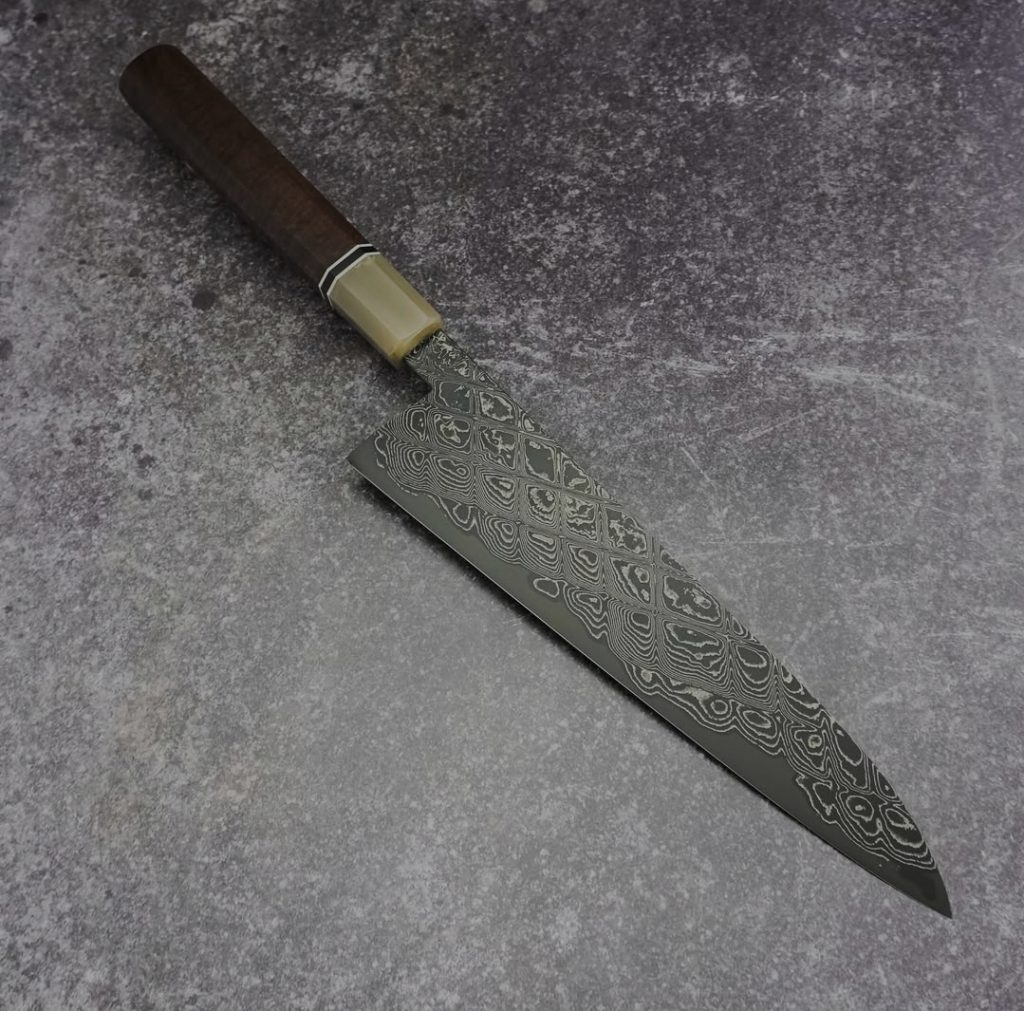
Forging my own Damascus unlocked both look and performance control. A repeatable S-grind recipe for ultimate food release. Heat-treat discipline: stop chasing max HRC; chase the right HRC for the geometry.
What is the perfect knife?
The one that disappears in your hand and makes you cook more. For me: a 230 Gyuto, neutral balance at the pinch, tip that whispers through onions, a heel that doesn’t punish boards.
How do you approach knife testing?
A simple protocol: Sharpness: paper towel + tomato skin, no cheat micro-toothing. Geometry: carrots for wedge mapping, potatoes for release, onions for tip feel. Stability: light 2×4 passes on test mules; should still shave after. User feedback: a chef runs it for a week; I adjust based on their notes.
How do you develop a design, select a steel, and fine-tune heat treatment?
- Define the job (e.g., tall 240 prep monster vs. laser petty).
- Pick the steel for that job (edge stability vs. toughness vs. corrosion needs and the looks).
- Set a target geometry, then back-solve heat treat to support that edge. If I want a laser edge, I won’t run a brittle 66 HRC — I’ll land where the geometry lives longest.
Any favorite steels, and what do you like about them?
Apex Ultra: scary-crisp edges, excellent stability; sweet spot around 64–65 HRC for my gyutos. 26C3 (“Spicy White”): insanely fine grain, loves thin geometry; beautiful feedback on stones. O2: tough and honest; perfect for hard-working, slightly thicker spines. Damascus: Beauty first and performance as a bonus; pattern and core lets me tune both cut feel and story.
How has the knife world changed since you started?
More openness, better information, and a healthier respect for geometry over hype. Social mediavmade discovery easier — and consistency harder — so the knives themselves have to do the
talking.
What’s up next for you?
New Damascus work (including Go-Mai with subtle ladder variants). In general, my forging experience just started and it’s super fun! A “Brew & Blade” pop-up series pairing cupping sessions with knife demos — my two worlds meeting in one room. I will continue to grow my experience and get better at what I do. I will try doing more collabs in the future to reach more people and potential clients.
To keep up with what Martin is up to head over to his website https://www.mk-knives.com/ and follow him on Instagram https://www.instagram.com/mk_knives_denmark/
Leave a Reply