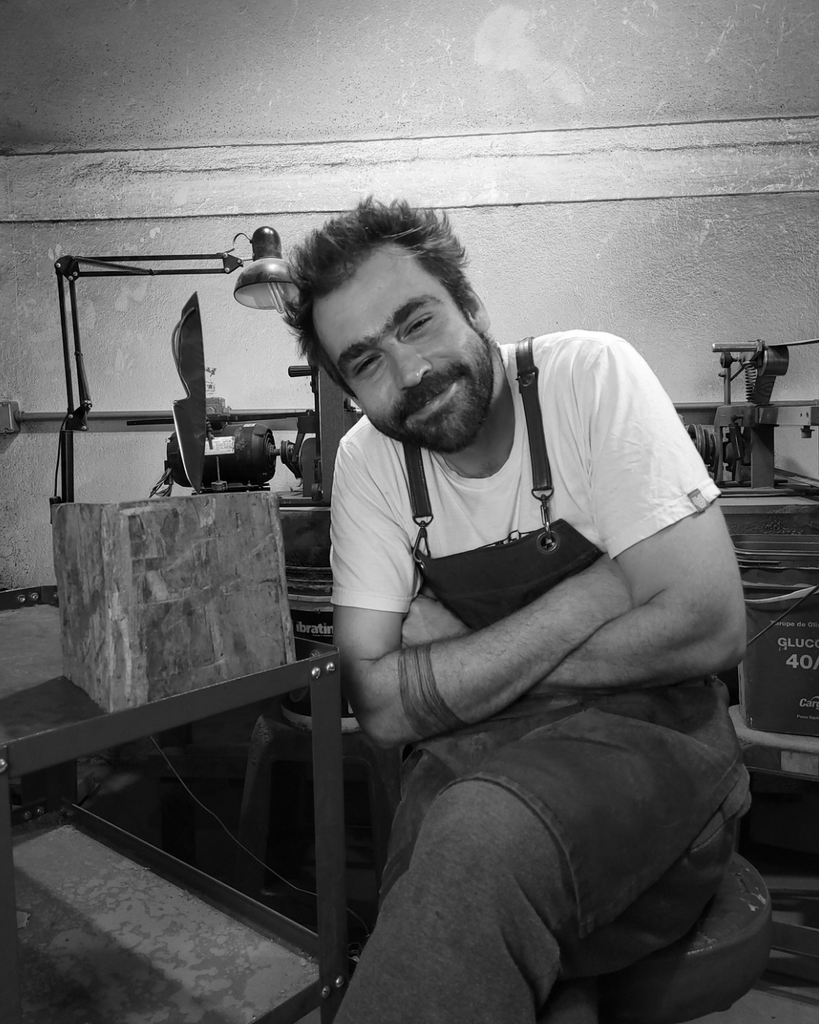
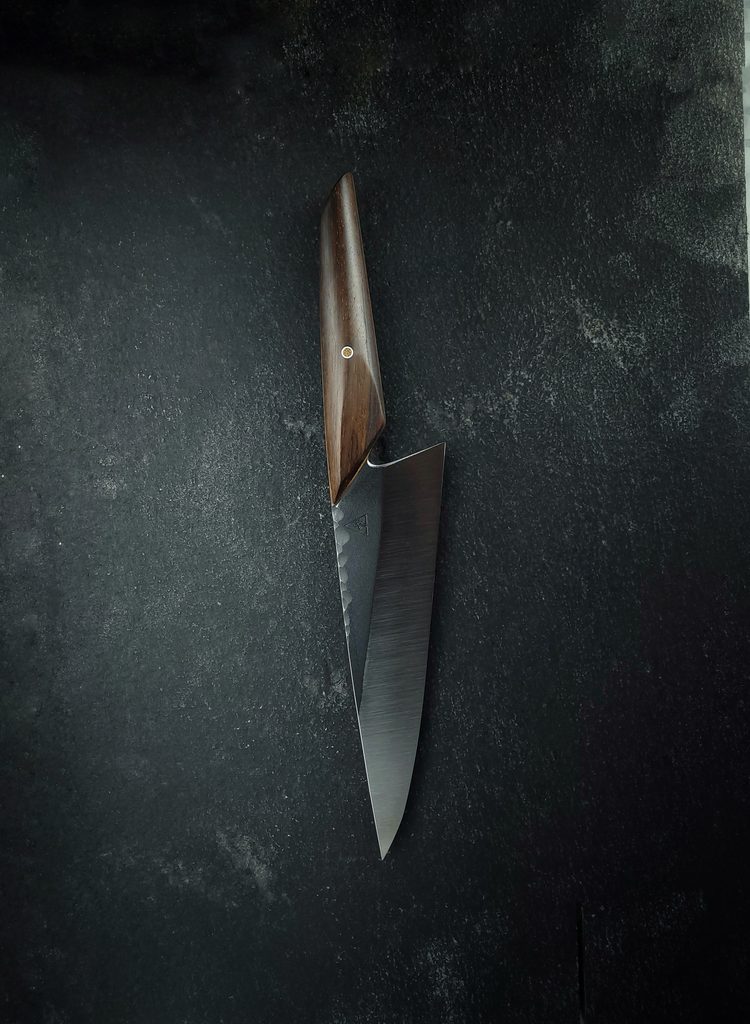
This week’s interview brings us back to Brazil, home to many talented makers. This maker has an incredibly unique yet simple design that caught my attention immediately. There is nothing to hide behind, the lines are at once familiar and bold. I am very excited to be able to share his story.
To start off, please tell us a little about yourself.
My name is Daniel Bahia Gontijo. I am Brazilian and 36 years old. I graduated in Product Design in 2011 and have been working as a full-time knifemaker for 13 years.
What sparked your interest in knives?
I have liked knives since I was very young. I remember the excitement of receiving my first pocketknife as a child and, sometime later, my first fixed-blade knife. The feeling of power to perform many different tasks was incredible.
What inspired you to do this and how did you learn?
My first contact with knifemaking came through my father. He is an enthusiast of manual crafts and dedicated himself to making knives as a hobby for a few years. He taught me the most basic fundamentals of the craft, and from there I continued learning as a self-taught maker.
When did you start making knives?
I started making knives professionally in 2012 after the design studio where I worked closed, and I have been working exclusively with knifemaking ever since.
What did you make your first knife with?
My first knife was made from automotive suspension spring carbon steel (5160) and Brazilian Pau Ferro wood. It was a small hunter blade.
What is the most important aspect of a well-made knife?
I understand that every aspect of a knife has its advantages and disadvantages. Extreme steel hardness, for example, provides excellent edge retention, but it also makes the blade more fragile and harder to sharpen. A thicker edge geometry increases impact resistance but reduces cutting performance. Therefore, I believe the most important skill for a knifemaker is knowing how to apply the ideal balance of characteristics for the intended purpose of the knife. Some of the aspects I consider most important are blade and edge geometry, heat treatment, material selection, ergonomics, and weight.
What keeps you going?
What motivates me most in knifemaking is evolution, creativity, and the perception involved in the process. I find it fascinating how the ability to “feel” the product constantly expands, revealing new possibilities and improvements. This dynamic is deeply connected to creativity, whether in defining a line of the shape or developing a new production technique.
Biggest struggle?
Without a doubt, the greatest struggles came from psychological challenges. This depends on each person’s emotional structure, but creating authorial work that is expected to deliver high performance and overall quality—while carrying all responsibility alone—can be a heavy burden. Self-criticism is important for growth, but excess can be harmful and paralyzing. The inner struggles are many: fear of making mistakes, self-sabotage, fear of inadequacy, and excessive self-pressure. Fortunately, these burdens have been gradually diminishing over time.
What kinds of knives do you make?
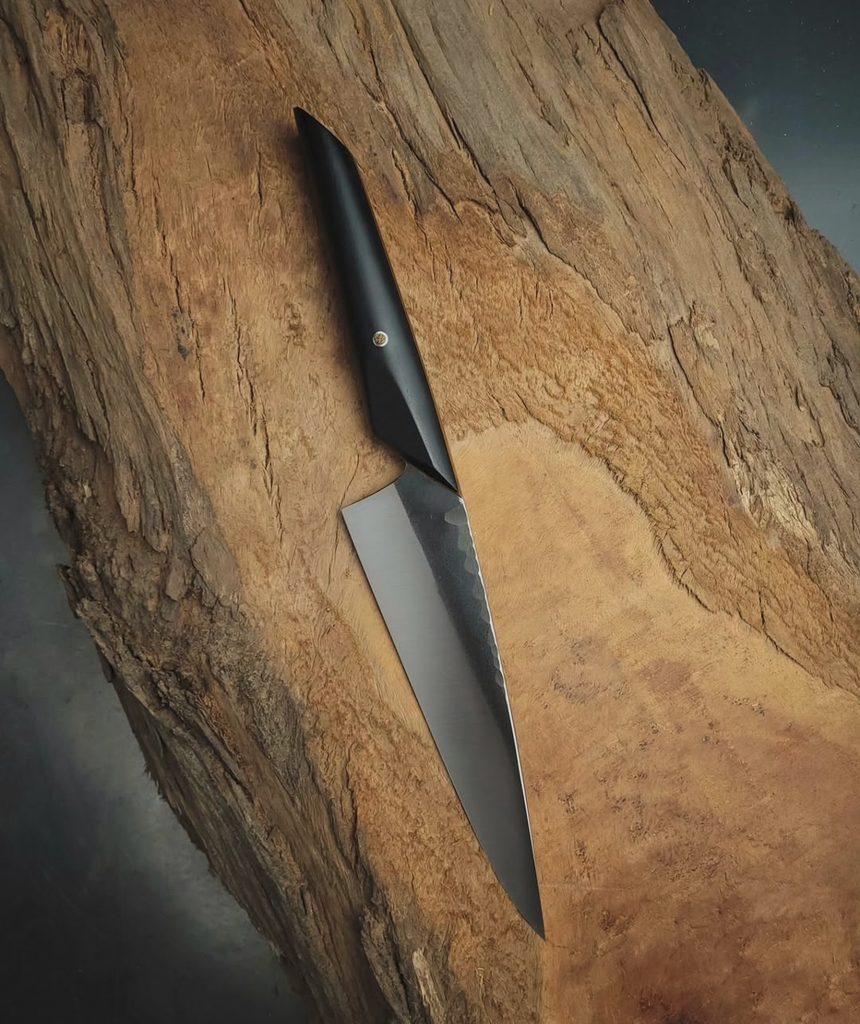
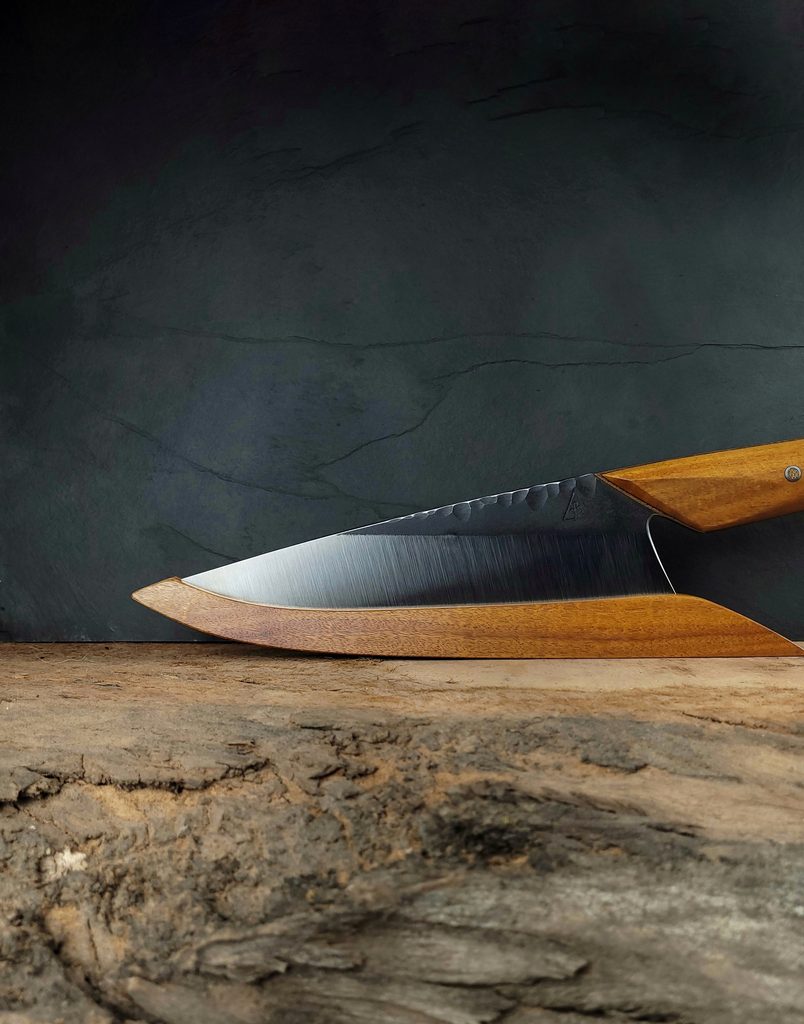
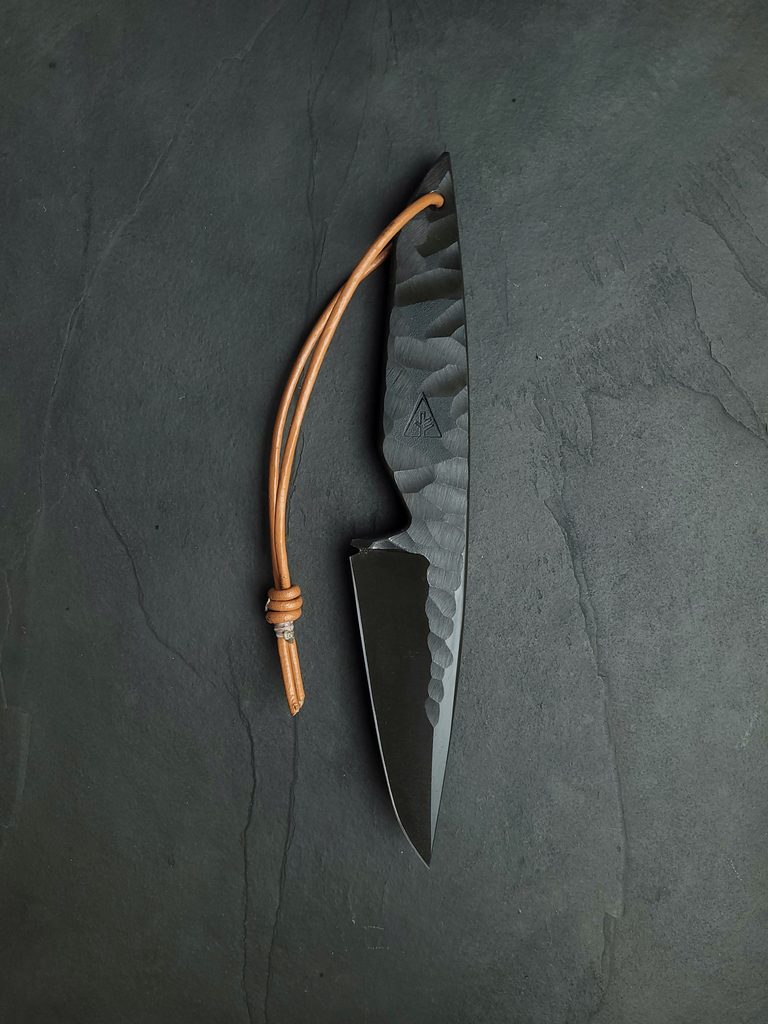
I mainly produce kitchen knives, both European and Japanese styles, but I also make some outdoor and EDC models.
How did your background affect your approach to knives?
My background in Product Design completely influences my approach. It helps me develop projects while paying attention to many different aspects of the product.
Since a young age, I have appreciated life philosophies and design schools that seek simplicity and harmony. I strongly value the idea of doing a lot with very little—the elegance and challenge of it. This principle is the main concept that guides my creations at ORK.
Who helped you early on?
My father helped me greatly in the beginning. He taught me the basics of knifemaking and many manual techniques, such as operating and maintaining different tools.
Who are your influences/inspirations?
Two major influences for me are Japanese knifemaking and the Bauhaus school of design. Both prioritize function, with simple lines and no excessive ornamentation. Although I allow myself to use more intense lines in my knives, they are usually defined by functional needs. My personal expression lies in the subtle harmonization between surfaces. Forms evolve from new perceptions of the knife’s needs, and it is impressive how beautiful lines emerge from this process. Another influence is automotive design, which contrasts with the sobriety of the others and adds energy through power lines.
What is the perfect knife?
I do not believe in the concept of a perfect knife. I believe everything depends on the user’s objective and circumstances. However, I strongly believe in constant evolution.
How do you approach a new concept and that concept’s implementation?
Concepts mature in my mind over longer periods, following my personal growth, the identification of needs, and experimentation. As for implementation, I study the characteristics of that knife type, sketch a series of alternatives, and create simple mock-ups to better understand volumes and proportions. Then I produce a functional unit.
How do you approach knife testing?
I conduct tests in the workshop, stressing and wearing the blade and handle until the material breaks or fails, as well as edge durability and brittleness tests by cutting large amounts of material. I have also performed more elaborate laboratory tests to check hardness and grain size of the steel structure. Still, the test I consider most important is constant use in my own kitchen.
How do you develop a design, select a steel, and fine-tune a heat treatment?
I applied the methods learned in college to create a unique design line with a well-defined aesthetic and identity, yet one that has been in constant evolution for the past 13 years. I worked with many different steels and eventually chose N690 based on the needs identified from most of my clients over the years, considering performance and practicality. Heat treatment calibration was achieved through experimentation, internal and laboratory testing, and exchanging knowledge with other knifemakers and specialists.
What do you like about N690 steel?
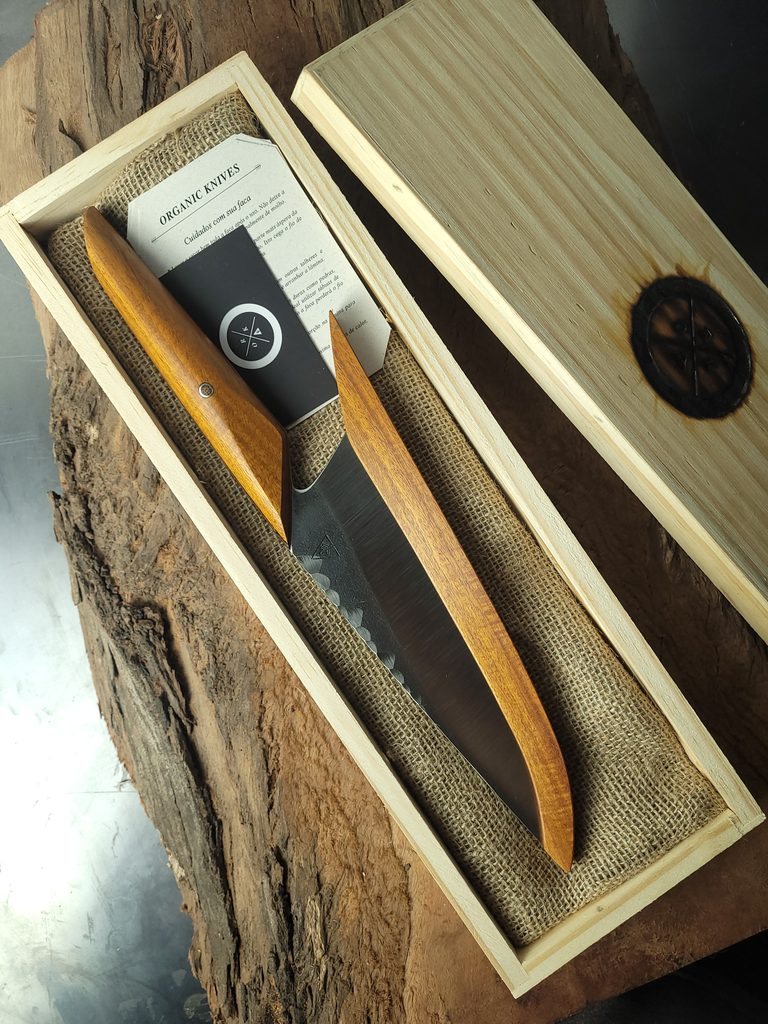
I chose N690 for its excellent edge retention and corrosion resistance, considering that most of my knives are intended for kitchen use. I realized that a significant portion of my customers do not handle carbon steel oxidation well. Despite being stainless, this steel is relatively easy to sharpen, and I can achieve a very fine grain structure even though it is a highly alloyed steel.
How has the knife world changed since you started?
The expansion of the knifemaking niche has been very clear, especially in Brazil. When I started, few people even knew what a “cuteleiro”(knifemaker) was. The demand for quality knives moved beyond collectors and enthusiasts and began attracting cooks and chefs, driven by the gastronomic boom. More recently, the culture of handmade knives expanded even further with reality TV shows focused on the craft and the discovery of this market.
What’s up next for you? Any exciting new projects to tell us about?
My main goal is to continue evolving my current line. However, I also plan to develop new and unconventional projects. The idea of radically minimalist and highly practical knives is always present in my mind.
To keep up with what Daniel is working on head over to his website https://www.organicknives.com/ and follow him on Instagram https://www.instagram.com/organic_knives/
Leave a Reply