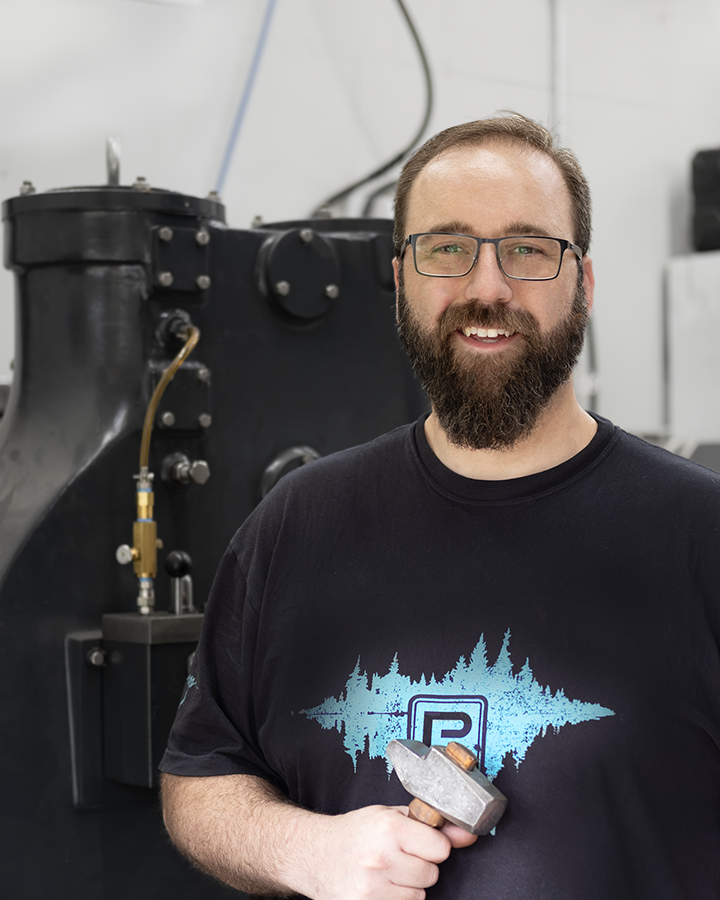
This week’s interview takes us to Minnesota, USA. What has always struck me about him, is his humility. His work is anything but humble if you look at the photos below and then compare that to how he describes himself. I have always believed you can speak softly and the world will listen, it all just depends on what you have to say, and I’d say his work speaks volumes.
To start off, please tell us a little about yourself.
Hi, I’m Rich Patterson, and I’m 39 years old. I was born in Cleveland, Ohio, but I moved to Minnesota in 2018. I’m married with two amazing kids. Before moving, I was a full-time commercial electrician, but now I’m a full-time maker here in Minnesota.
What sparked your interest in knives?
When I was around nine or ten, my uncle gave me an old-school pocketknife. From that first knife I was totally hooked. I started a collection buying every knife I could find at garage sales, flea markets, and anywhere else I could. I’d use my knives to cut wood, build, and explore in the woods.
What inspired you to do this and how did you learn?
I was hooked on collecting, but at that point in my life I couldn’t afford any nicer knives. I figured I could save some money by making my own. It turned out it wasn’t a simple or straightforward process. When I started learning YouTube wasn’t around like it is now. Instead, I dove into blade forums, books, and a lot of messing up.
I enjoy the process of using science and art to make a chunk of metal into a functional tool.
When did you start making knives?
My first real “knife” was when I was 17. It was a small hunting knife. I traded the knife to a welder, who put together my first grinder.
What did you make your first knife with?
A homemade forge out of an old coffee can. A random block of steel as an anvil. An old rusty hammer. And steel for the blade was a scrap piece of leaf spring.
Do you have a favorite knife you made, tell me about it?
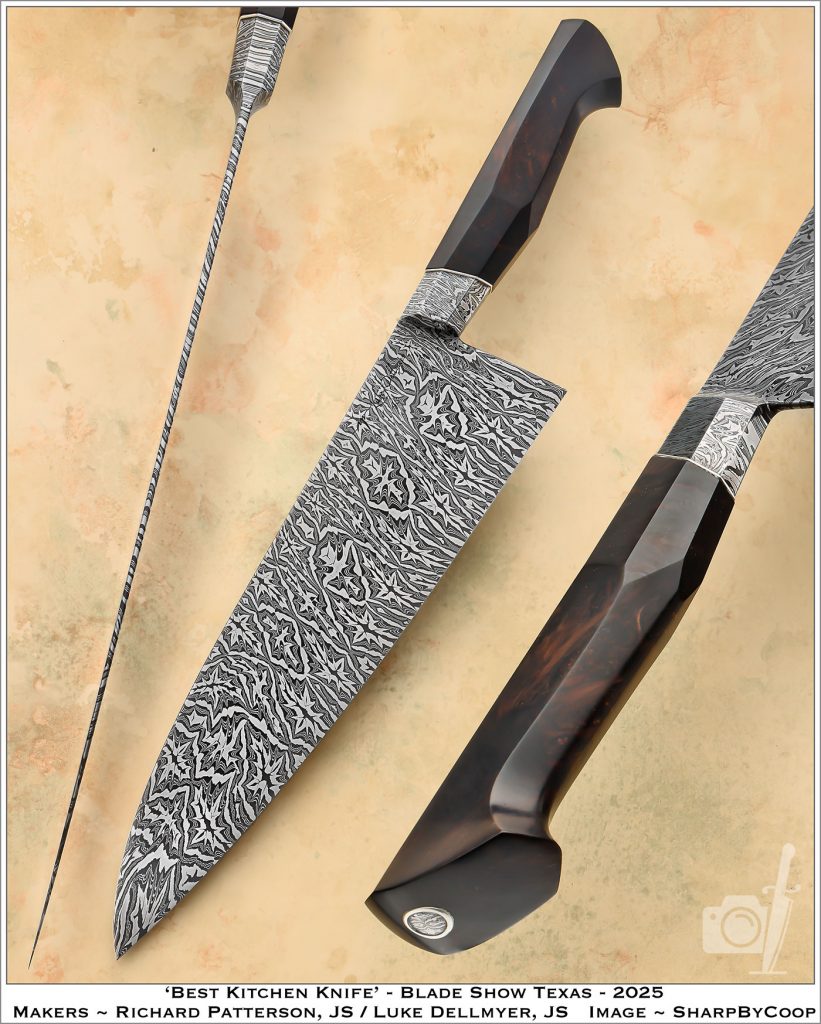
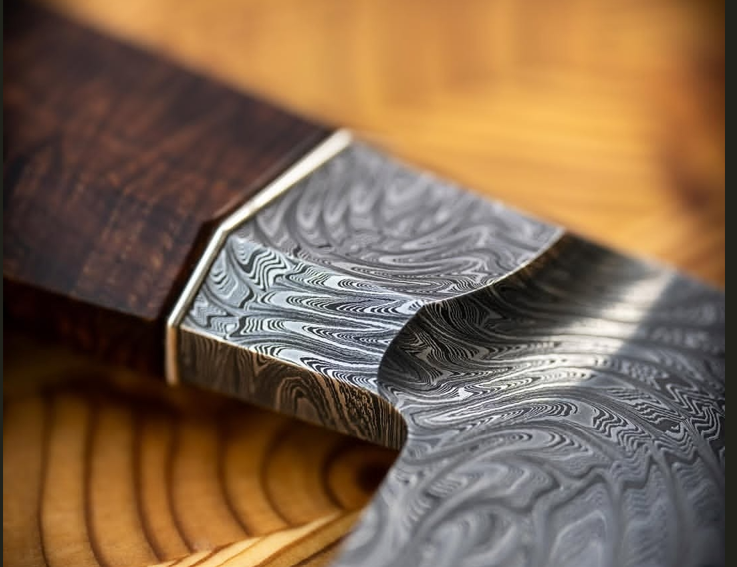
The knife I was most proud of was my integral chef knife from my ABS journeyman set. It represented the best work I was able to achieve at that time.
What is the most important aspect of a well-made knife?
That’s a tricky question. Geometry and heat treatment are so connected. Heat treatment tells you what kind of geometry you can use and how long it can remain sharp. But the geometry is what determines how well it cuts.
What keeps you going?
The next project: I really enjoy the journey. I actually have a hard time finishing projects. But knowing that I have another one coming up helps me push through. As I’m thinking of a new project I’m envisioning the next shape or design or technique I want to try out.
Biggest struggle?
See previous question… finishing a project 🙂
What kinds of knives do you make?
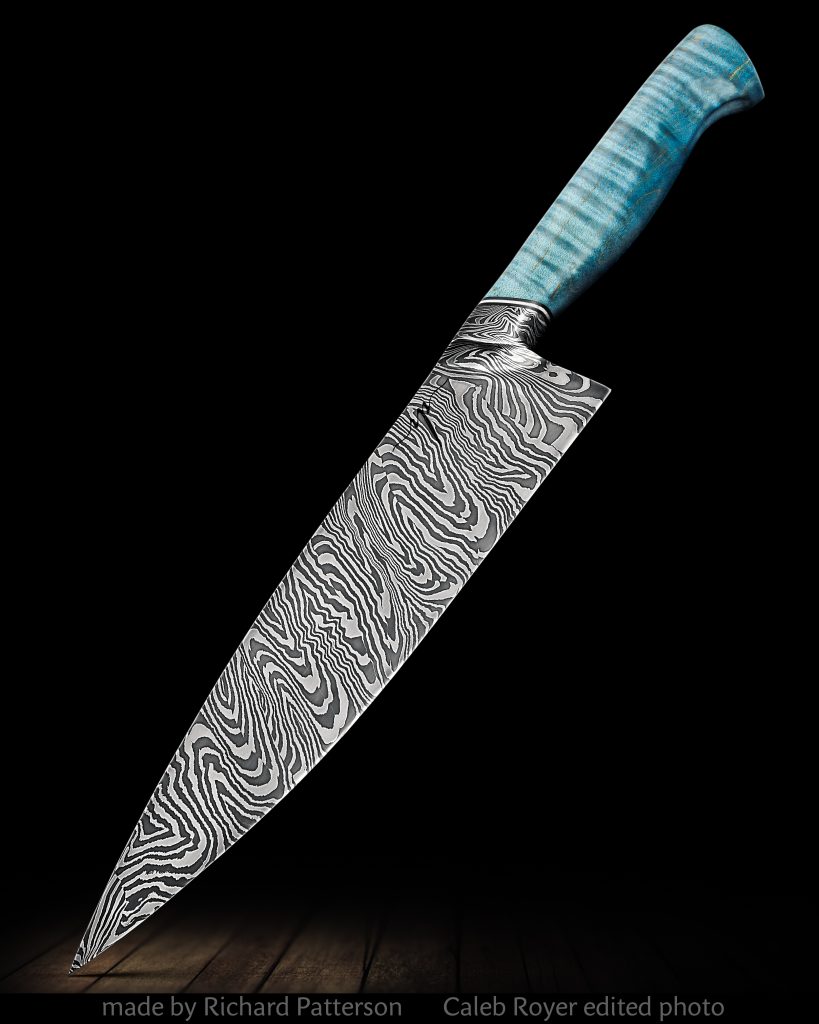
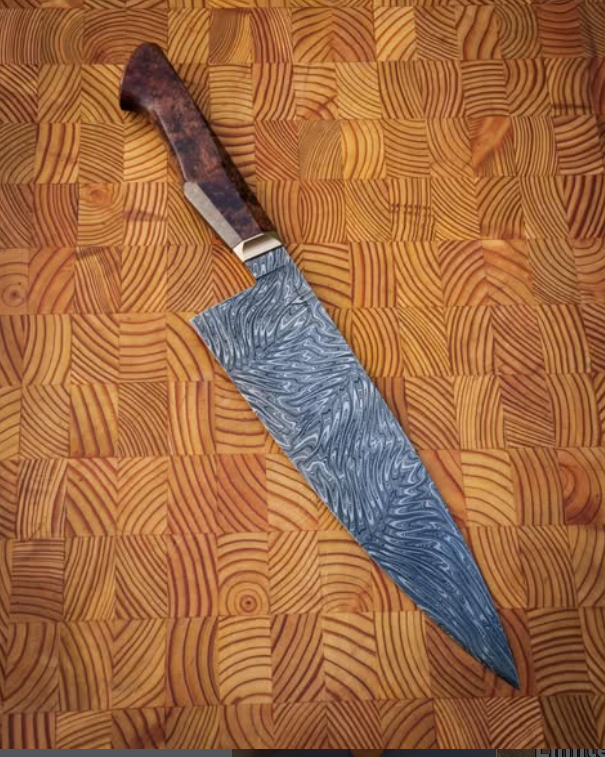
I started out making EDC and outdoor knives. As I’ve progressed, I’ve transitioned almost entirely to culinary. I really like that a chef knife is used every day in every home. And even someone with little experience can appreciate the differences in performance.
How did your background affect your approach to knives?
Working in construction really taught me how to run a project. Being able to take an overwhelming project and break it down into smaller steps makes it more approachable.
Who helped you early on?
Kim Thomas, a well known blacksmith in Ohio. I had my first forging experience in his shop. He let me borrow a coal forge for a bit.
Who are your influences/inspirations?
Nick Wheeler, Kevin Cashin, Bob Kramer, Mareko Maumasi, Salem Straub, Jordan Lamothe, Benjamin Kamon, Nick Rossi plus so many others.
How do you think that inspiration (those inspirations) translates into your work?
Some inspire me with their art and design. Others by the precision of their work. Others their workmanship process and forging technique.
Any specific breakthroughs or revelations in your knife making journey?
It’s a real eye-opener when you realize a project’s spiraling out of control and you shouldn’t keep pushing forward. I’ve spent so much time trying to salvage something that’s already beyond repair. Knowing when it’s time to stop and start again fresh is a game-changer!
How do you approach a new concept and that concept’s implementation?
I research. Then I make prototypes to test out new concepts.
How has the knife world changed since you started?
Earlier on custom culinary knives weren’t a significant focus of the knife community. Only in the past 10 years or so has that area become more central. Sure there were guys doing it, but it was a minority. Also pre-forged in fire being a knifemaker was kind of weird now it’s kind of cool and more respected area of interest.
What’s up next for you? Any exciting new projects to tell us about?
I’m working on a semi-production line of culinary knives. They’re partially ground in a facility in Washington. I do the final grinding and assembly here in my shop. The first model is a 210mm Gyuto. If that goes well I have a couple other shapes in the works.
The next big knifemaker milestone I hope to pursue is testing for ABS Mastersmith in the next few years.
To keep up to date with what he is working on, and upcoming projects check out his website https://www.pattersonblades.com/ or follow him on Instagram https://www.instagram.com/pattersonforge/
Leave a Reply