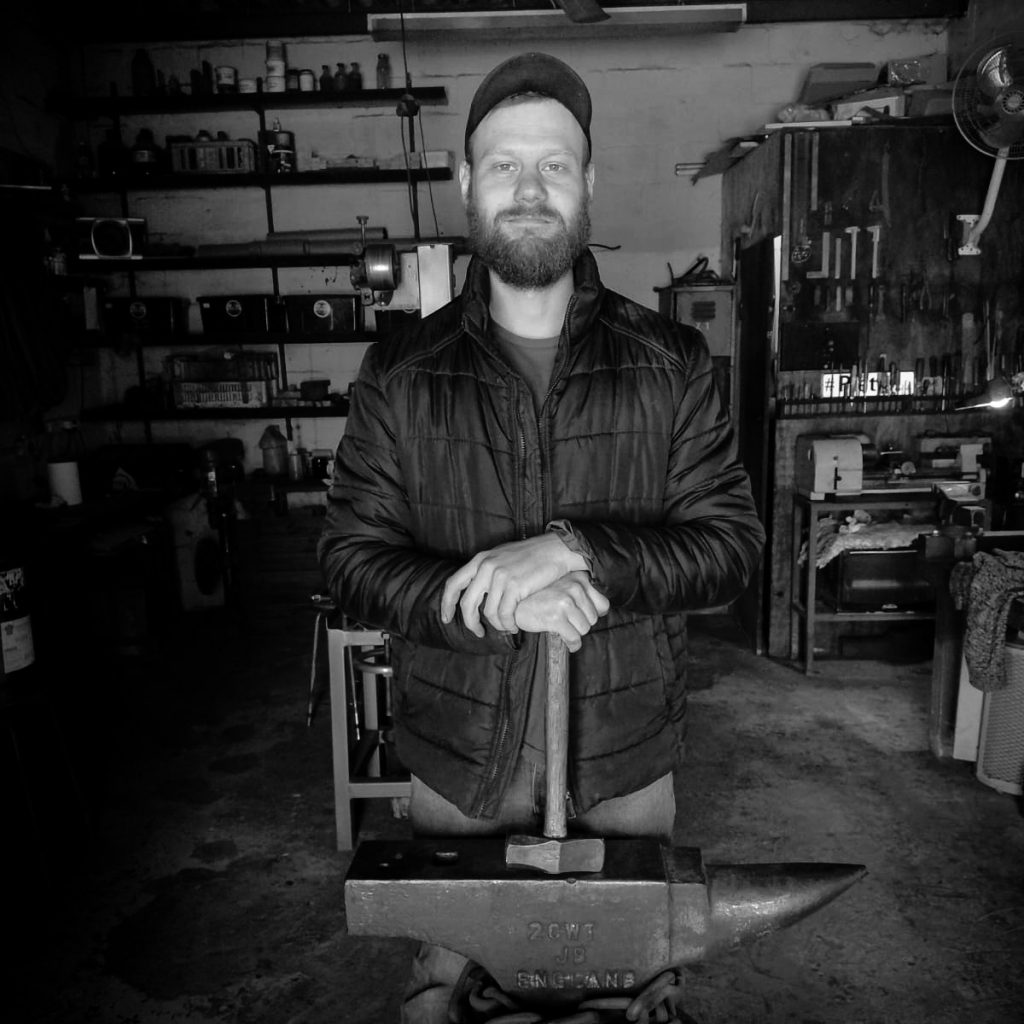
This week’s interview takes us to Africa, and a maker who reminds me why I love handmade knives. It also reminded me that life can take you places you never expect, and that can be beautiful. One thing I really appreciate about this maker, is how he is so immersed in so many different knife making traditions. I am so pleased to be able to share his story with you.
To start off, please tell us a little about yourself.
My name is Pieter van der Bank (brand name: PvB Knives). I am a bladesmith based in the quaint little town of Heidelberg in the beautiful Western Cape of South Africa. My studio is located at our local art gallery, Star Nation Art Studio, where we work together as four artists: a blacksmith, a bladesmith, a painter, and a potter.
Directly after finishing school, I did a blacksmithing apprenticeship under Andries Kluyts, the blacksmith at Star Nation, for two years. The work included decorative metalwork, sculptural elements, various forms of welding, structural steelwork, and installations. I forged a couple of knife-shaped objects just for fun but didn’t end up finishing any.
After this, at the age of 20 and unsure of what to do with this thing called life, I booked myself a plane ticket to Thailand, where I had some friends at the time, and ended up working and traveling around Southeast Asia, living in and around Bangkok for about a year. That’s where the real interest in knifemaking and bladesmithing started.
What sparked your interest in knives?
I was staying in a little apartment in Saraburi province in central Thailand at the time and was out for the weekend visiting the famous “Monkey Town,” Lopburi. There’s a beautiful mountain temple there which I wanted to check out, and on the way back down from the 3,790-step staircase on the mountain, I heard a very familiar sound—the unmistakable ringing of an anvil.
A small craft market had sprung up from seemingly nothing, with stalls selling traditional Thai ingredients, foods, and utensils. The sound was coming from one of the stalls, manned by a family of craftsmen, where an elderly gentleman was sitting at a stake anvil, hammering out blade after blade. Fascinated, gawking at the practiced ease with which he was working, I ended up buying myself my first ever knife. It was a lovely little carbon steel cleaver—apparently a traditional Thai paring knife—which quickly became my favourite kitchen utensil. It’s still hanging in my studio.
What inspired you to do this, and how did you learn?
Inspired by my little Thai cleaver and having some experience and interest in blacksmithing, I started checking out the South African knifemaking scene. I came across the social media pages of Mike Fellows, Stuart Smith, and Philip Dunn, and was in awe—having never known such a niche existed in RSA.
When did you start making knives?
I had to come back to South Africa in October 2016, at the age of 21, and was back for about a week when I decided I had to try my hand at making a knife. Making do with mostly carpentry tools in my father’s workshop, I completed my first knife after about a week: my own version of my favourite knife—the Thai mini cleaver.
The steel was repurposed from an L6 frame saw blade, and the handle was Leadwood from our farm in Limpopo, where I grew up. The bug had bitten! I posted a photo of my attempt on Facebook just to show my friends, and would you believe it—I got an order for a mini cleaver soon after. I made the knife and sent it off, posted another picture, and got two orders. Suddenly I found myself investing in knifemaking tools and starting a small business!
Do you have a favorite knife you’ve made? Tell me about it.
Every passion project becomes my new favourite—the most recent being a 1.2-meter Viking-style longsword. A good friend, who has done a couple of my weekend workshops in the past, commissioned it earlier this year. I went all out! The blade was pattern-welded steel, the hardware was wrought iron, the handle was African Blackwood, and the scabbard was covered in leather embossed with the name of the sword in Elder Futhark runes. More time was spent researching the era’s swords and smithing techniques than actually making it.
What is the most important aspect of a well-made knife?
This is an extremely broad question, and it absolutely depends on the type of knife. However, I believe every handmade knife should at least adhere to some strict requirements. As Master Jack Connan often says: If something is worth doing, it’s worth doing to the best of your abilities. Don’t do half-hearted work, and don’t send out crooked or blunt knives!
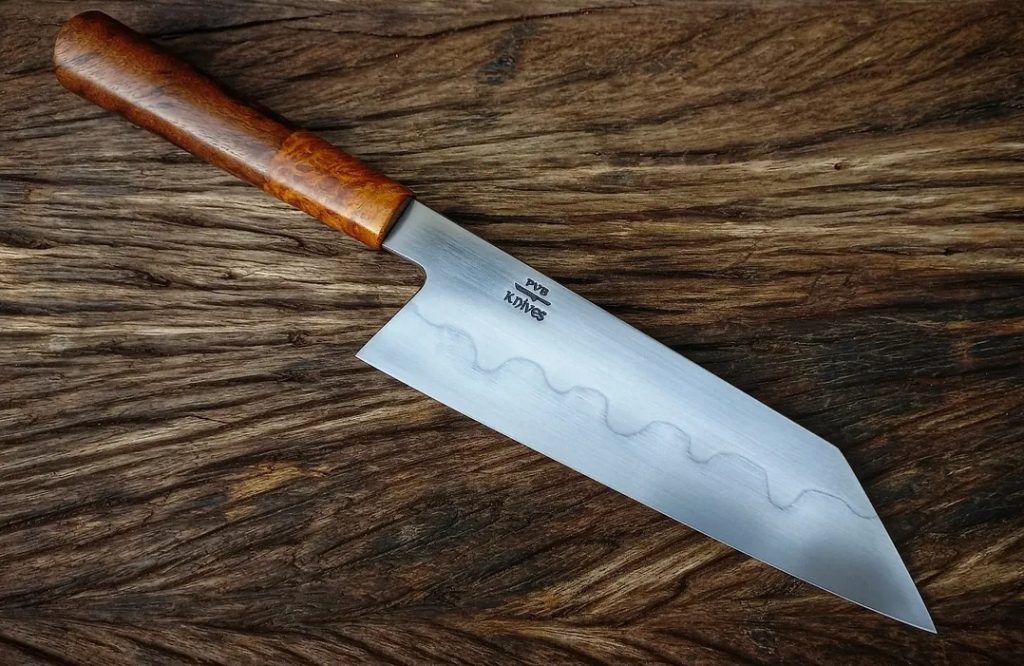
A chef’s knife must have proper edge geometry and a distal taper; a utility knife should have a comfortable grip; a throwing knife should be balanced; a hunting knife should be light to carry, etc. Most importantly, I believe, is to give your client the best version possible of their chosen steel and other materials. If you don’t know how to achieve these results, don’t start making before doing adequate research.
What keeps you going?
As I often tell anyone willing to listen, I don’t have a passion for knives, but rather for the process of making them. That’s why I try to forge as many of the knives I make as possible—even when no forging is required. The ancient, almost lost art of heating up and smashing out a piece of steel until it resembles a usable object fascinates me, even after 9 years of doing this full-time. There are just so many nuances and techniques to it. One can never get tired of it.
Biggest struggle?
Finding inspiration on my own. This is why getting custom orders is so rewarding. Being open to new ideas and styles ensures I can continue my artistic approach to bladesmithing and apply what I learn from each order to the next item I craft.
What kinds of knives do you make?
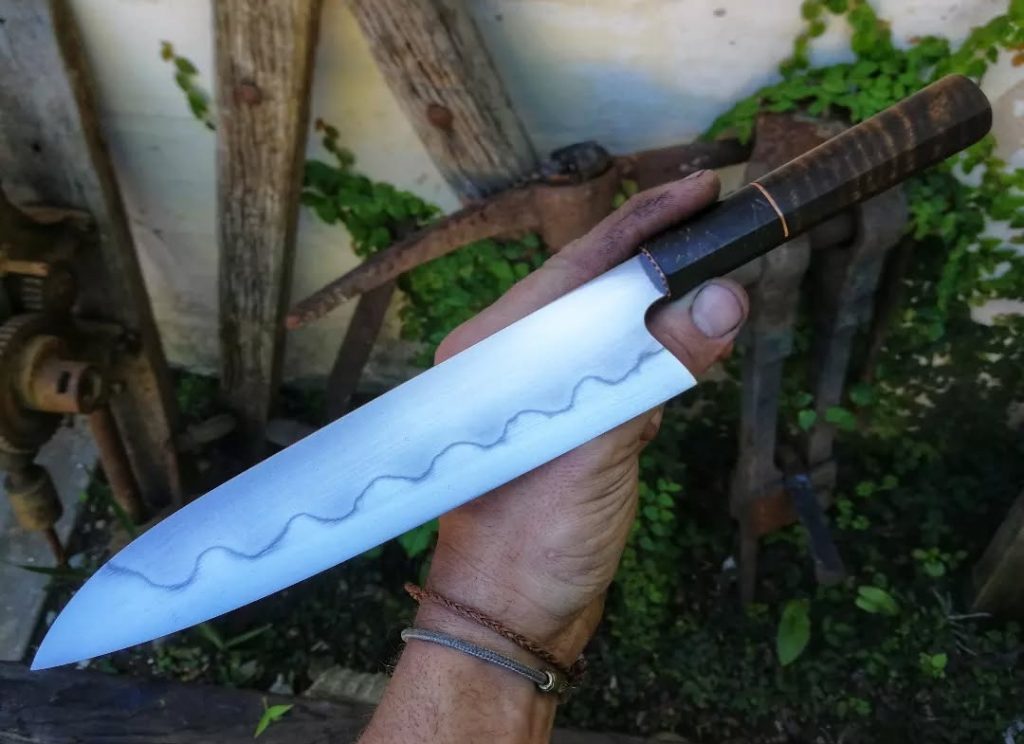
I specialize in Japanese-style kitchen knives, as they are probably the most difficult style to get right—there are just so many factors to take into consideration at all times! Finding the balance between sharpness and toughness in their super-hard, ultra-thin edges will take me at least another 9 years to master.
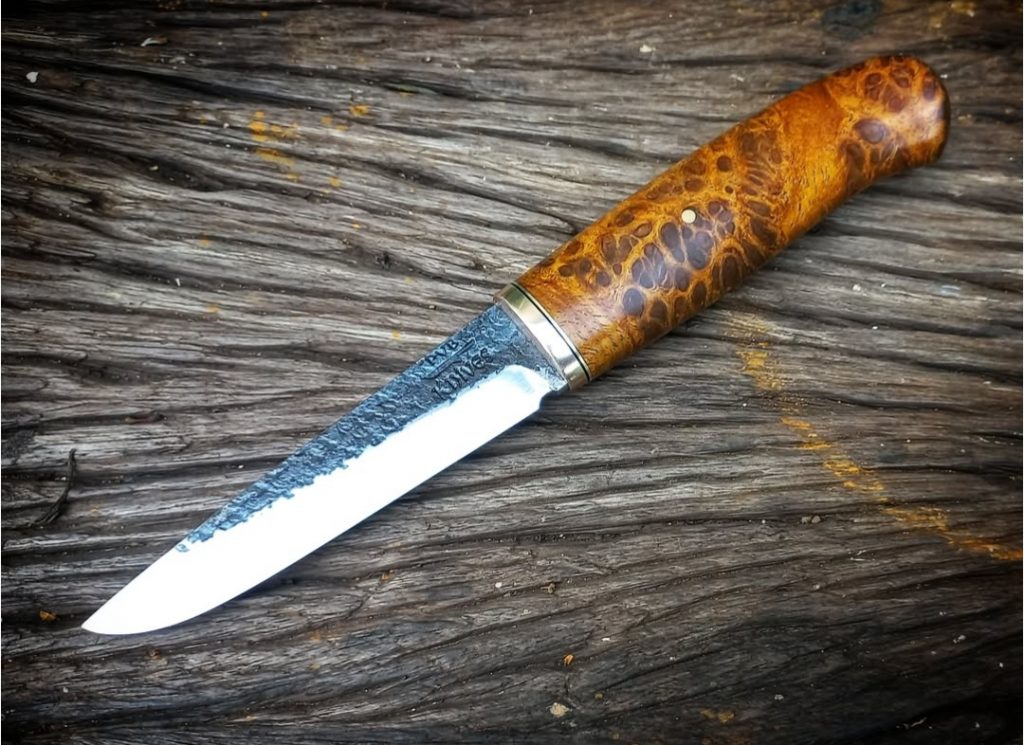
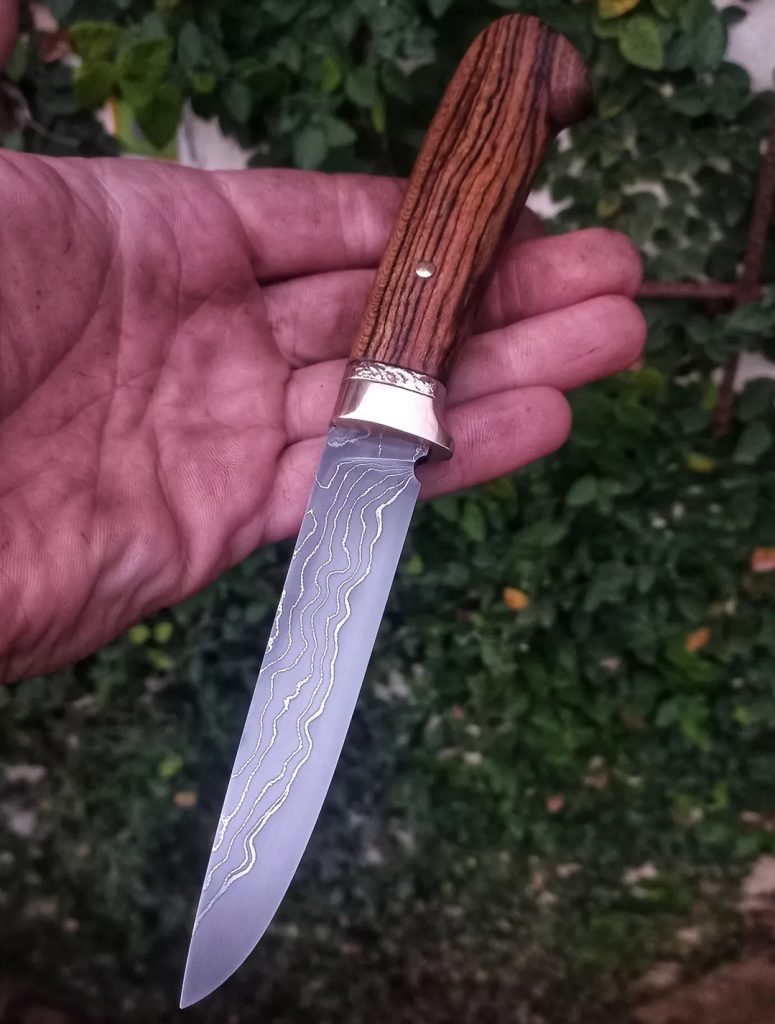
Scandinavian utility knives also fascinate me due to their rich history, evolution through the ages, and their all-round versatility.
How did your background affect your approach to knives?
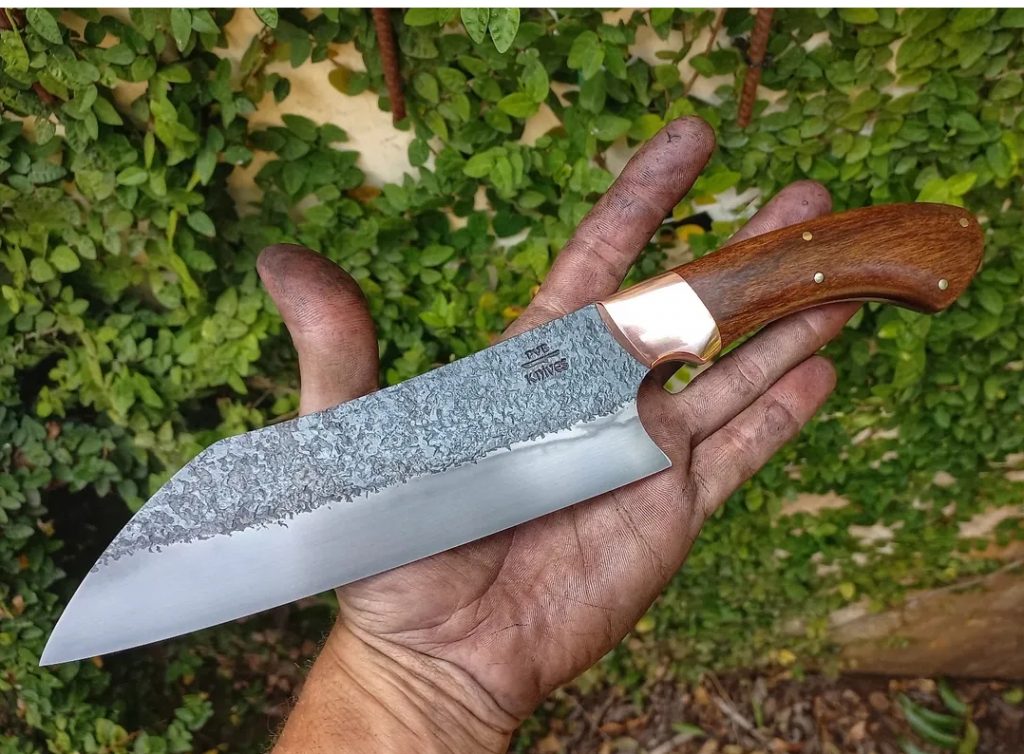
My background in blacksmithing makes me love a good forge finish on a knife! Oftentimes, I’ll apply a forged texture even on a stock-removed knife. There’s a fine line, though, between “rustic” and forged. If I do a blacksmith finish on a blade, I’ll still make sure to apply all other rules of knifemaking—especially with symmetrical and polished bevels juxtaposed with the rougher finish.
Who helped you early on?
My friend and mentor Andries Kluyts, with his broad knowledge of forging techniques and toolmaking. Jack Connan, a masterful knifemaker, goldsmith, and gunsmith, once phoned me out of the blue to answer a technical question I posted on a knifemaking group on WhatsApp—I appreciate his brutal honesty and sound advice! My father André, who kindly let me use his workshop for the first few years of my knifemaking journey. And of course, my amazing wife Maretha, who has been my rock through all the ups and downs.
Who are your influences/inspirations?
Jim Hrisoulas, Steve Schwarzer, David Lisch, Stuart Smith, Jack Connan, Philip Dunn, Curtis Haaland, and the gentlemen of the Northmen Guild.
How do you think those inspirations translate into your work?
Even though the knifemaking community shares techniques freely, it’s very important not to copy anyone else’s work—even with their permission. So, I always try to put my own twist on a style, technique, or idea I see from another maker. If I see something that pleases the eye—whether it be an entirely new surface finish or even just a simple curve where one wouldn’t expect it—I’ll keep it in the back of my mind to amalgamate with everything I’ve learned so far.
Any specific breakthroughs or revelations in your knife-making journey?
Ferric chloride, 0000 steel wool, and Autosol metal polish are your friends., haha.
What is the perfect knife?
There is no such thing! That’s why different knives exist for different purposes—and the perfect knife for that purpose will differ from person to person, depending on a plethora of factors. In the end, I think it boils down to personal preference.
How do you approach a new concept and its implementation?
Research, trial, and error. For example, I’ve been trying to make a batch of the famous Yakut or Sakha knives, and just last week I broke 6 of a batch of 8… back to the drawing board because I was too impatient with the hardening and straightening of a very asymmetrical blade.
How do you approach knife testing?
The brass rod test on thin edges will reveal improper heat treatment. A ferric chloride dip will show if I’ve hardened a large enough portion of the blade on a differentially hardened knife. And a few minutes standing outside checking out the finished knife will show any scratches and imperfections—sunlight reveals all!
How do you develop a design, select a steel, and fine-tune a heat treatment?
A good example is the Mini Cleaver, which I still make! The design has evolved through the years, with tiny changes made countless times. Every time I learn something new or discover an issue, I try to address it. The choice of steel depends on the type of knife: for tough-use knives I like using 5160, for cheaper batch-produced items I use thin 1070, and for chef knives I prefer 1095 and W2. Heat treatment can be fine-tuned by following the steel manufacturer’s specs and through trial and error.
Any favorite steels?
Call me biased due to my background, but I prefer using carbon steel—both when making and using a knife. A cool, unique patina on a large, wide-bladed chef’s knife, to me, just looks so much better than a standard satin finish on a stainless blade. The thing about carbon steel is that you never get bored of it—you can do so much with it, and the fact that the patina is constantly changing how the blade looks is an added bonus.
Nothing against stainless knife steels though—I have used N690, Elmax, and 14C28N and they definitely do the job. From a philosophical point of view, we live in an era of consumerism where people have forgotten how to look after their possessions. I believe having to take good care of something practical and beautiful makes you appreciate it even more.
How has the knife world changed since you started?
It seems to be constantly changing. The History Channel’s Forged in Fire has definitely helped to awaken interest in bladesmithing. Interestingly, I noticed a massive spike in kitchen knife sales during Covid, with people being home more and focusing on cooking. With recent price hikes on food and living expenses, the general public is still buying handmade knives—but they seem to be leaning toward the more affordable options.
What’s up next for you? Any exciting new projects to tell us about?
I’m working up the courage to apply for KGSA membership. I don’t feel like I’m there yet, but I won’t know unless I try hey!
To keep up to date with Pieter follow him on Instagram https://www.instagram.com/pvb_knives/
Leave a Reply