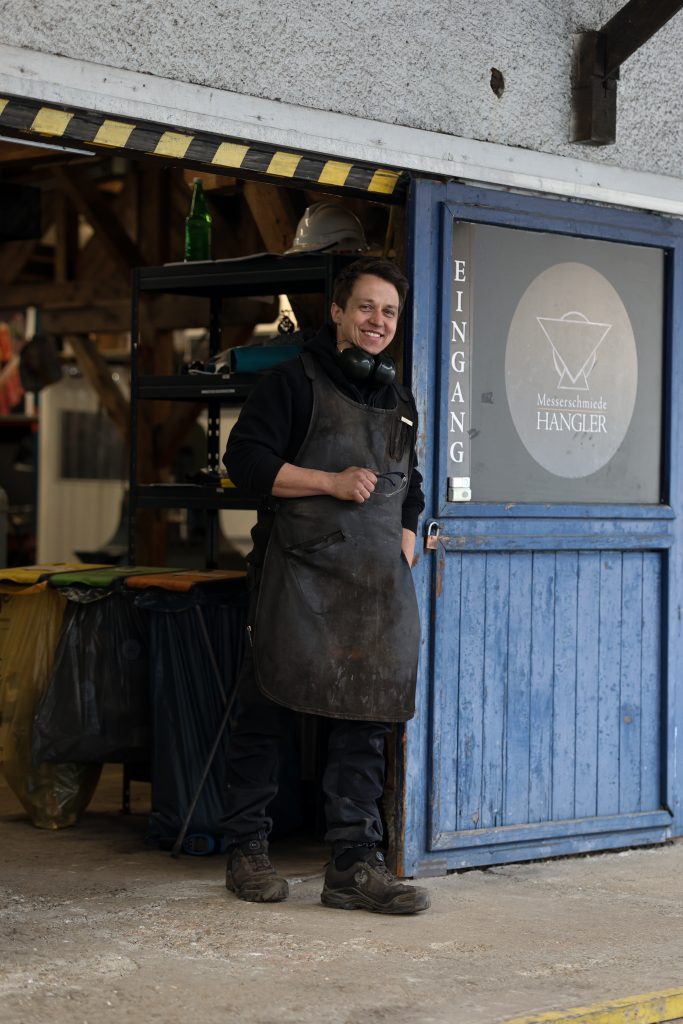
This week’s interview is with Tobias Hangler a maker who knows knives inside and out, not only a noteworthy and talented maker, but also was part of the team who developed ApexUltra. He’s also always been gracious with his time and knowledge. I have greatly appreciated getting to know him better. He also likes to give back by participating in charitable projects and has even contributed towards my Steel for Good charity project. I am very pleased to share his story.
To start off, please tell us a little about yourself.
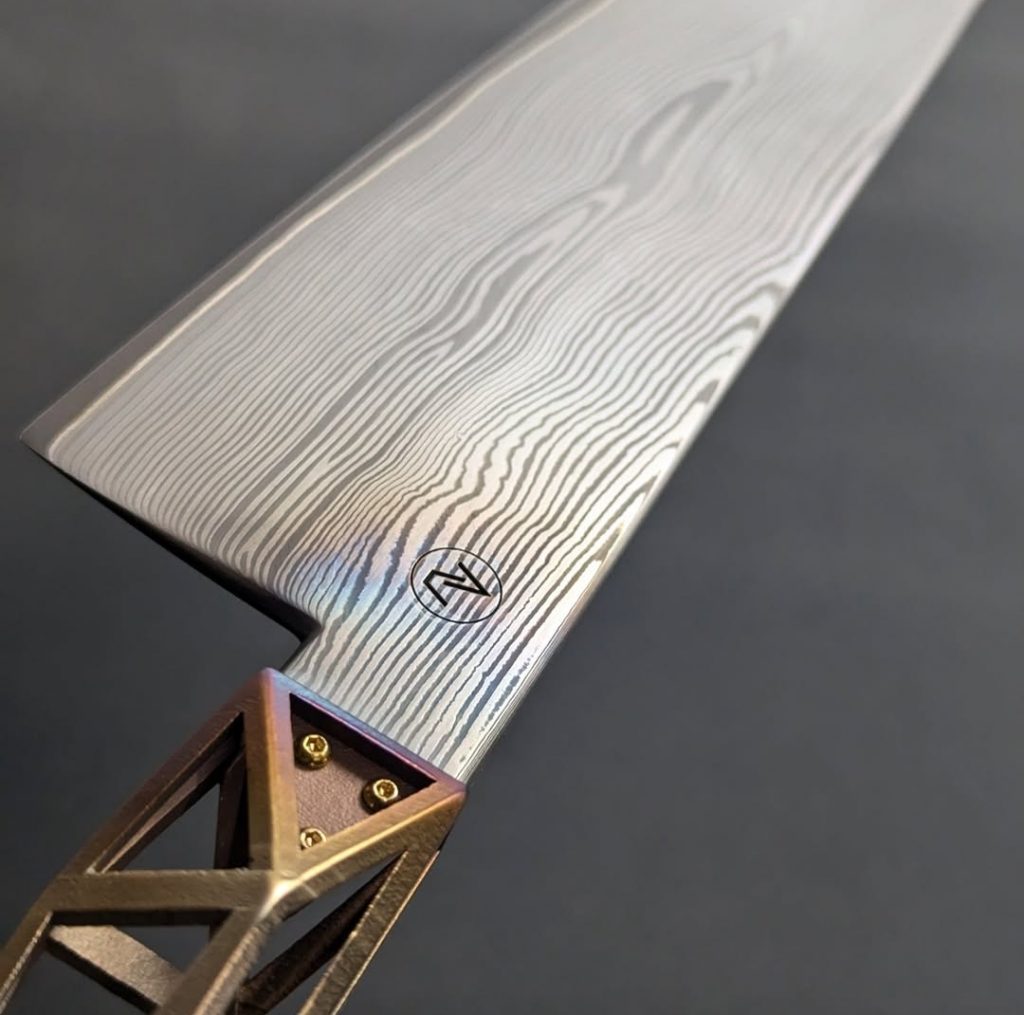
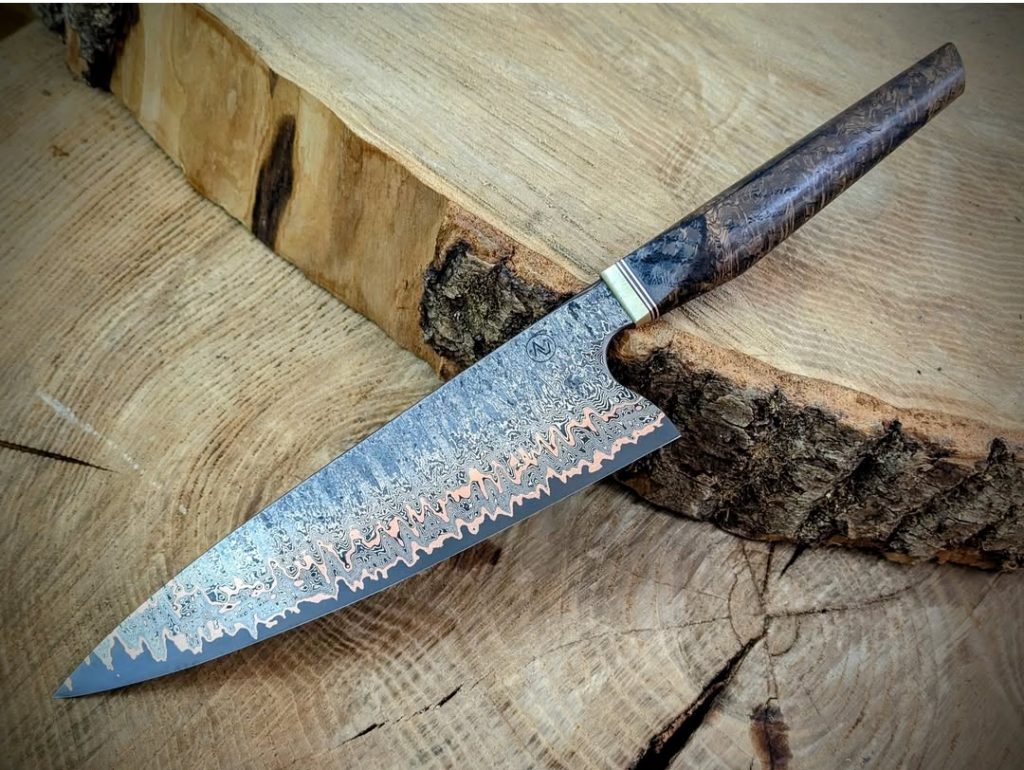
I am a bladesmith and metallurgist based in Austria, focused on creating culinary knives that are both highly functional and a joy to use. My aim is to make knives that spark excitement through their performance and character. With my technical mindset, I’ve always been fascinated by how far performance in culinary knives can be pushed – optimizing those last few percent is endlessly interesting to me. In the kitchen, I find myself reaching for knives that not only work extremely well but also have presence and personality. When I make knives, I enjoy playing with contrasts – rough and refined, puristic and playful – and bringing together different materials to create a cohesive concept.
What sparked your interest in knives?
I’ve used knives from a young age, but what truly drew me into knife making was forging. I always felt the urge to forge and to create something useful. Knives presented the perfect challenge: they are endlessly demanding, and they offer a lifetime of learning without ever becoming boring.
What inspired you to do this and how did you learn?
As mentioned above, it all began with forging. When I started in 2006, most of the available knowledge came from books and a few online forums. Video content and other resources came later. My craft was largely self-taught, but on the scientific side I studied metallurgy formally at the University of Leoben, where I earned a Master’s degree.
When did you start making knives?
2006.
What did you make your first knife with?
A piece of railroad steel, a file, and a coal fire.
What is the most important aspect of a well-made knife?
For me, it’s functionality – however that functionality is defined or achieved. A knife that doesn’t perform its intended purpose is useless, whether due to poor geometry, poor heat treatment, or poor material choice. The tricky part is that these qualities aren’t always visible to the buyer. That’s why trust and reputation play such a central role in the knife world.
What keeps you going?
Creating things I can be proud of, and constantly refining and improving the way I make knives.
Biggest struggle?
At the moment: shipping knives to the US.
What kinds of knives do you make?
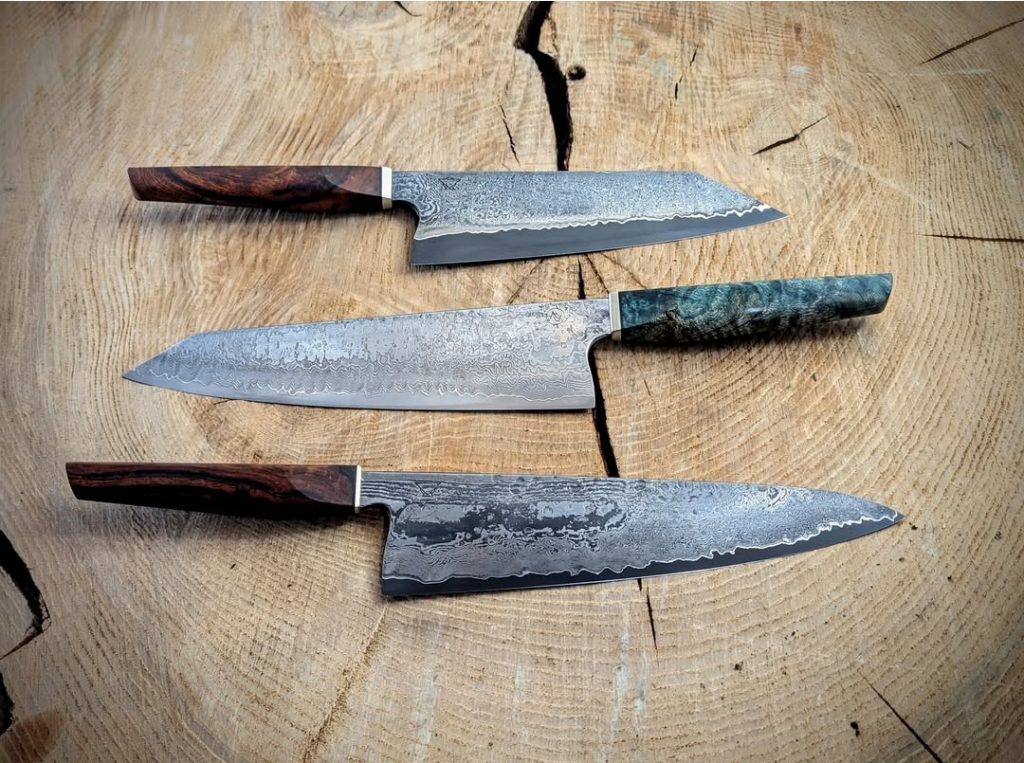
I work almost exclusively on high-performance culinary knives made from high-hardness steels such as ApexUltra.
Who are your influences and inspirations?
There are too many skilled craftsmen to name individually. I truly believe we can learn something from everyone – even if it’s just learning how not to do something.
Any specific breakthroughs or revelations in your knife making journey?
Helping design and bring ApexUltra to market was the fulfillment of one of my biggest dreams. Knowing that this steel is the best available worldwide for high-hardness applications is immensely rewarding.
How do you approach a new concept and its implementation?
That’s one of my favorite parts of knifemaking: prototyping. I love testing ideas without the pressure of making something perfect right away – just seeing if the concept works in general, and discovering the challenges along the way.
How do you develop a design, select a steel, and fine-tune a heat treatment?
There are many approaches. Sometimes I start with a material concept I want to explore. Other times, the blade shape and size come first, and I choose materials and construction to suit it. In some cases, I begin with a target price or other practical constraints and work backward. For fine knives, I usually use ApexUltra for the core, since it’s what I’m known for and it’s the best steel for fine edges that I’ve found so far.
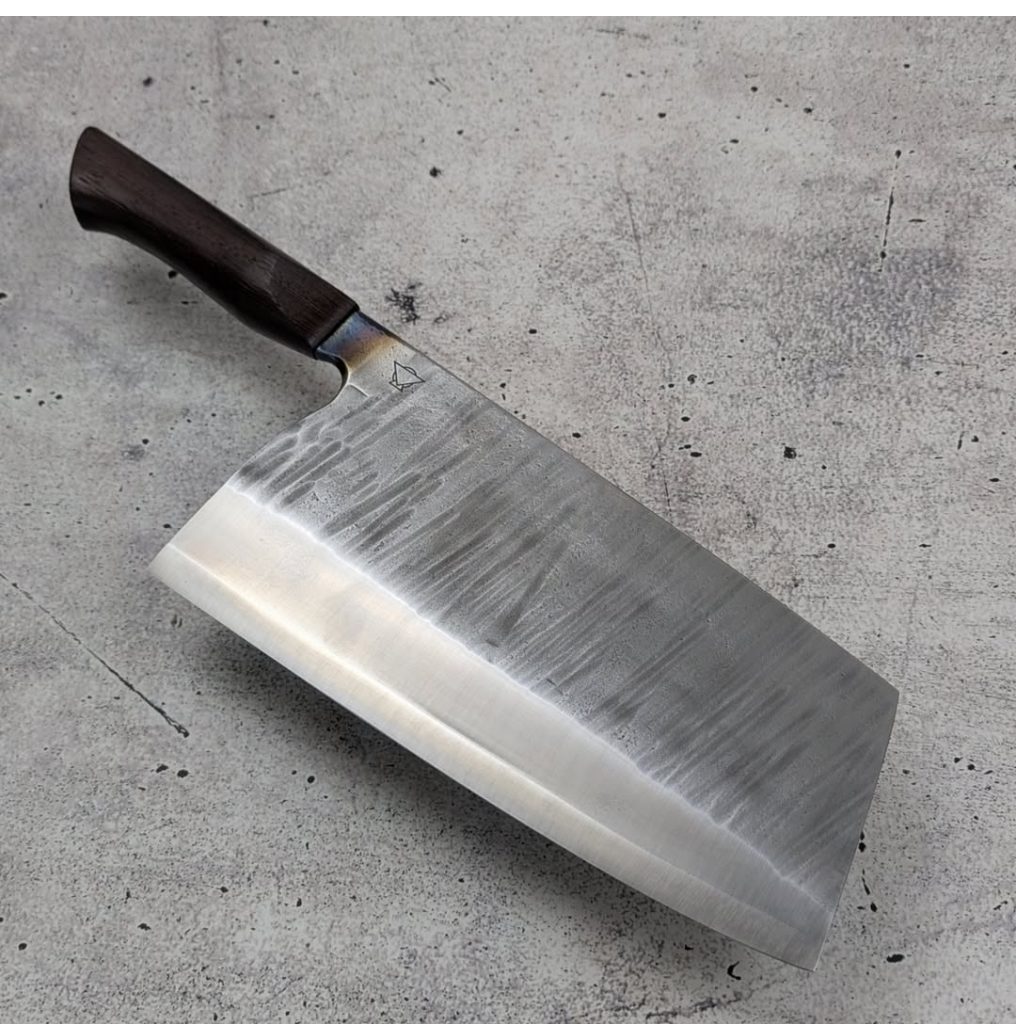
What do you like about ApexUltra steel?
The edge it takes is phenomenal. Considering the high hardness, it is surprisingly easy to sharpen, because the hardness comes more from the steel’s matrix than from carbide content. It has excellent edge stability, which allows knives to be made very thin and sharp without the edge rolling or chipping easily.
How has the knife world changed since you started?
It feels like everything has changed. There are now so many resources online, and people are far more open to sharing knowledge and ideas than they were when I began.
What’s up next for you? Any exciting new projects?
Yes, I’m currently working on bringing a large batch of stainless-clad ApexUltra to market. I think this is a fantastic combination of steels, and I hope other knifemakers and manufacturers will pick it up so that we’ll see more production knives made with ApexUltra.
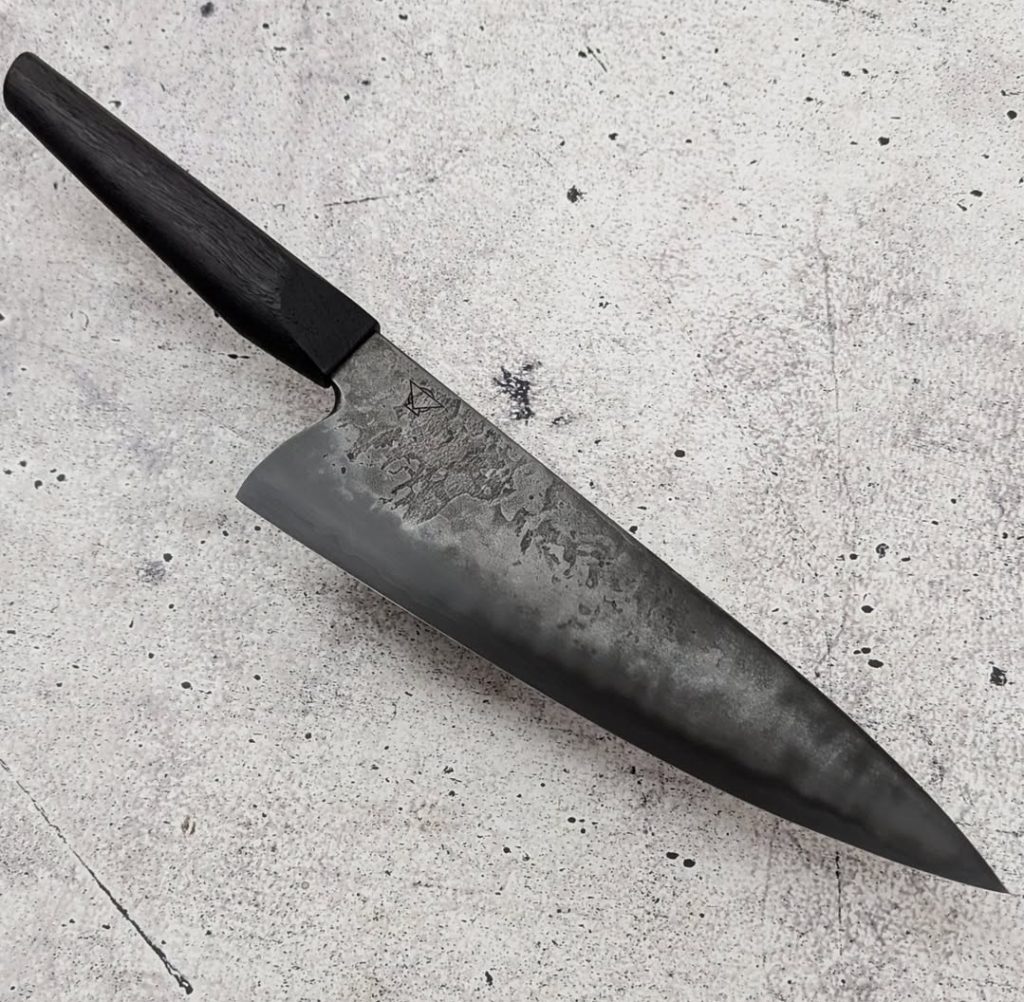
To see more of Tobias’ work and keep up to date with what he is creating head over to his website https://en.messerschmiede-hangler.at/ and follow him on Instagram https://www.instagram.com/messerschmiede_hangler/
Leave a Reply